
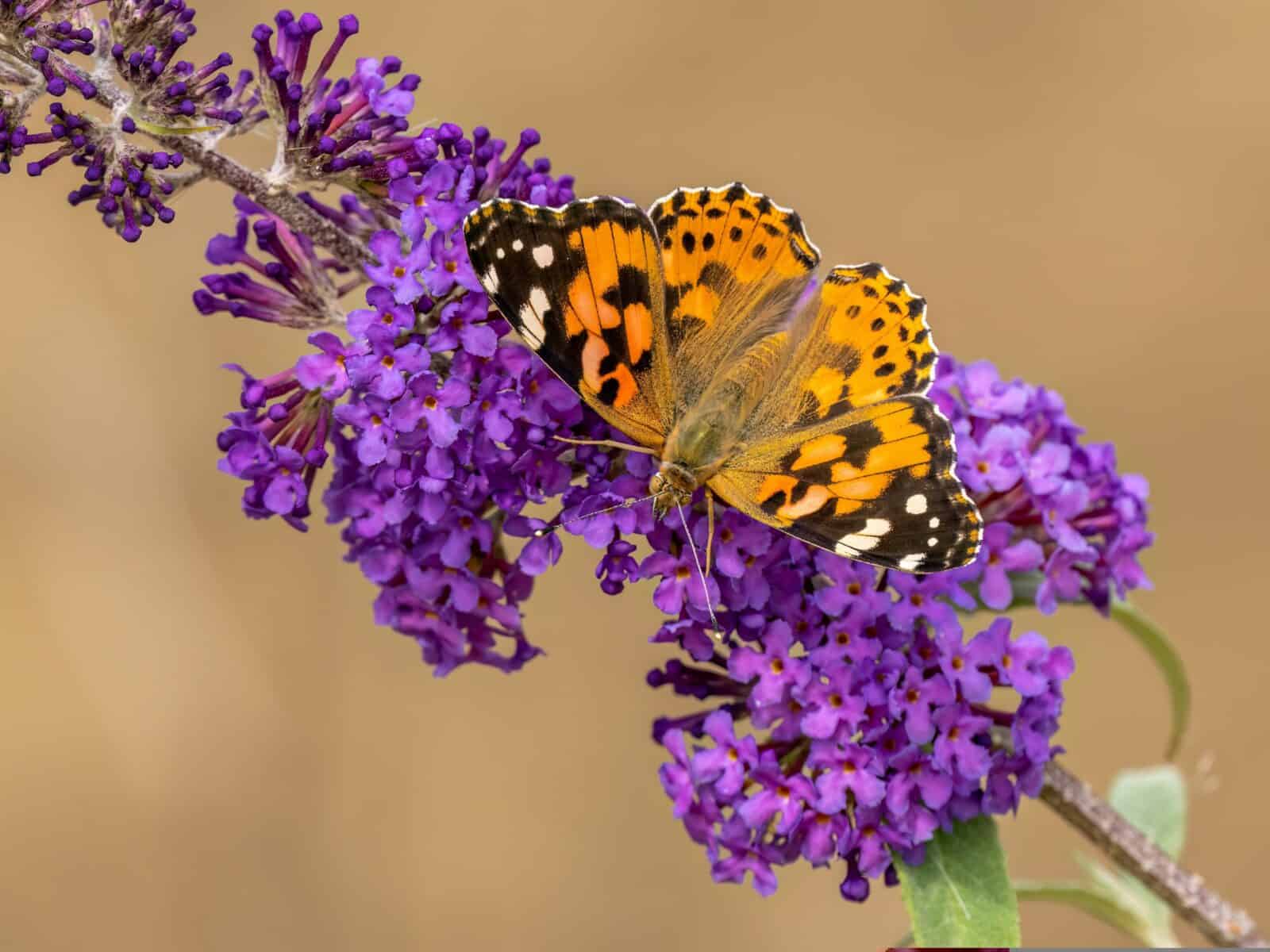
From the Peacock to the Red Admiral, August is a wonderful month to see a variety of butterflies fluttering around the garden. Many species stay local throughout the year as the climate is right and everything they need is available from neighbouring gardens. However, one species – the Painted Lady – makes a much more arduous journey in order to visit the UK.
Painted Lady
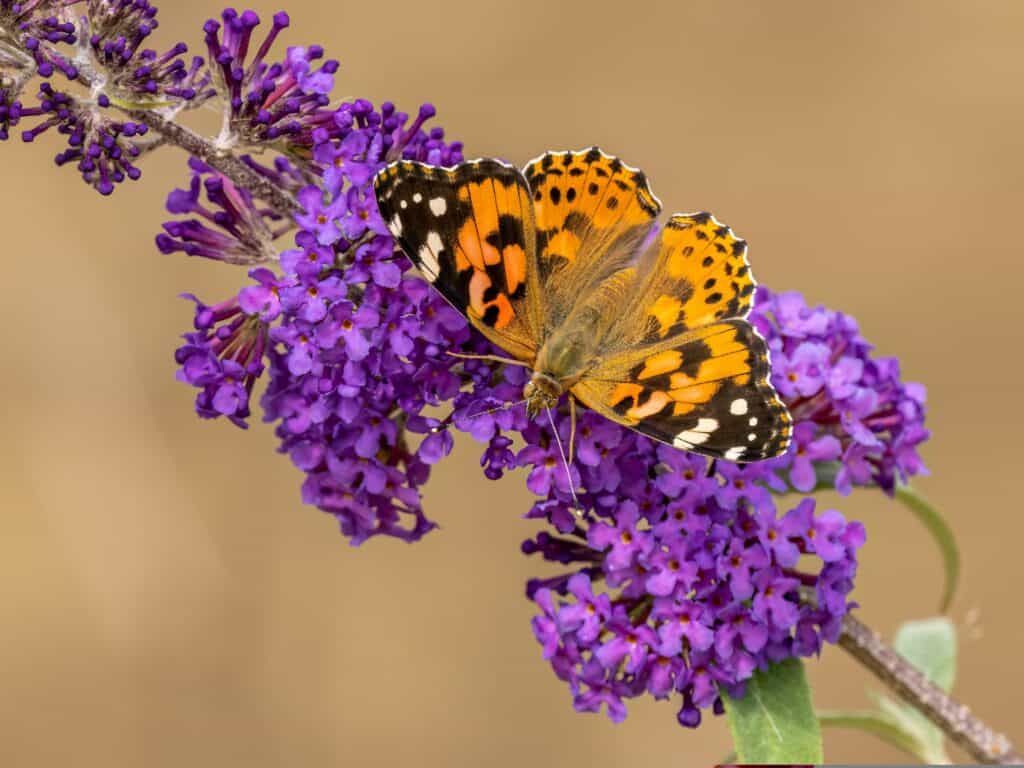
The Painted Lady (Vanessa cardui) is a vibrant butterfly with a wingspan of approximately 5.5cm, boasting a bold mix of colours.
With its wings open, you’ll see orange patches surrounded with black markings and white spots.
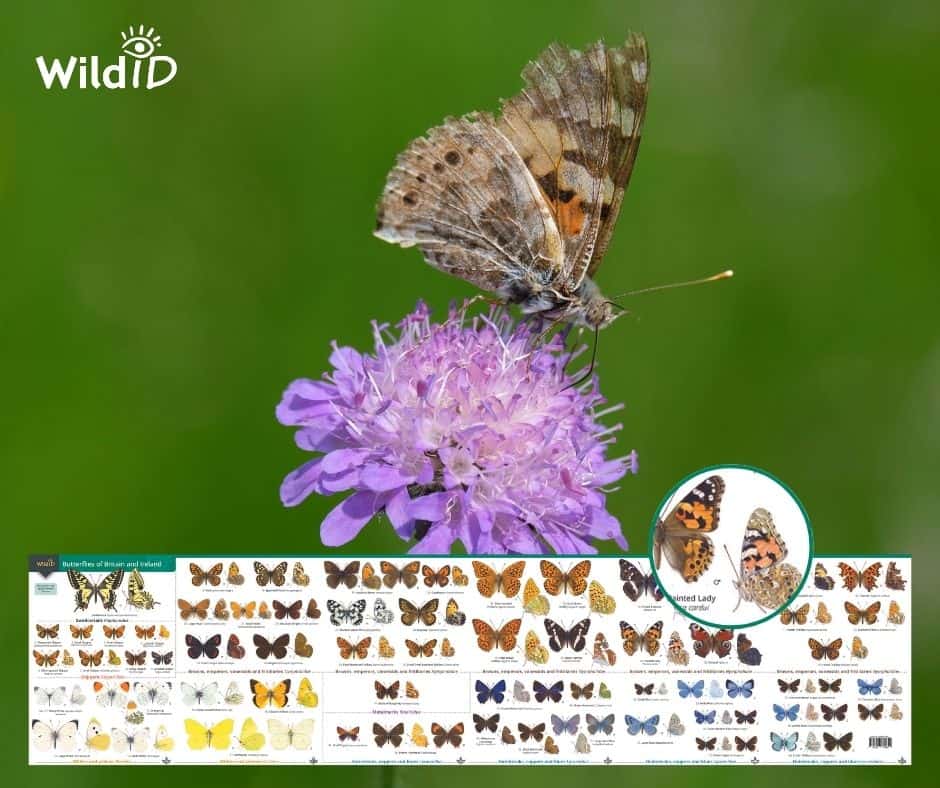
With closed wings, you’ll see a mixture of markings comprised of black, white and browny-orange tones. They also have a slight hint of red on their forewing and some eyespots on their hind wing.
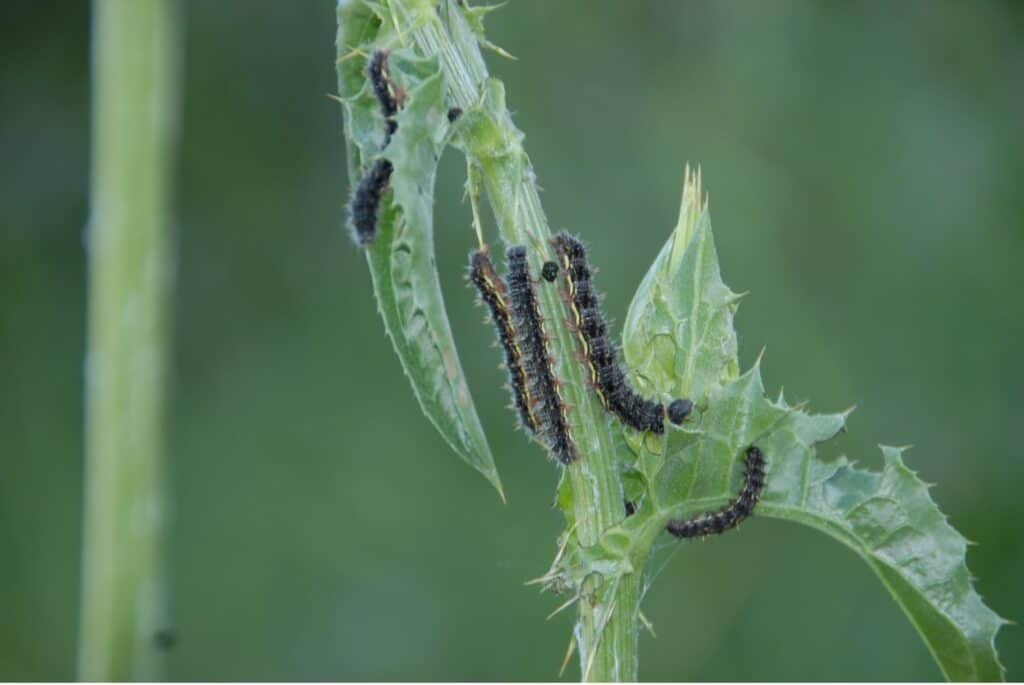
Like all butterflies, the Painted Lady undergoes a four-stage life cycle: starting life as an egg, hatching into a caterpillar, transforming into a pupa, and finally emerging as an adult butterfly. Unlike some species that complete this cycle once a year, the Painted Lady will complete it several times, producing multiple broods in different locations.
Magnificent migrations
Every year, the Painted Lady embarks on an incredible migration, covering over 5000 miles! Starting from the desert fringes of North Africa, this species journeys north through mainland Europe, eventually reaching Britain and Ireland. However, this epic journey is not completed by a single butterfly. Instead, each generation travels part of the way, with new adults emerging, breeding, and continuing northward.
Arriving in the UK from March onwards, these butterflies are most abundant during the summer months. As a common and widespread garden visitor, the Painted Lady is definitely one to watch out for.
However, their numbers can vary greatly each year, with ‘Painted Lady Years’ occurring about once a decade. During these events, a significant influx of butterflies migrate to the UK. The most recent Painted Lady Years were in 2009, 2019, and an estimated 11 million butterflies arrived in the UK in 2009 alone!
These beautiful butterflies do not stay through the winter in the UK. Instead, they set off in autumn to make the massive journey back south to warmer climates, ensuring the continuation of their remarkable migratory cycle for years to come.
Frequently asked questions
- What plants will the Painted Lady feed on?
- As a caterpillar, they feed on a wide range of plants, including thistles, mallows, Common Nettles and Viper’s-bugloss. As an adult butterfly, they can be seen nectaring on a wide range of flowers, including thistles, brambles, buddleja, knapweeds and clover.
- How long do the butterflies live for?
- The lifespan of an adult butterfly typically ranges from 2–4 weeks.
- I’ve seen one in my garden, should I record my sighting?
- Absolutely! Recording sightings of these butterflies, along with other wildlife, helps track their distribution and monitor changes over time. You can submit your records via the Big Butterfly Count, iRecord or iNaturalist.
- Big Butterfly Count: An initiative from Butterfly Conservation, where you spend a short period of time looking and counting the butterflies you see. This takes place every year on set dates (18th July – 10th August 2025).
- iRecord: A website and app where you can log your wildlife sightings.
- iNaturalist: An app that allows you to take a photo of the butterfly (or any wildlife), provides an identification suggestion, and then submits the data.
- Absolutely! Recording sightings of these butterflies, along with other wildlife, helps track their distribution and monitor changes over time. You can submit your records via the Big Butterfly Count, iRecord or iNaturalist.
Learn more
Our WildID ‘Butterflies’ guide features all 60 wild butterflies found in Britain and Ireland. It has been designed for quick and easy identification of living butterflies, and features life-sized colour paintings of each species.
*Summer Walkers Bundle – Six guides and a bee tote bag for £25. (The bundle includes our popular butterfly guide)*
We also run courses that delve into the natural world. View our current courses here or sign up for our Biodiversity Newsletter to be the first to hear about new releases.
This article was originally published in Amateur Gardening magazine 2024.