
Education
At the heart of every Field Studies Council centre are the people who create unforgettable learning experiences that bring outdoor education to life.
Our education teams aren’t just experts in their fields, they’re passionate educators and welcoming hosts who create spaces where curiosity thrives. Whether it’s guiding students through hands-on investigations or ensuring every visitor feels at home, their dedication shines through in everything they do.
“We give 100% on every course to ensure visits are rewarding in terms of academic goals, and the enjoyment of being outdoors, and pushing people outside their comfort zones to achieve things they might never have thought they could do.”
There’s more to working in a centre than you might guess – take a read through these interviews and find out the fascinating story behind some of our staff
“There’s nothing like hearing the excited chat of students from an inner-city school when they first get in the River Tillingbourne and feel the water around their wellies!”
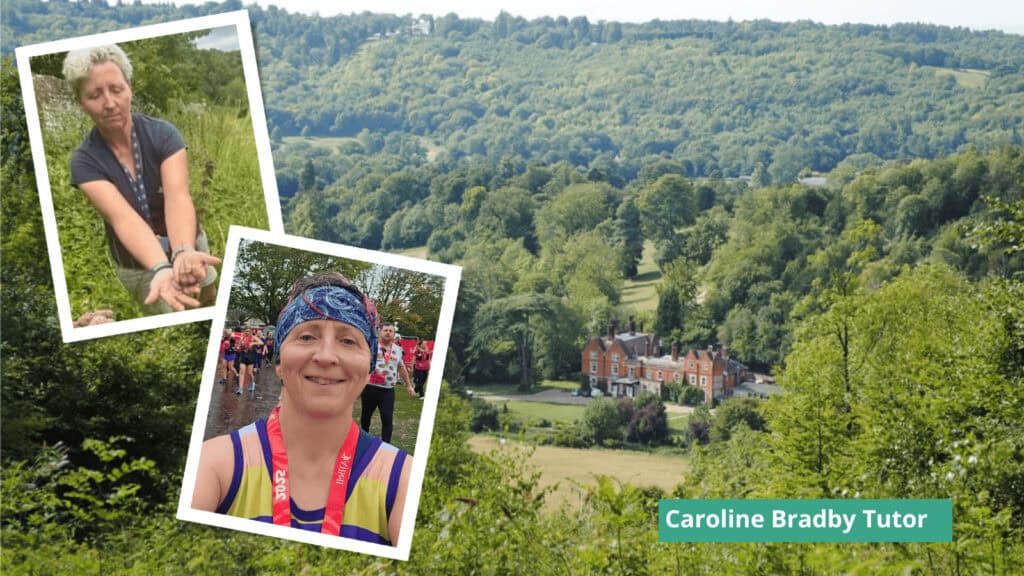
Meet Caroline, tutor at Juniper Hall
Can you tell me a little about your role at the Field Studies Council and what a typical day looks like for you?
I’m a tutor at Juniper Hall. There’s no typical day, but our routine usually involves a morning meeting at 9am where we go through the groups that are visiting and ensure everything is ready for the day. Course activities start from 9.30 so there’s not long to check kit, classrooms and paperwork. Then meeting students and teachers and embarking on a range of activities throughout the day, such as A Level Geography in Dorking or Leatherhead, or at the river, or KS2 Survival Skills with activities like shelter building and fire lighting. If it’s a residential course we’ll finish at 8pm after a classroom session, or perhaps marshmallows around the campfire.
What inspired you to join the Field Studies Council, and what do you enjoy most about working here?
I was a primary school teacher for 14 years and always enjoyed taking my classes outside for a range of activities. This combined with having a geography degree and a love of outdoor adventure meant that when the opportunity came along to combine all of these things, I jumped at it.
What’s your favourite part of the landscape you work in?
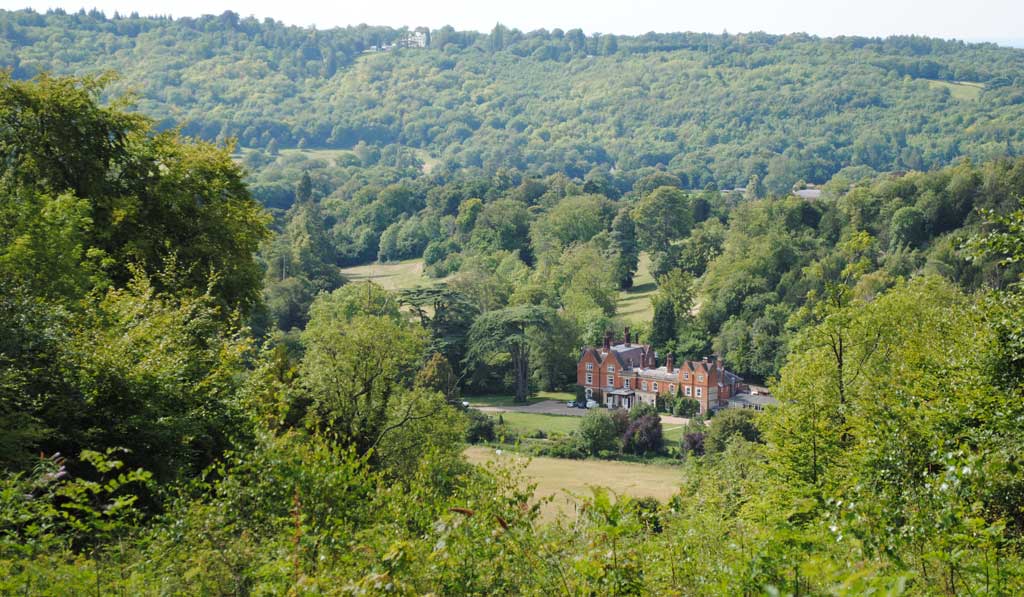
We might not be in a National Park, but the views from the top of Box Hill are always different and always beautiful, no matter what the weather or season is.
Do you have a favourite outdoor activity or subject area you love teaching? Why does it stand out for you?
I can’t pick one favourite as it very much depends on the group or the circumstances of what we are doing. However, there’s nothing like hearing the excited chat of students from an inner-city school when they first get in the River Tillingbourne and feel the water around their wellies!
What’s the most memorable moment you’ve had while working with a school group?
We had a Generation Green 2 group in and took them up to Lodge Hill. The National Trust conservation herd of Belted Galloways were grazing up on Box Hill at the time. During our last stop our walk, the cows decided to join in with a field sketch. The children in the group weren’t phased at all and just carried on with what they were doing whilst admiring the beautiful animals.
If you could describe your centre in three words, what would they be?
Kind, collaborative and crazy.
What do you think makes a school trip with the Field Studies Council so special compared to other trips?
The environment around the centres and the people who work here. We have so many possibilities for courses in beautiful surroundings, whether it be for GCSE or A Level fieldwork or a KS2 team building course. We give a 100% on every course to ensure visits are rewarding in terms of academic goals, and the enjoyment of being outdoors, and pushing people outside their comfort zones to achieve things they might never have thought they could do. We are proud that our sites and activities are so accessible. Also, ask about the food and the welcome – the kitchen and hospitality staff here are amazing.
What do you like to do outside of work—any hobbies or adventures of your own?
I don’t like to stay still for too long. I like to run – taking part in anything from a weekly parkrun to a half marathon. I play cricket and hockey, and I have recently bought an e-bike which I’ve started having adventures on. If I do sit down, it’s often to watch sport on TV or catch up with my friends for a chat.
Is there something about your job that people might be surprised to learn?
I teach children to light fires. Up close, most invertebrates aren’t all that scary!
What advice would you give to teachers planning their first school trip with the Field Studies Council?
If you’re on a residential, you probably won’t get a lot of sleep, but you will have fun and will be amazed at what your students can do outside of the classroom! If it’s a day visit, you’ll be amazed how much we can pack in!
“As well as having mountaineering, mountain biking, caving and canoeing qualifications to do my job I also have an advanced food hygiene certificate, and I am licenced to sell intoxicating liquor.”
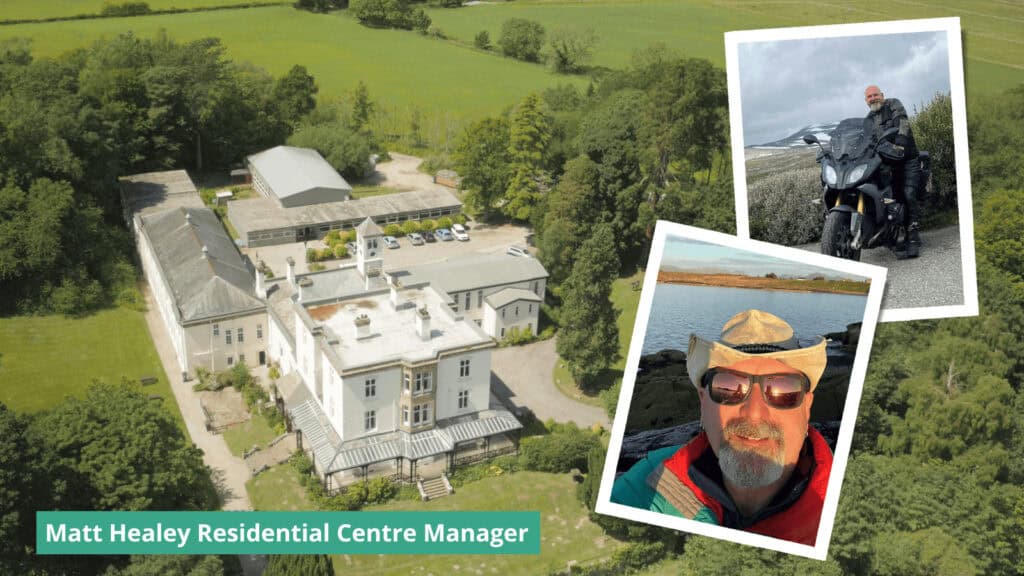
Meet Matt, Residential Centre Manager at Castle Head
Can you tell me a little about your role at the Field Studies Council and what a typical day looks like for you?
My role at the Field Studies Council is called “Residential Centre Manager”. I look after all aspects of caring for our 160 bedded centre at Castle Head. This includes the building itself, the staff who work here and the diverse flora and fauna in our extensive grounds that includes otters, crested newts, barn owls and more squirrels than we know what to do with.
A standard day starts at 0830 with a quick scan of any incoming e-mails and a check-in with staff and customers who are on centre. We then have an Education Team meeting where we discuss the days teaching activities, check our risk management practices and make sure that all our customers are happy and ready for the day. Once this has happened, I take a walk around the centre and grounds to check that all is in good shape. It’s great to observe the groups as they meet their tutors, whilst checking in with their teachers or lecturers.
Once I am happy that the day will flow well, I have a meeting with our centre administrators and discuss future bookings, and problem solve any issues that may arise, as we are usually looking six-weeks ahead.
After this I usually meet with individual staff informally to check that all is going well before moving onto the main management tasks of the day. These can be as diverse as meeting with local farmers that use our land for grazing, preparing budgets for the coming financial year, and working with colleagues to fill out funding applications.
Finally, I check that all groups are back to centre ready for their evening meal, sometimes ending my working day by welcoming new groups to centre as we often have groups arriving and departing throughout the week, including weekends.
What inspired you to join the Field Studies Council, and what do you enjoy most about working here?
My professional career has been built on working for young people and the natural environment. Working for the Field Studies Council allows me to provoke thousands of learning experiences for students who are interested in exploring the natural environment and their place within it.
What’s your favourite part of the landscape you work in?
My favourite parts of the Lake District are the high fells, especially in winter when snow covers the tops of the mountains and the sun is shining from a clear blue sky.
Do you have a favourite outdoor activity or subject area you love teaching? Why does it stand out for you?
My favourite outdoor activity is journeying, either by canoe or on foot. Moving thoughtfully through nature whilst having little or no impact on the environment is a gift.
What’s the most memorable moment you’ve had while working with a school group?
I have so many memorable ‘teachable moments’ it’s hard to pin one single experience down, however I do still laugh about a recent conversation with a school group, some of whom were struggling to believe that the cows we saw being herded along a country lane were the providers of the milk they bought from their local supermarket!
If you could describe your centre in three words, what would they be?
Tranquil, Friendly, Inclusive
What do you think makes a school trip with the Field Studies Council so special compared to other trips?
The level of subject knowledge, combined with a blend of teaching and experiential learning skills possessed by the education teams at the Field Studies Council is second to none.
What do you like to do outside of work—any hobbies or adventures of your own?
My personal passion is travelling on two wheels – I have ridden across the continent of Australia twice (49 Deg C) as well as riding into the Sahara in Africa and above the Arctic Circle in Norway. I’ve also climbed high mountains in Himalayas (-30 Deg C). These adventures gave me an operating temperature range of 79 Degrees Centigrade!
I’m personally and professionally interested in the sociology and psychology of adventuring in nature, and what it means to different cultures and human societies, especially as we confront the realities of climate change.
Is there something about your job that people might be surprised to learn?
As well as having mountaineering, mountain biking, caving and canoeing qualifications to do my job I also have an advanced food hygiene certificate, and I am licenced to sell intoxicating liquor.
What advice would you give to teachers planning their first school trip with the Field Studies Council?
The school residential is not just about teaching scientific or subject knowledge. Its value goes far beyond the curricula for GCSE and/or A levels. The social and emotional learning that takes place during a residential is fundamentally important to the holistic development of students. We value having conversations with teachers and lecturers about how we can increase the value of our work by ‘building in’ environmental, social and emotional learning, equipping young people with 21st Century learning skills, such as curiosity, care, and a love of learning.
The stories of our tutors and centre managers remind us that Field Studies Council is a really special place to work and visit, with a community built on passion, knowledge, and care. Our commitment to inspiring learners and protecting the natural world is what makes every visit special.
“The social and emotional learning that takes place during a residential is fundamentally important to the holistic development of students.”
If you’d like to meet more of our people behind the experience, we are always excited to welcome new visitors to our centres across the UK. Each centre has its own unique appeal, from the coastal locations of Devon, Pembrokeshire and Western Scotland, to the hills and lakes of the Lake District and many more exciting landscapes to discover in between.
If you’d like to talk to us about discovering new landscapes with your class, and bring nature into your learning, and the outdoors into your classroom, we would love to talk to you about the options available to suit your needs.
Contact the team: [email protected]