
Though wildlife may be less noticeable at this time of year, the world beneath our feet is teeming with life. Under piles of leaf litter, damp rotten logs, and within the soil, tiny invertebrates are working hard to keep our soils healthy — among them are the springtails.
Springtail diversity
Springtails (Collembola) are tiny invertebrates, often between 0.2mm and 6mm in size. About 250 species live in the UK, ranging in patterns, colours, and lifestyles.
One distinct group of springtails, the Symphypleona, are referred to as ‘globular’ springtails, known for their rounded body shape.
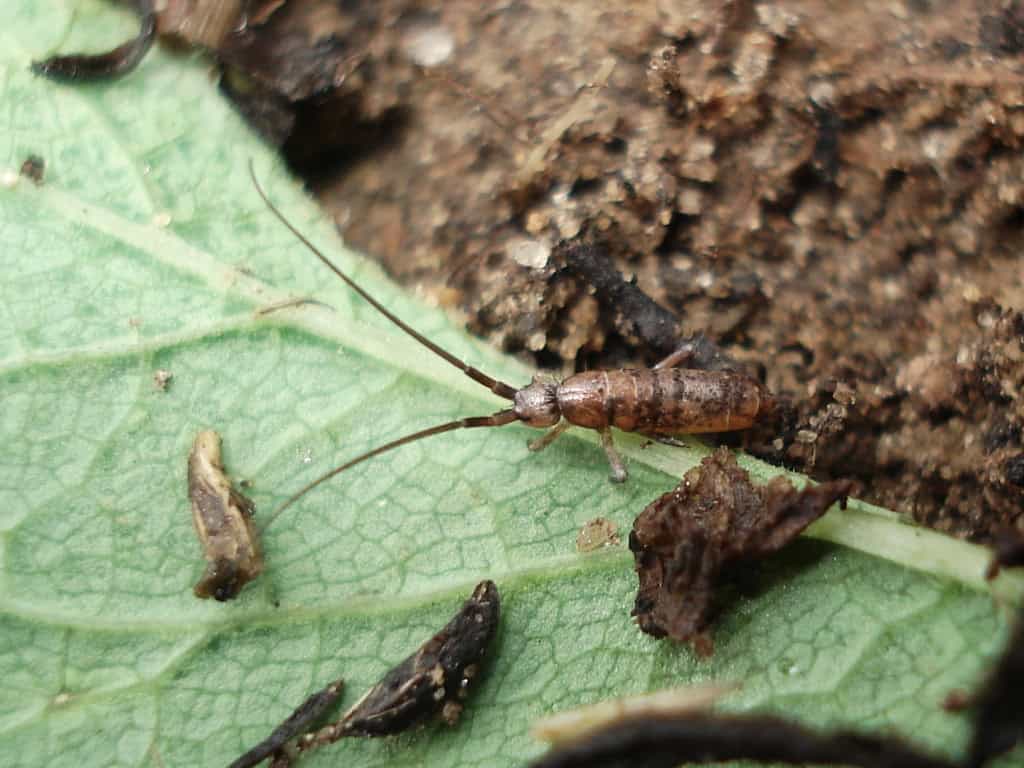
Other springtails may have much longer bodies and may be referred to as ‘slender’ or ‘linear’ springtails. One of these slender springtails, Pogonognathellus longicornis, is the UK’s largest, reaching 6mm in length and visible to the naked eye. Plus, their antennae are even longer than their bodies, and when disturbed or threatened, they retract into spirals. This species is commonly seen in gardens, so keep your eyes peeled for their distinctive coiling antennae!
Amazing adaptations
One fascinating adaptation that many springtails possess is their ‘furca’, a fork-shaped structure that is folded beneath their body. It acts like a highly tensioned spring, held in place until it needs to escape danger. When disturbed or threatened, the springtail will release the furca, striking it down onto the ground and consequently propelling the springtail into the air at a great distance and speed. All of this happens in less than a second, and they can reach up to 100 g-forces, higher than that experienced by fighter jet pilots.
See them in action in this video:
Springtails in the garden
Springtails thrive in various garden habitats, particularly in soil and leaf litter, where they may exceed 40,000 per square metre!
After autumn, leaves and old plant matter are abundant, yet by spring it will have disappeared. This is not done by magic or overnight, but it is through the tireless work of springtails (and other invertebrates), who are fantastic decomposers. Fungi will start the decomposition process, followed by springtails, which move in to feed on the fungi, in turn recycling the nutrients back into the soil.
So next time you’re turning your compost bins or mulching flowerbeds, take a moment to appreciate these tiny creatures hard at work, creating the rich and healthy soil we rely on.
Frequently asked questions
- Do other animals feed on springtails?
- Yes! Springtails are an important part of many food chains. They are eaten by animals such as frogs, toads, spiders, and ground beetles — which go on to provide food for birds and mammals.
- What equipment can I use to get a better look at these creatures?
- If you’d simply like to see them in a little more detail, a hand lens can get you up close. These come in a range of magnifications and help you get closer to invertebrate life.
This article was originally published in Amateur Gardening magazine 2024.