
Steve Docker is a Resource Development Officer with Field Studies Council Publications. Here he describes a stunning encounter with waders whilst exploring the north Norfolk coast.
The stage is set
There are moments in nature that stay with you, encounters that remind us of how breathtaking nature can be. On the final day of a short break to north Norfolk, my wife and I witnessed a mass gathering of waders at RSPB Snettisham that unfolded like a scene from a nature documentary.
We had already enjoyed good views of Pink‑footed and Brent Geese at various coastal reserves, but on Sunday 1st February 2026 we turned our attention to The Wash. Snettisham sits tucked into the southeast corner of this vast estuary, its saline lagoons, sweeping mudflats and tidal rhythms creating a rich sanctuary for thousands of birds throughout the year.
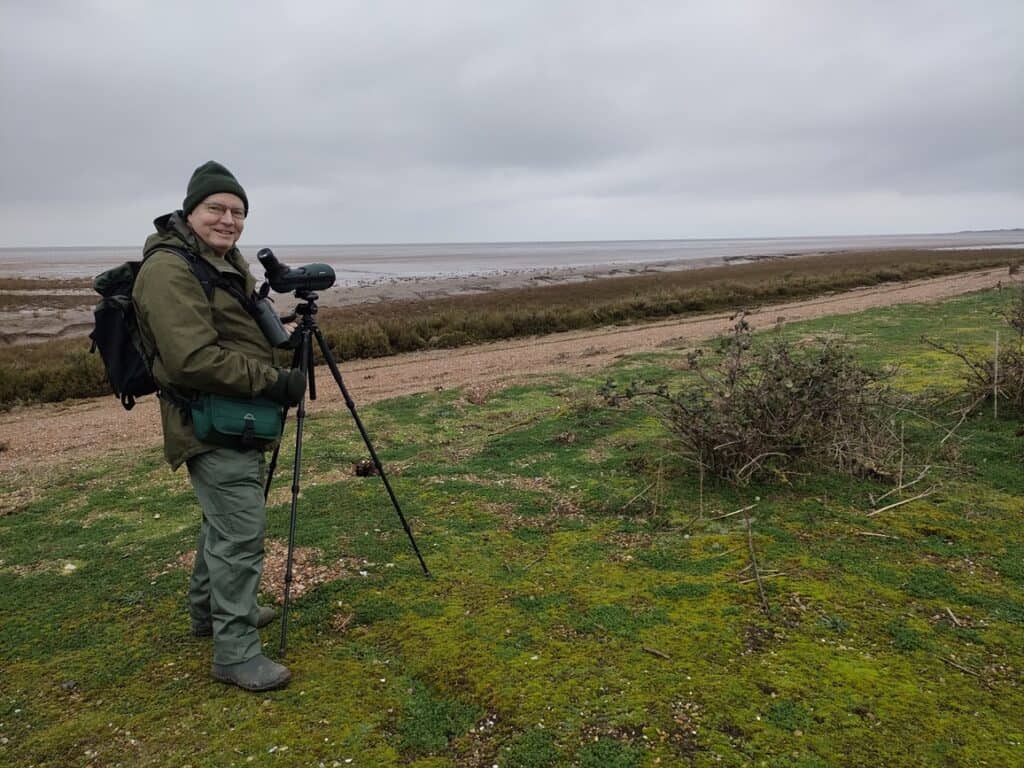
When we arrived, the weather was calm, overcast and dry. Nothing suggested that the evening would deliver such a memorable birdwatching experience but careful planning, and a bit of luck, set the stage.
Reading the tides
High tide was just before 6pm with sunset an hour earlier, so we knew the light would fade before the water reached its peak. Still, the incoming tide is crucial as the rising water corrals the birds into dense flocks and pushes them closer to shore. Only later did we realise that a spring tide, when the tidal range is at its greatest, was just days away, which is also an important factor to seeing a mass gathering of waders.
A rewarding walk
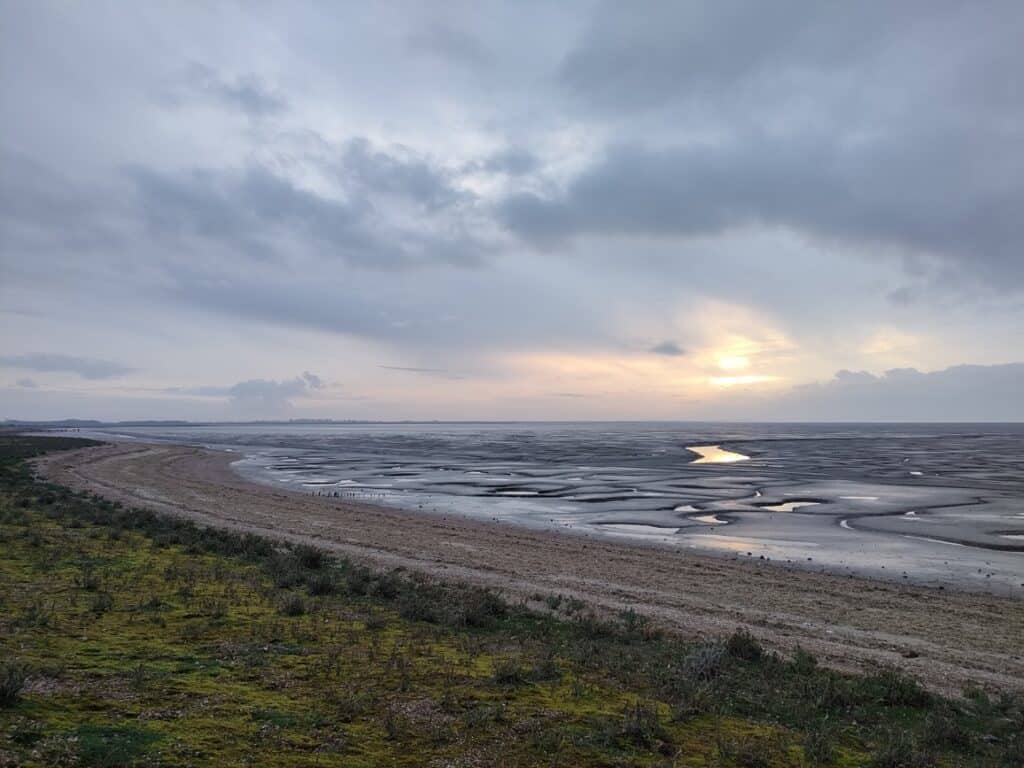
Our route to the reserve took us south alongside one of the four lagoons, a gentle and rewarding walk. As we reached the Beach Trail, the landscape opened before us. A ribbon of shingle beach gave way to a vast wilderness of mudflats stretching an incredible 25km across The Wash to Lincolnshire.
The sense of space alone was worth the walk, but we still had more to explore. We looped around the southernmost lagoon, pausing for lunch at the Sanctuary Hide. With the tide advancing, we then made our way back along the Beach Trail.
The great gathering
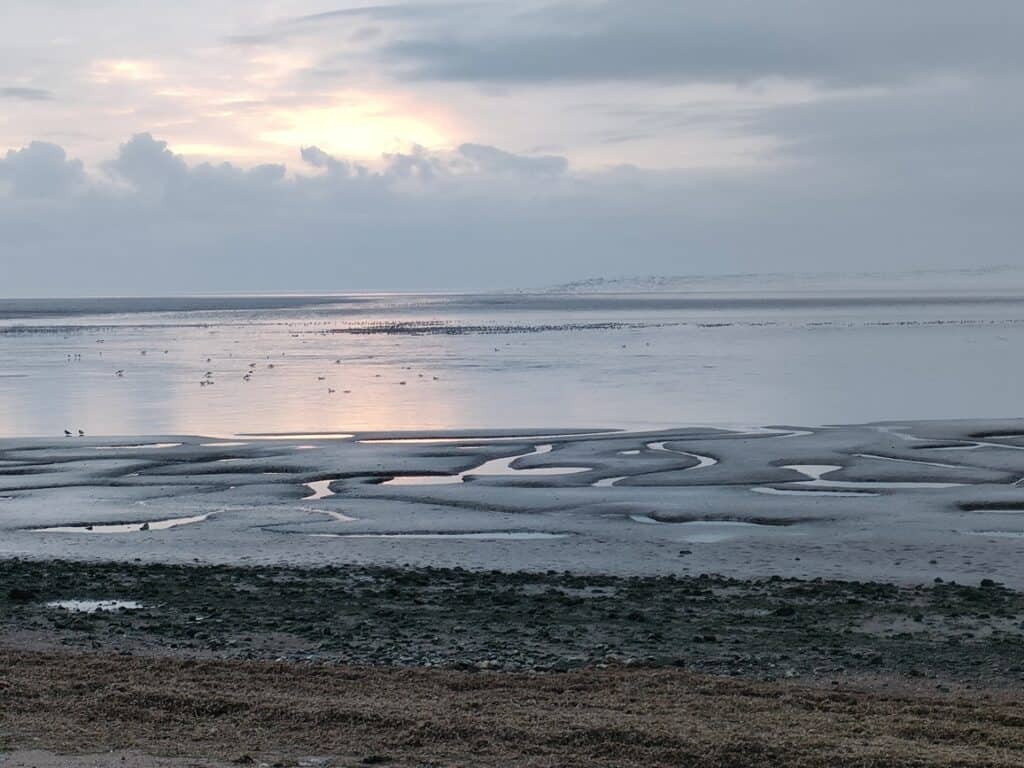
As time and tide dictated, we arrived at our chosen wader viewpoint just as the estuary transformed. Amazingly, this is one of the few places in eastern England where the coastline faces west. The setting sun broke through a slim gap in the clouds for the first time that day, and the water returning to the channels within the mud began to reflect the sunlight against a pearlescent grey, orange and yellow sky.
Then the birds arrived.
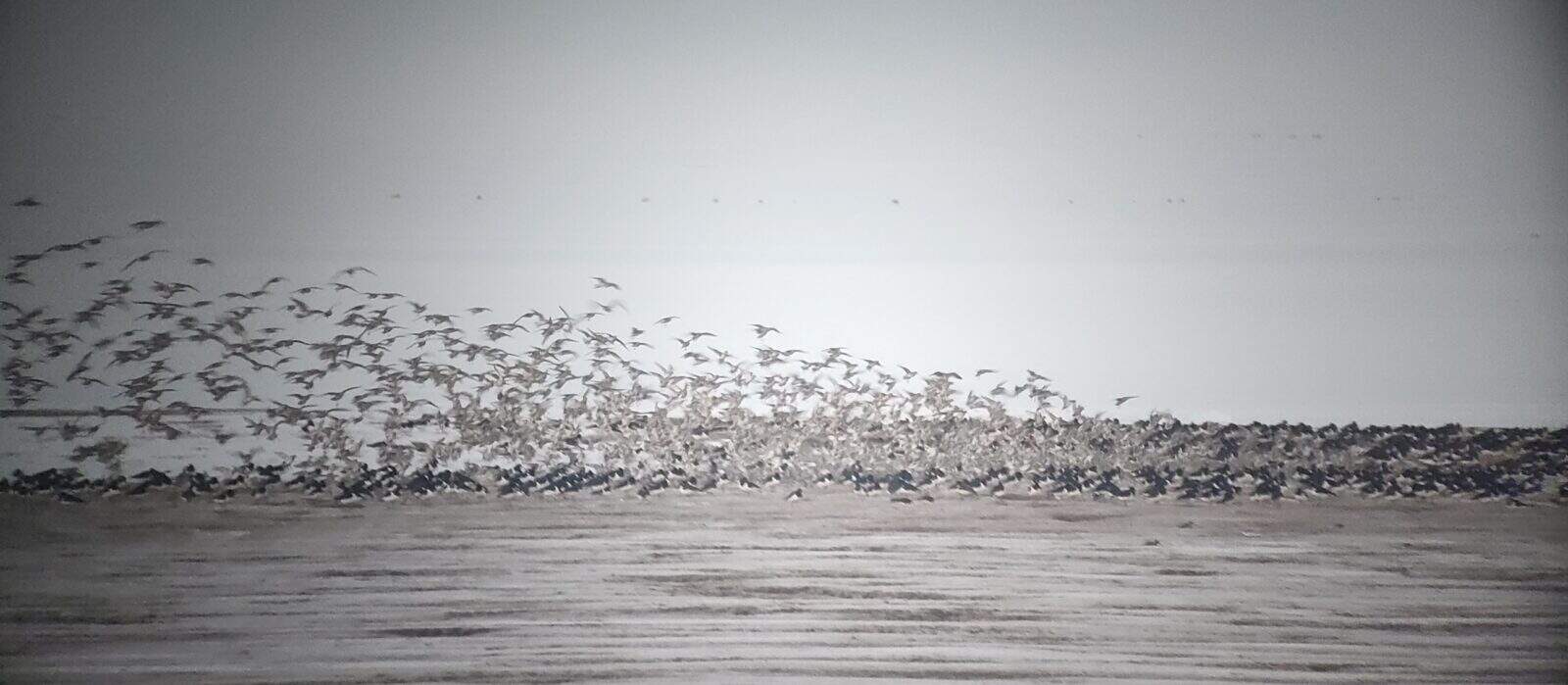
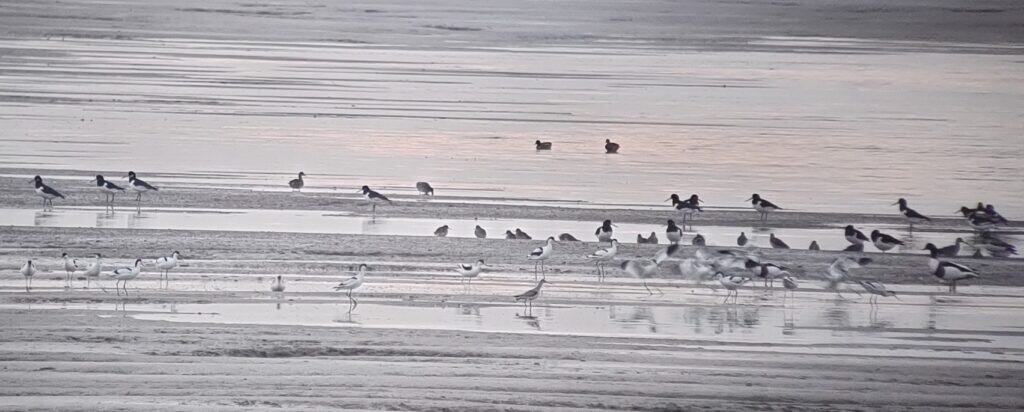
The first large groups of aerial waders were the Lapwings, their loose, shapeless flocks and broad rounded wing tips easily recognisable. Then, from the direction of the North Sea and the returning tide, huge groups of Knot, and other wader species, gathered at the advancing water’s edge. Suddenly they lifted into the air forming a great mass of dense, shape‑shifting wader murmurations. Their pale underwings flashed as they banked and twisted, and the soft roar of thousands of wings briefly drowned out their calls. The spectacle lasted for 20 minutes or more.

A perfect finale
As daylight faded, we picked out elegant Avocets on the mud below the swirling flocks, their black and white plumage and slender up‑curved bills unmistakable. With the tide rising and the sky dimming we began our walk back, still wrapped in the magic of what we had witnessed. Nature had offered us something unforgettable, a winter wader spectacle.
Want to learn more?
The Field Studies Council run a range of courses, both on-line and at study centres. In addition, there are a range of resources available at eclectic-ecologist
To help us all appreciate and enjoy biodiversity and better understand the changing state of nature the Field Studies Council has produced a wide range of high-quality identification resources such as the WildID fold-out guides and Aids to Identification in Difficult Groups of Animals & Plants (AIDGAP). All guides, including a Winter Birds Bundle, are available from the Field Studies Council online shop. The bundle comprises three WildID bird charts, including Waders of Britain and Ireland.