
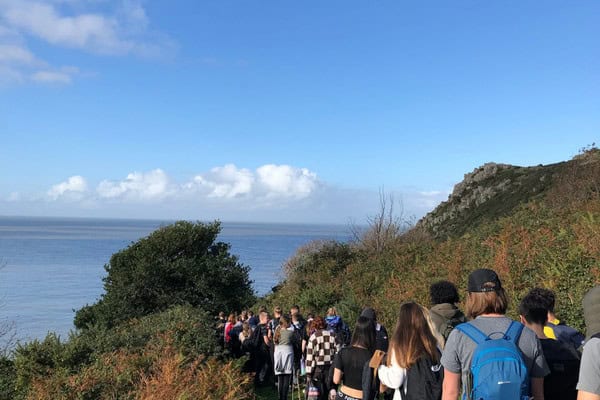
At Field Studies Council, our residential courses give students the opportunity to develop skills, independence, and confidence in ways that simply aren’t possible in the classroom.
This month at Nettlecombe Court, students from Peter Symonds College took part in our A Level Skills for the Independent Investigation course, a geography fieldwork course designed to prepare them for their Non-Exam Assessment (NEA) and beyond.
Taking learning beyond the classroom
For lead teacher Paul Wright, this visit is part of a long-standing relationship with Field Studies Council, and is his fifth time visiting the centre, recognising the value of combining expert fieldwork teaching with a residential experience in a new environment.
Paul explained his motivation to visit as:
“Fieldwork skills, Field Studies Council expertise, and environments that are unknown to our students — as well as the residential experience itself.”
For many learners, this provides a rare opportunity to apply classroom knowledge in unfamiliar settings, helping to deepen understanding and engagement. The college works to ensure that as many students as possible can take part, including those who may face financial barriers.
“The course is very affordable, and we can cover costs for students in receipt of free school meals.”
By reducing these barriers, more students are able to benefit from high-quality fieldwork and the wider experience of residential learning.
A transformative fieldwork experience
While the course is designed to support NEA preparation, its impact goes far beyond academic outcomes.
We asked Paul what the highlights and wider benefits are. He explained:
“Social confidence, a sense of belonging in a large cohort, and environmental awareness — understanding the diversity of the UK.”
Outdoor learning helps students develop confidence not only in their fieldwork skills, but also in working with others, navigating new environments, and engaging more deeply with the natural world.
During the residential, noticeable changes emerge in students’ confidence and wellbeing. Many become more comfortable working independently and as part of a group, and tutors and teachers often see increased engagement as the course progresses, and after they return home.
“Strong positives for wellbeing and confidence — we often receive messages from parents about how pleased they are with the benefits.”
For some students, particularly those who missed out on earlier residential experiences, this opportunity plays an important role in rebuilding confidence and independence.
Why outdoor learning experiences matter
Experiences like this bridge the gap between school and the next stage of life. Students take part in a shared experience that is different from both classroom learning and a leisure residential, helping them develop the skills they will need beyond education.
As Paul puts it:
“Being part of a group experience which is not like school, but also not a holiday — it’s necessary for the next life stage, such as university or apprenticeships.”
The impact continues long after students return to college. Teachers observe greater clarity in students’ NEA choices, a more positive attitude towards Geography, and, in some cases, increased interest in progressing to university-level study.
“Greater certainty over NEA choices, positive attitudes to Geography (sometimes leading to university choices) and an increased sense of belonging to the course.”
Alongside academic development, students often return with a stronger sense of identity within their cohort and greater confidence in their abilities.
The supportive atmosphere at Nettlecombe Court plays a key role in enabling these outcomes. The combination of experienced tutors, welcoming staff, and a strong emphasis on environmental values helps create an environment where students feel comfortable and supported.
Teachers particularly value the centre’s focus beyond the curriculum, including environmental action, community, and cooperation.
Help us continue delivering life‑changing experiences
Courses like this show the wider impact of fieldwork — not just on academic outcomes, but on confidence, wellbeing, and future aspirations.
Through continued support, we can:
- Ensure more students can access residential learning
- Remove financial barriers for disadvantaged learners
- Deliver experiences that prepare young people for their next steps
Support our work and help more students benefit from fieldwork experiences.