
At Field Studies Council centres, food is part of the experience. Whether it is a hearty breakfast before a day outdoors, a packed lunch for a fieldwork session, or a warming evening meal after exploring the landscape, our catering teams play an important role in helping visitors feel welcomed, fuelled and cared for.
But behind every meal is another story too, one about sustainability, responsible sourcing, food waste reduction and the everyday choices our kitchens make to reduce environmental impact.
This year, we were especially proud to achieve the Soil Association’s Green Kitchen Standard Award, building on the strong foundations already created through our Food for Life Bronze Award. The Green Kitchen Standard recognises caterers who take real, measurable action to reduce energy, water and waste through sustainable kitchen practice.
| 82% | 73% | Top 3 | 100% |
| Green Kitchen Standard score | Industry average | Organisation nationally | Training score |
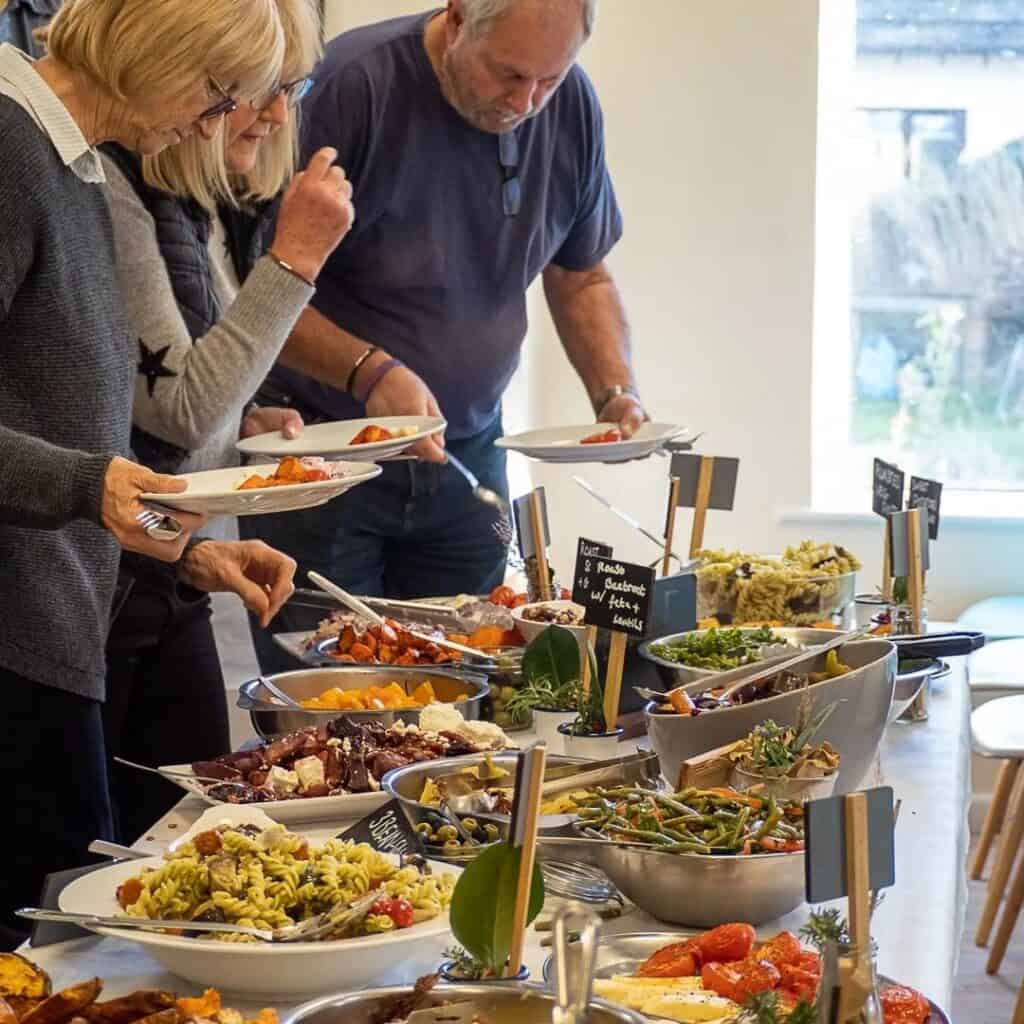
Smarter menus, lower carbon choices
Our menus are increasingly planned with carbon impact in mind. Every standard dish is supported by nutrition and carbon information, helping teams understand the impact of different meals and make informed choices when planning for groups.
Across our menu development, we have removed meals rated “very high” for carbon impact, with around 80% of our menu now sitting in the very low to medium CO₂e range.
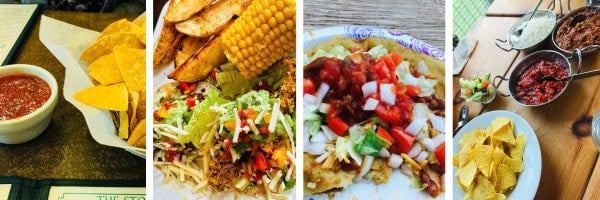
This does not mean compromising on the meals visitors enjoy. Popular dishes such as Sundried Tomato, Spinach and Mushroom Pasta are rated A / very low, at around 0.43 kg CO₂e per portion, while Ultimate Mexican Chilli Non Carne is rated B / low, at around 0.8 kg CO₂e per portion.
Ultimate Mexican Chilli Non Carne
Served with steamed rice, tortilla chips and tomato salsa. A hearty, colourful and popular group meal in the low-carbon range, at around 0.8 kg CO₂e per portion.
Reducing food waste, one service at a time
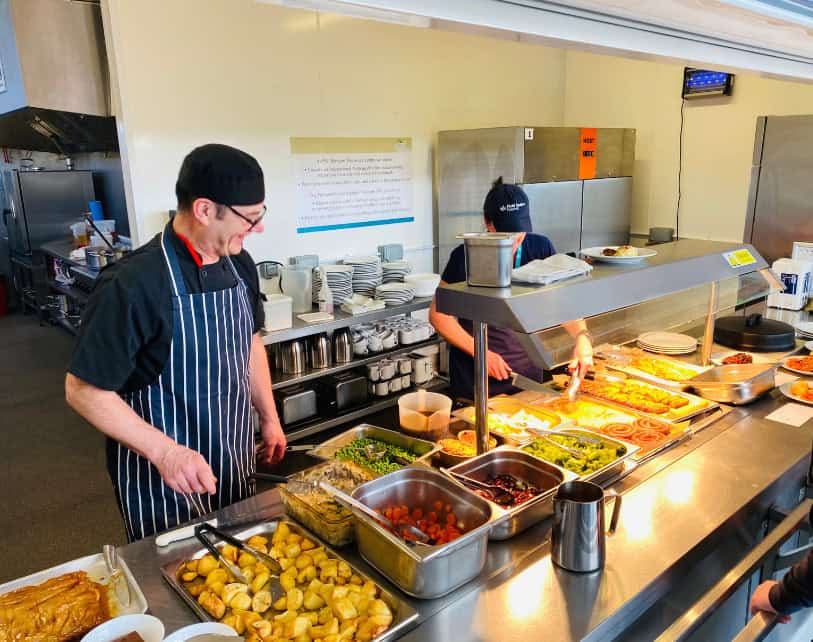
Food waste is one of the biggest sustainability challenges in catering, so our kitchens work hard to plan, portion and reuse ingredients carefully.
Our teams use menu planning tools, stock controls and daily tracking to better understand what is being served, what is being used and where waste can be reduced. Practical kitchen actions include planning orders ahead, consolidating deliveries, batch cooking, using selected frozen produce to reduce spoilage, rotating stock carefully and following a safe leftover repurpose approach.
| Figure | Equivalent | Why it matters |
| 560,580 plates of food served in 2024 | Roughly the population of Las Vegas | Small improvements across every service add up quickly. |
| 33,340 kg food waste saved from landfill | Approx. 2.5 double-decker buses | Careful planning, tracking and waste segregation make a real difference. |
| 5,250 litres of used cooking oil recycled | Approx. 35 bathtubs | Waste oil is turned into renewable biodiesel. |
| 1 beef-to-veg swap per week | Equivalent CO₂e saving of 16 London–New York return flights | Menu choices can reduce carbon impact while keeping meals familiar and filling. |
Behind the scenes: sustainable kitchens in practice
Sustainability in our kitchens is about much more than what appears on the plate. Our Green Kitchen Standard work recognises how teams manage energy, water and waste as part of everyday service.
- Food waste minimisation plans, weekly monitoring and measurable reduction targets.
- Recycling facilities and separate food waste streams, with zero landfill food waste through AD or composting routes.
- Free tap water and a refill culture rather than bottled water sales.
- Reusable serviceware where possible, alongside continued reduction of single-use items.
- Waste cooking oil recycled into biodiesel.
- Energy monitoring, switch-off policies, LED lighting and a move towards more efficient electric kitchen equipment.
Responsible sourcing and welfare standards
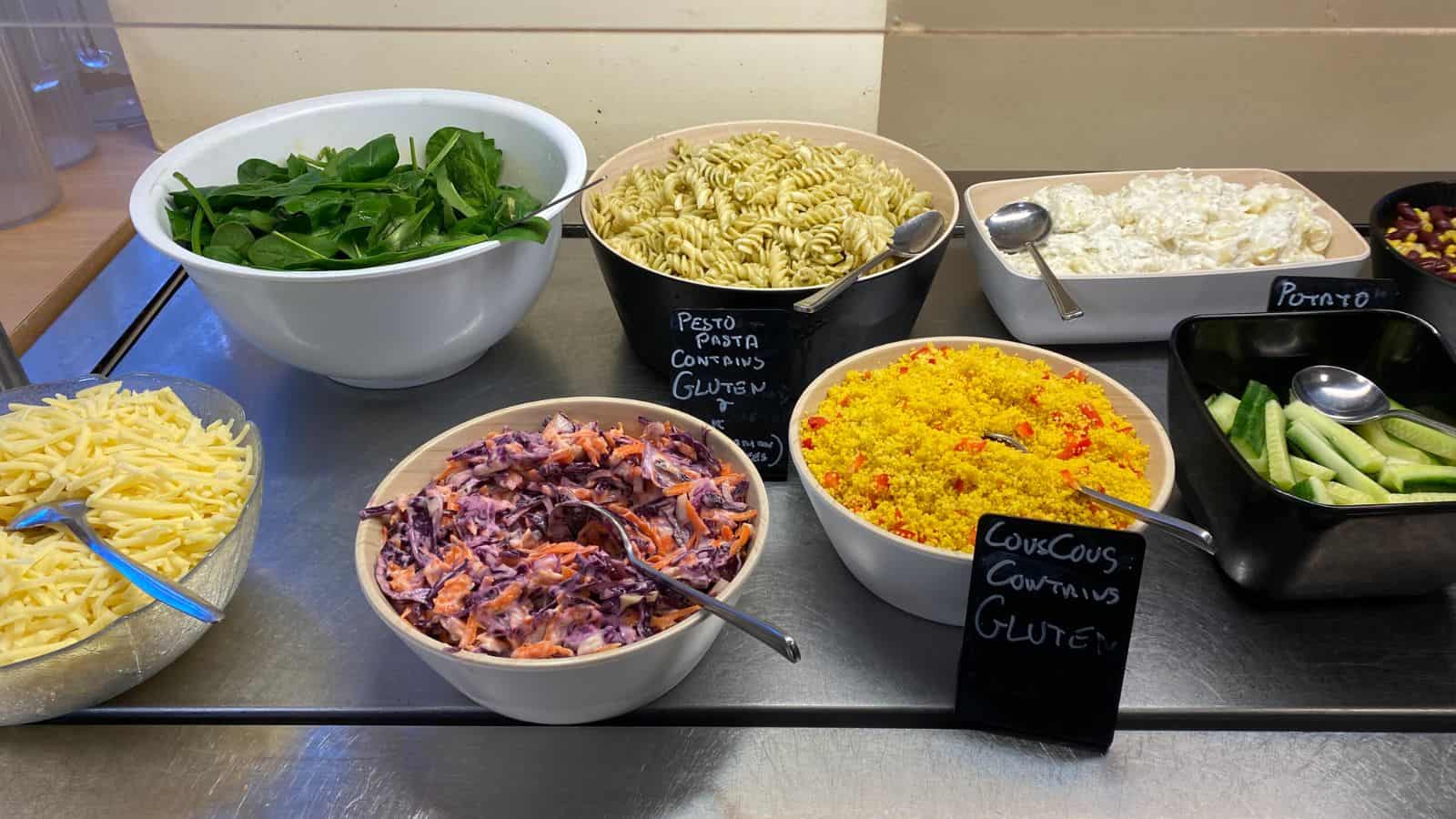
We take a practical, evidence-led approach to sourcing. Our focus is on consistent standards, careful ordering, fewer unnecessary deliveries and responsible product choices across centres.
Where animal products are used, our sourcing standards support recognised welfare and sustainability credentials, including Red Tractor and Farm Assured meat, MSC fish and free-range eggs.
We also continue to reduce reliance on high-impact ingredients, with a particular focus on dishes without beef or lamb, lower-carbon menu choices and regular vegetarian or plant-based menu options.
Always improving
Sustainable catering is not about one single change. It is about lots of practical decisions, made consistently, from what we buy, to how we cook, how we serve, how we reduce waste and how we support our teams.
The Green Kitchen Standard gives us external recognition, but it also gives us a clear framework for further improvement. Our next steps include continuing staff training, improving food waste tracking, developing lower-carbon menus, reducing unnecessary deliveries and making sustainability more visible for visitors and staff.
Every meal served at a Field Studies Council centre is part of a bigger picture: supporting people, places and the planet, while helping visitors connect with the natural world in meaningful, everyday ways.
By Chris Wilkinson
Catering and Hospitality Development Manager