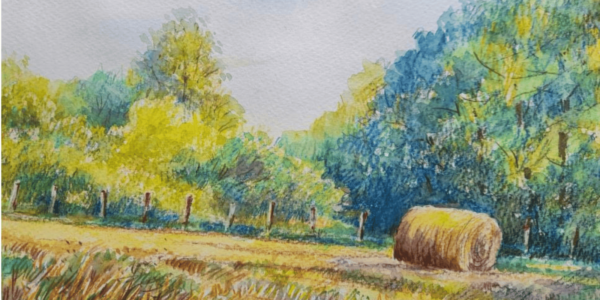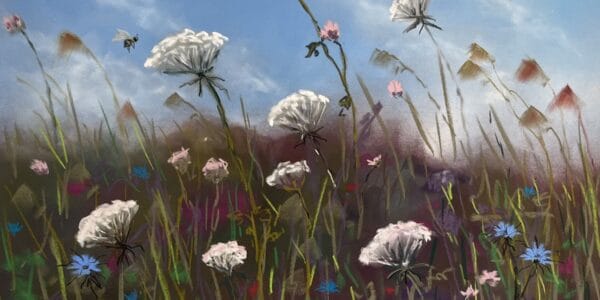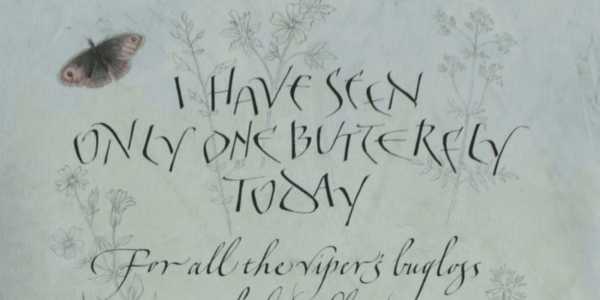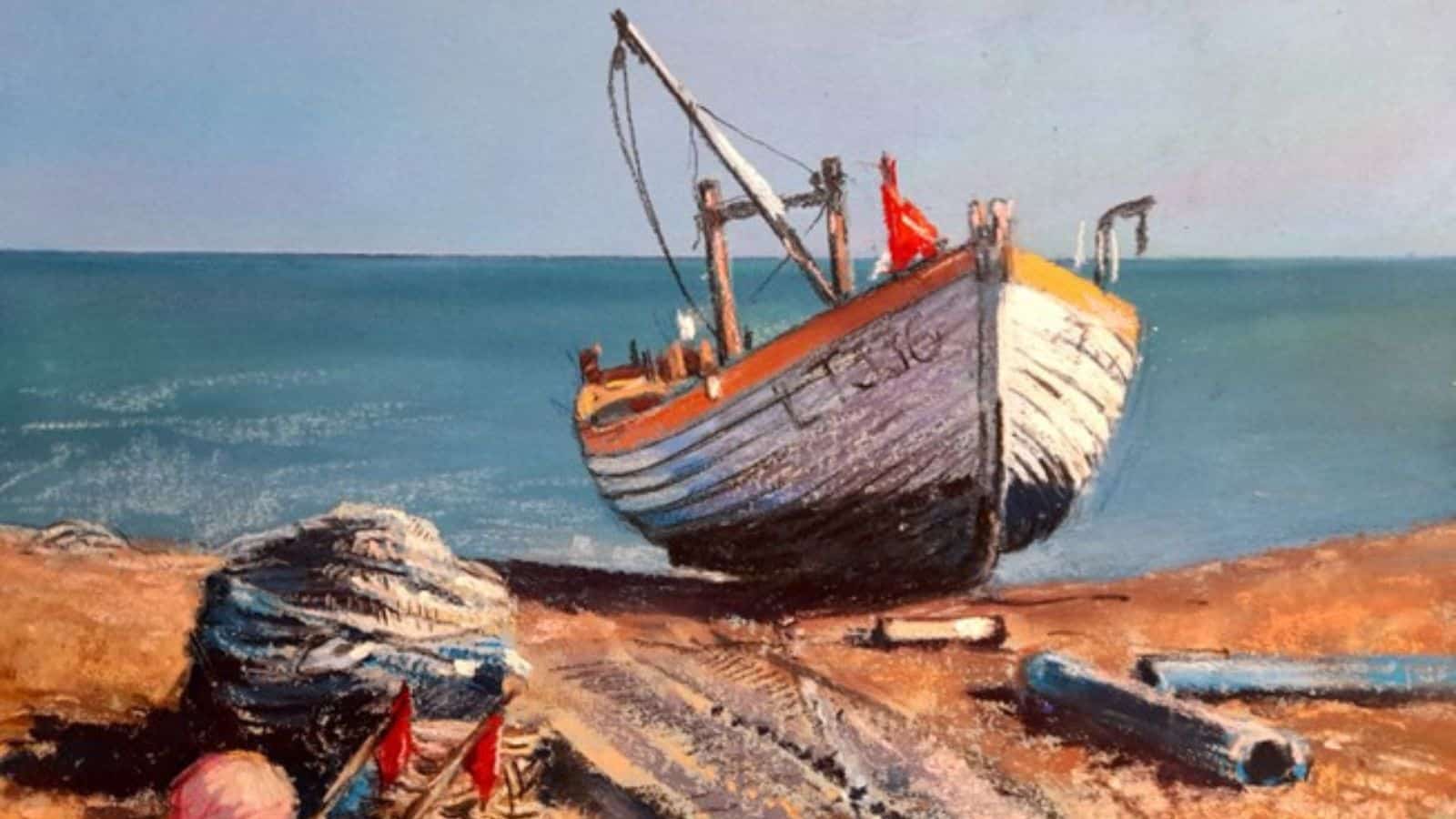
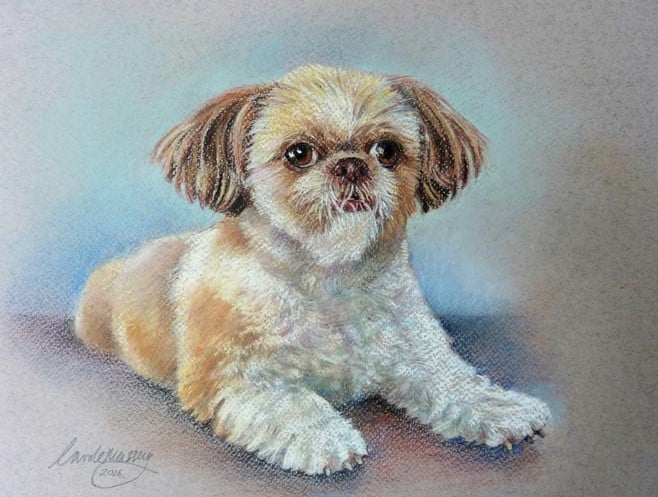
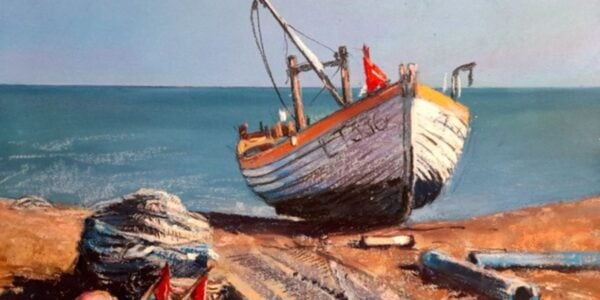
Soft pastels and pastel pencils are a vibrant and inspiring medium. They are ideal for capturing the colours and texture of the landscape and the buildings at Flatford Mill. Soft pastels and pastel pencils are a great medium for the subtle hues in a human portrait or the texture of an animal’s fur.
Read more
Carole’s informative and enthusiastic demonstrations will guide you through a range of exercises to develop and extend your skills using this versatile and forgiving painting medium. Suitable for all abilities.
On Saturday we will do a series of exercises practising blending and mark making techniques for using soft pastels and pastel pencils on paper and/or textured board in addition to looking at colour principle. These may include tree studies, colour mixing for shadows, and recreating the texture of an animal’s coat. Topics such as composition, tonal contrast and working from photographs will also be covered. After a series of exercises, you will be able to work on your own choice of subject – a landscape, or portrait of a well know face, family member or an animal or pet.
On Saturday evening there will be a demonstration after supper in the studio
On Sunday you will continue working on your own choice of subject whether it’s landscapes, portraits or animal studies. Those who want to concentrate on landscapes may wish to do some sketches or work outside, depending on the weather. Others may prefer to work in the studio from their own references.
About the tutor
Carole Massey
Carole Massey is a popular and supportive tutor who has been teaching at Flatford Mill for over 20 years. She managed her own successful design partnership before returning to her first love of painting, which currently involves tutoring, demonstrations, private commissions, and exhibitions.
A recent portrait commission for the Bank of England of Sir Charles Bean, deputy governor now hangs in the bank in perpetuity. She is a regular contributor to The Leisure Painter magazine, has written many teaching Art books, published by Search Press, with international sales exceeding 250,000. Her latest books are “Drawing for the Absolute Beginner” and “The Beginners’ Guide to Drawing Portraits” which will be on sale on the course. She has exhibited and demonstrated at the Mall Galleries, London, and her work is in a number of private collections in the UK and abroad. She lives in Suffolk.
Email address: [email protected]
Explore our range of drawing and sketching courses hosted by our engaging tutors and learn from their expertise and skills. Our art courses are a chance to meet like-minded people, a chance to unwind from everyday life, and a great opportunity to experience the UK’s glorious countryside surrounding our field centres.
This course is open to participants aged 18 and over only. For under-18s, please contact the centre directly or see our young people courses and activities for families.

Example Timetable
Arrival Day
Check-in is between 1600-1800, if you are arriving after 1800 please advise us, so we can ensure you are advised of access codes, room key location, and room location.
You will meet the tutor at dinner, and you will have your first session after dinner.
What's Included
-
 Expert Tuition
 -
 Free Wi-Fi
 -
 Full Board Accommodation
 -
 Hot and Cold Drinks
 -
 Picnic Lunch
Refreshments are included, but please bring a packed lunch with you.
Before You Attend
What to bring
Soft pastels
A good range of artists quality soft pastels e.g. Winsor &Newton, Daler Rowney, Schminke, Unison, Sennelier) to include a wide range of colours including some darks, depending what subject you wish to paint.
Pastel pencils
Useful for the initial sketching process and adding fine detail. If you are only using pastel pencils, then a good range of colours is advisable - perhaps 24 or 36 minimum. Makes such as Derwent, Carbothello, Faber Castell, Caran D’Ache etc are ideal. In addition, a white soft pastel for bright highlights is very useful.
Pastel paper and textured board
Pads or loose sheets of Canson Mi-Teintes, Daler Rowney “Murano” or Fabriano “Tiziano” paper OR if you prefer to work on a more textured surface, Canson Mi-Teintes “Touch”, Pastelmat, or Art Spectrum “Colourfix” are all good. Choose colours to suit your subject: Size approx. A3 (12” x 16”)
Other materials
- A stump (or torchon), cotton buds or colour shapers for blending
- A kneadable eraser or blue tack
- An apron or shirt to protect your clothes.
- Masking tape or clips to secure loose sheets of paper to a board
- Fixative - optional
- Paper or Glassine to cover your finished work.
- Suitable photographic reference for landscapes, people or animals. For portraits of people, try to avoid a mouthful of teeth: ensure your reference is good quality and has sufficient detail; work from several photos if necessary for the perfect pose.
Opportunities to attend this course
-
Tue 01, June 2027 09:30 - 17:00