
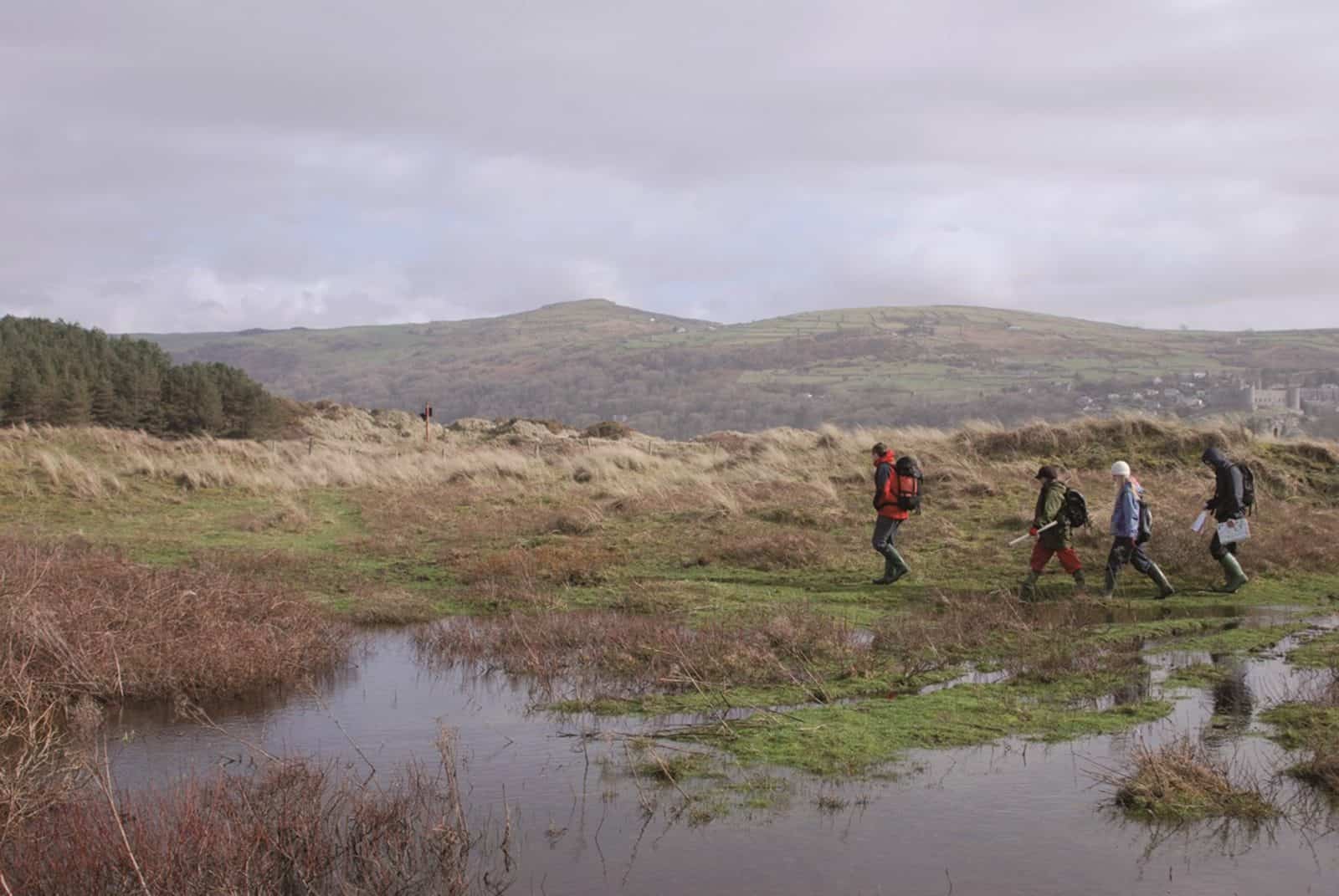
A 5-day Biology course at a Field Studies Council centre offers an unrivalled opportunity for students to develop their practical skills and deepen their understanding of ecological syllabus content in a variety of inspiring habitats and collect data for their project task.
Our tutors will provide expert guidance on suitable topics and facilitate the planning and carrying out of experimental research.
Example Timetable
The following is an example of how a 5-day course might look. Our courses are as flexible as possible to meet your requirements, and there is also some variation between what is offered at specific centres due to habitat availability.
Day 1Arrive Midday
Welcome by staff, centre tour and introduction, pre-course meeting of staff and teachers, allocation of wellies and waterproofs as appropriate.Afternoon
Introduction to Sampling Students discuss key ecological terminology and ecosystem components before evaluating a range of techniques to survey wild organisms in the centre grounds. This session explores how sample an ecosystem using different types of quadrats, transects and sampling strategies as well as trying out equipment to monitor abiotic environmental factors.Evening
Remote Sampling How do we monitor mobile organisms? How about organisms which are active at night? In this evening session students explore field techniques and equipment used in ecological studies, then conduct some humane trapping of nocturnal mammals and invertebrates. Day 2Morning
Monitoring Wild Populations (including follow-up to remote sampling) We will open the nocturnal traps from the previous evening and identify our finds to species level. We will then attempt to quantify the population of a sample of mobile animals using mark-recapture methods. Habitat Exploration Students will visit a habitat such as rocky shore, freshwater or woodland and consider the factors affecting the distribution and abundance of species within it. They will learn fieldwork techniques to measure a variety of biotic and abiotic variables. Back in the classroom, they will explore techniques for the analysis of data including worked examples of statistical tests.Afternoon and evening
Rocky Shore Zonation & Adaptation How do organisms survive on the rocky shore? What influences their distribution? Students will conduct a transect study of the rocky shore to investigate the distribution of organisms on the shore and the abiotic factors affecting their survival. Back in the classroom, they will analyse their data using kite diagrams and Simpson’s Diversity index. Day 3Morning
Projects – Research
Students will identify a topic to investigate, carry out background research, formulate their aim and hypothesis, and identify variables. They will plan their experimental procedures, taking into account health and safety considerations and the availability of resources.Afternoon and evening
Projects – Pilot Study
Students will begin their experimental work, trailing their methods and allowing time to make modifications to their procedures informed by the results of their pilot study. Day 4Morning and afternoon
Projects – Data Collection
Students will conduct their experimental work, carrying out sufficient independent replicates.Evening
Projects – Data Processing
In the evening students can process their raw data and begin their data presentation. Day 5Projects – Results and Discussion
This session allows students time to complete data processing and start to present and analyse their data, conducting any statistical tests as appropriate.Depart Midday
How this course fulfills the specification
Field techniques for biologists
Health and safety Sampling of wild organisms Identification and taxonomy Monitoring populationsParasitism
Niche Parasitic life cycles Investigative biologyScientific principles and process
Scientific method Scientific literature and communication Scientific ethicsExperimentation
Pilot Study Experimental design Sampling Reliability Presentation of dataReporting and critical evaluation of biological research
Background information Reporting and evaluation experimental design Data analysis Evaluating results and conclusions
Added value of this course
Why Choose Field Studies Council?
-

Expert tuition by fully trained staff
-

Stunning locations across the UK
-

Outstanding curriculum knowledge
-

Rigorous health and safety procedures
-

Support before and after your visit
-

Free places for visiting staff