
From the very first snowdrops of January to the last damselflies of early summer, thousands of eyes across Britain have been watching nature awaken, and you’ve helped us capture it!
The Signs of Spring Survey, run in partnership by the Royal Society of Biology and the Field Studies Council, entered its second year with a simple mission: get people outdoors, spotting the first signs of the new season, and sharing what they see. Together, we’re not only celebrating the magic of spring but building an important long-term record to help scientists track how climate change is shifting seasonal patterns.
Like past years we focused on 10 key signs of spring and asked the public to log on our interactive map when and where they saw them along with basic environmental data such as weather and temperature.
2025 highlights
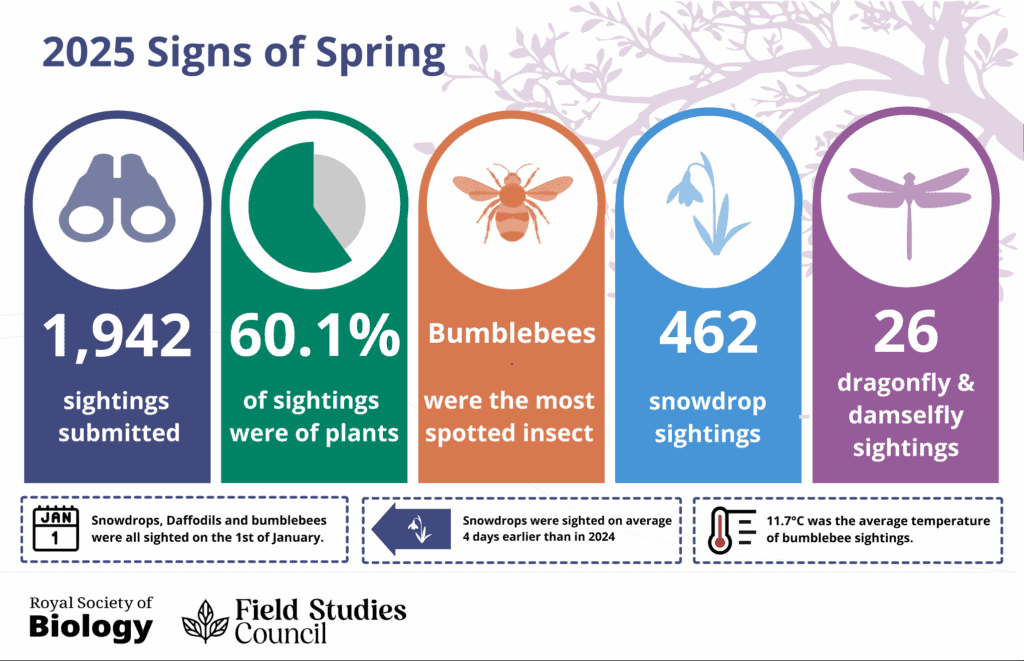
This year we’ve had 1,942 submitted observations between the 1st of January and the 18th of June from within the UK. Nearly half of all records were submitted between 16th February and the 18th of March. Despite focusing on the UK, we also gathered 9 records from overseas.
Top 10 signs This year Snowdrops were the most reported sign with 462 sightings. Bumblebees were the most reported invertebrates with 299 sightings. Dragonflies and damselflies remained our rarest find with just 26 sightings in 2025.
As with previous years, urban areas, particularly London stood out as hotspots for observations, although this is likely due to higher populations of people in these areas, rather than a concentration of spring activity. This year has seen some records from isolated areas including the northern Isles.
2024/2025 in comparison
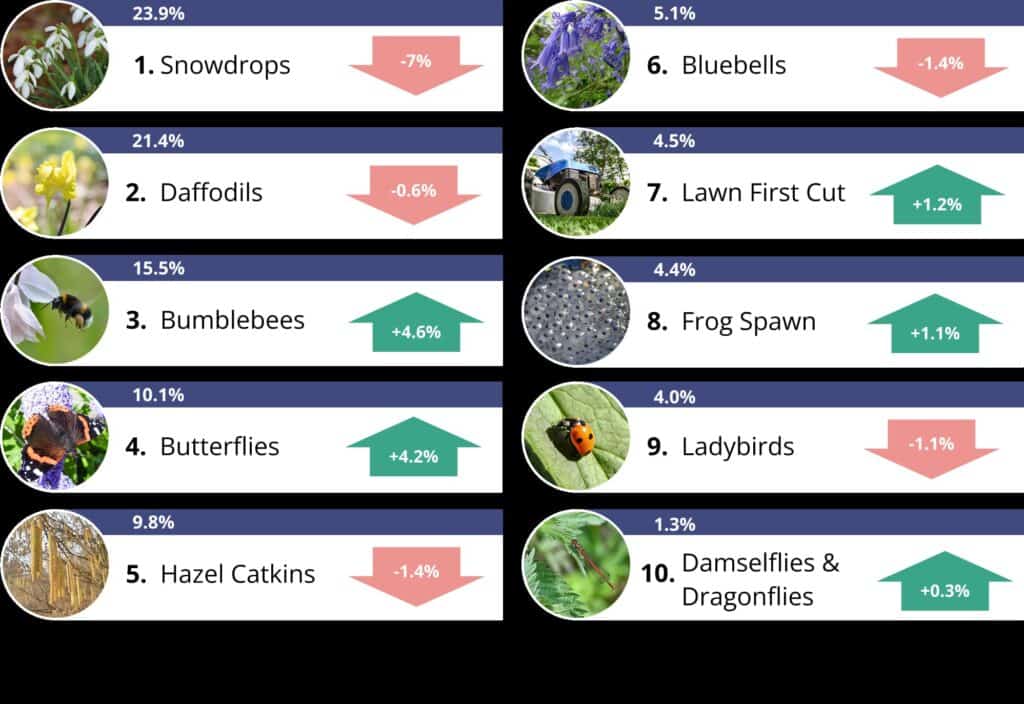
This year we featured on national television, 9 live radio interviews, 2 radio programmes and a podcast. As a result, we received a good number of records across the country to add to our ever-growing dataset. We were able to use this data to show changes in percentage of recorded signs between 2024 and 2025.
The image below shows changes in percentage of records for each of the 10 recorded signs of spring.
Why it matters
By tracking the same 10 key indicators each year, from the first lawn cut to ladybirds and bluebells, we’re building a valuable dataset that can reveal long-term changes in our seasons. Each observation adds a piece to the bigger picture, helping conservationists understand and protect our wildlife and habitats.
Looking ahead
The Signs of Spring Survey isn’t just about recording what you see, it’s about deepening our connection with the natural world, learning new skills, and taking part in real science. We’re committed to making the survey even more inclusive and accessible, so that more communities can join in.
Thank you to everyone who took part in 2025, whether you spotted one snowdrop or a whole meadow in bloom, your contribution matters.
What next?
📅 We’ll be back in 2026, ready to see what changes another year will bring. In the meantime, you can explore this year’s interactive map and learn more here: field-studies-council.org/signs-of-spring