
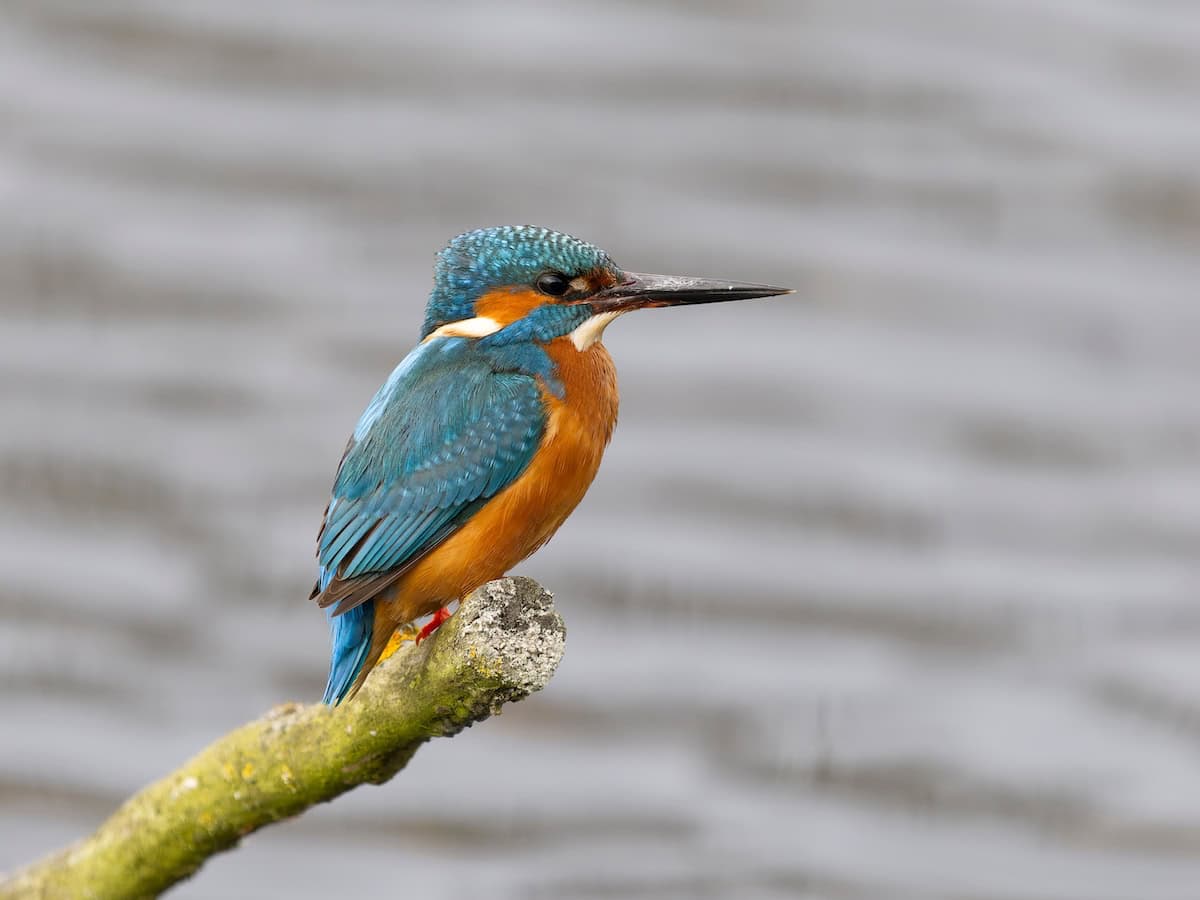
Steve Docker is a Resource Development Officer with Field Studies Council Publications. Here he describes some wildlife highlights from a short break exploring the River Stour and surrounding area.
Constable Country
Many people visit ‘Constable Country’ for its big-sky landscapes, immortalised by the famous landscape painter John Constable. In September 2025 my wife and I explored this stunning area along the Essex/Suffolk boundary. We followed the River Stour, pronounced by most to rhyme with hour, though some favour tour.
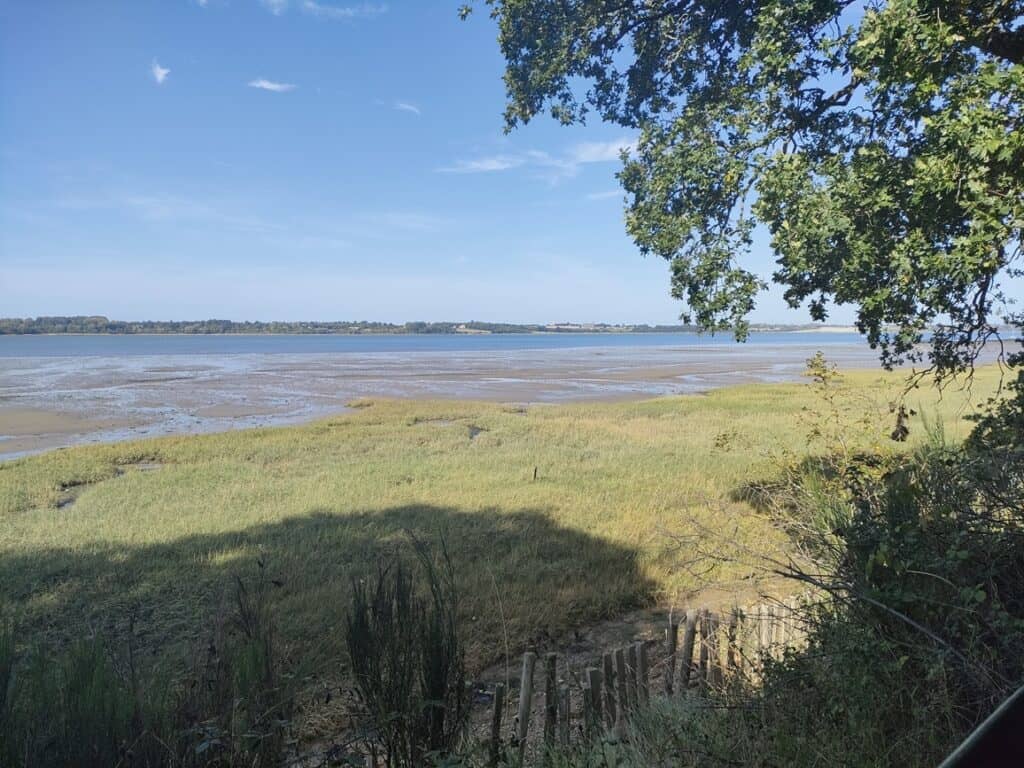
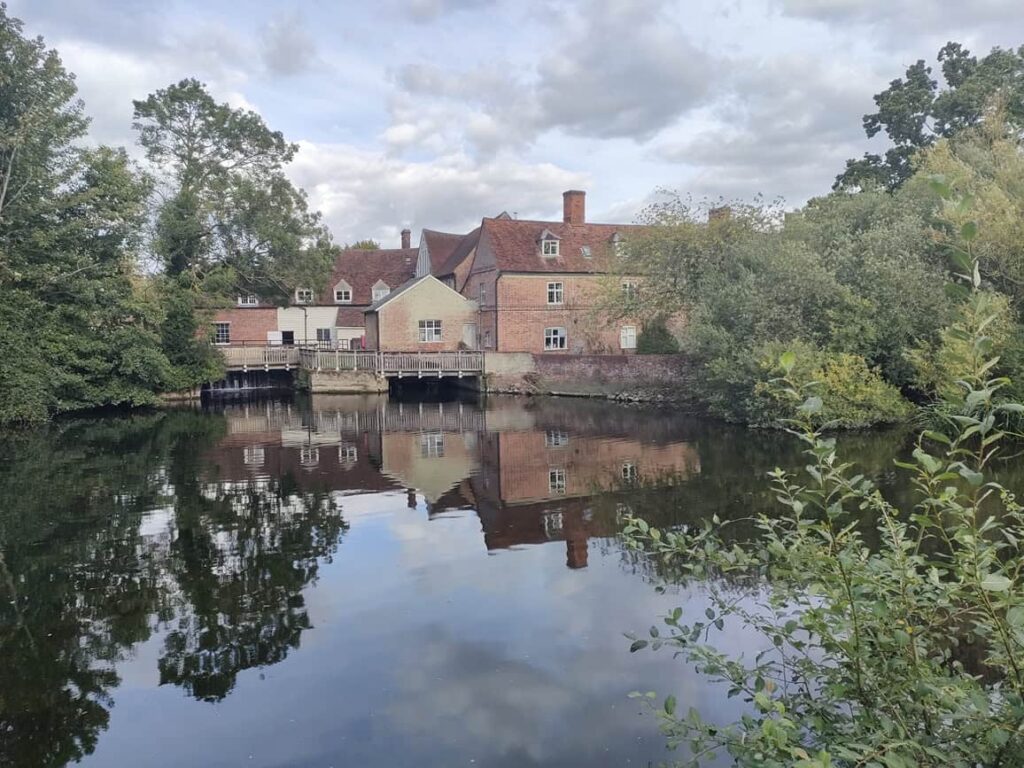
From our base in Nayland, through Field Studies Council Flatford Mill, to the Stour Estuary, our playground covered about 15 miles (24km). Our focus, as always, was natural history, but we were also drawn to the old pink walled buildings that give the area so much character. Here are some of the (very edited) highlights.
Dedham to Flatford Mill
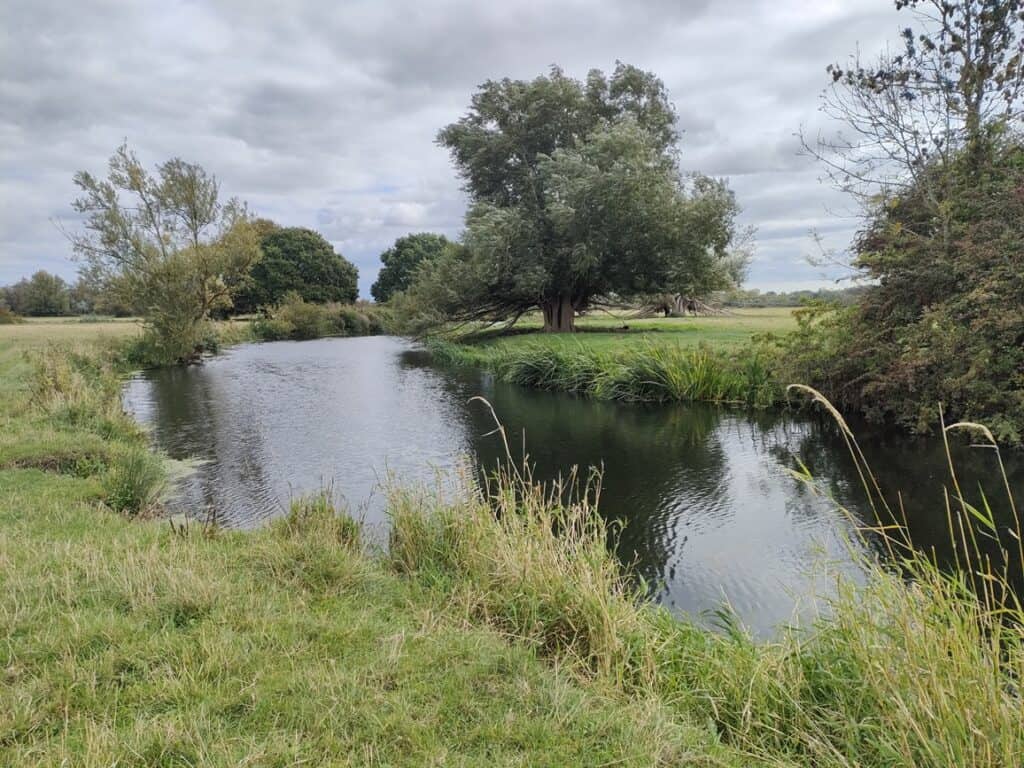
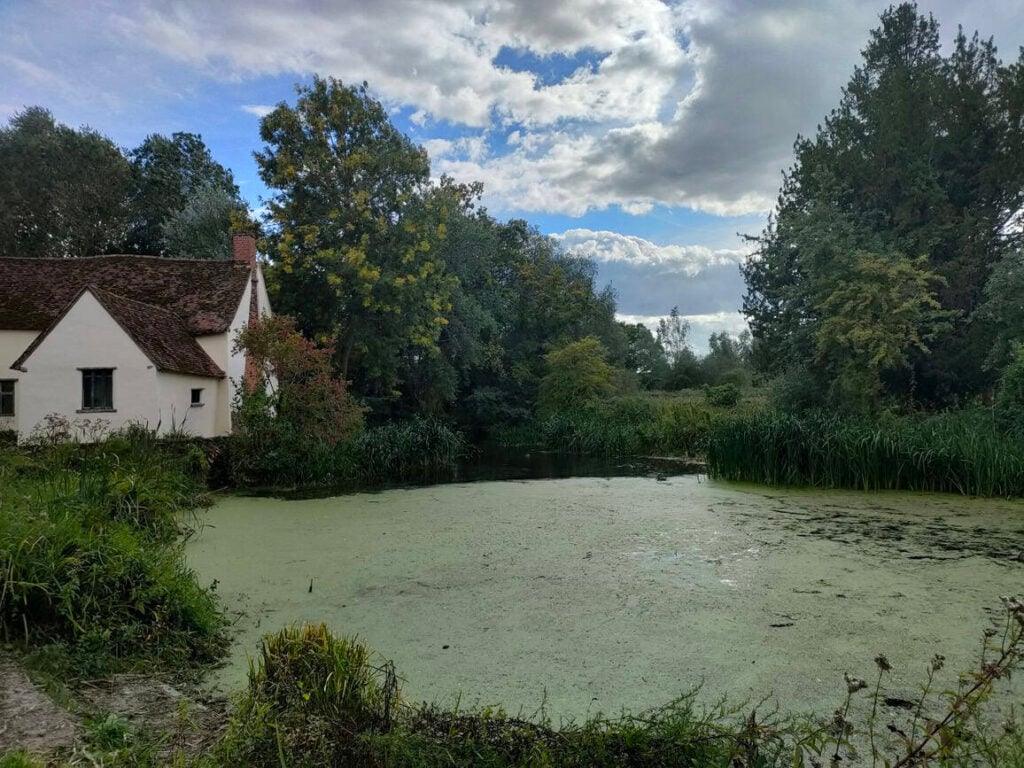
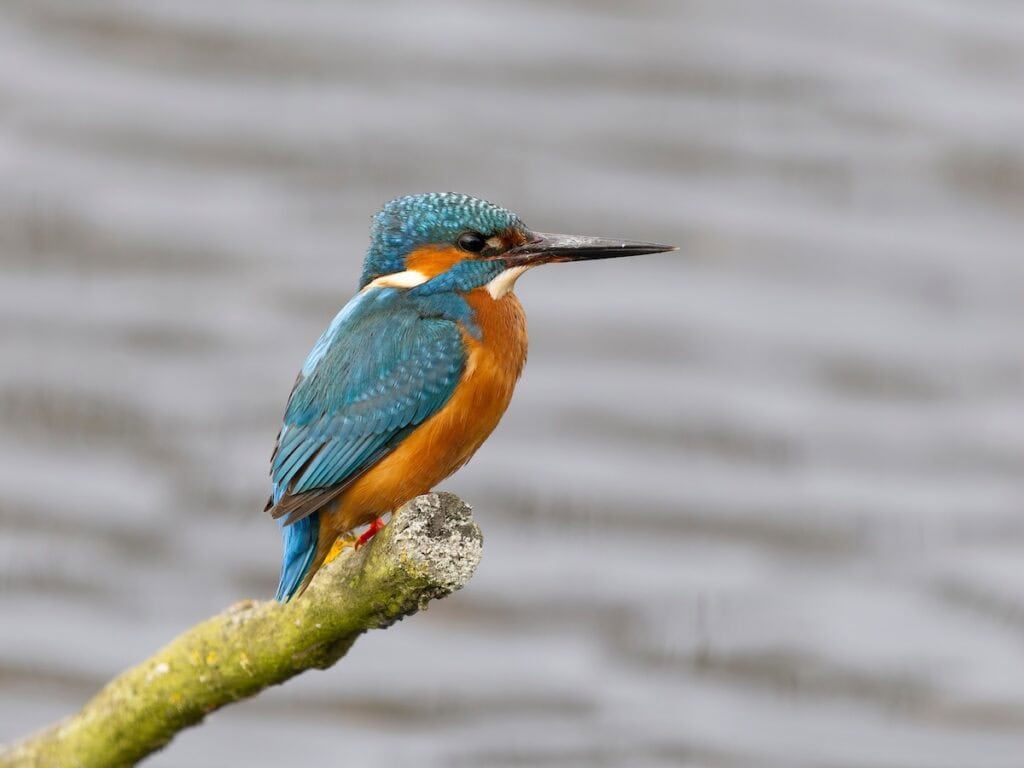
Our journey began with a gentle walk from Dedham to Flatford Mill near East Bergholt, returning along the same route. The walk was made extra special by four separate encounters with Kingfishers Alcedo atthis, each flash of turquoise and orange a reminder of the Stour’s rich wildlife. The walk also brought back fond memories of my previous visits to Flatford Mill, where I first attended a fungi course nearly 20 years ago. My last visit was in 2012 but perhaps the most memorable was ‘Trees and Woodland in the British Landscape’ with the late Oliver Rackham in 2007. Check out ‘Perfect Pub Walks with Bill Bailey’ (Channel 4, Episode 2). Bill and Sir Trevor McDonald take in Dedham Vale and the Stour Estuary, including Flatford Mill.
Wolves Wood
We had a particularly productive time at RSPB Wolves Wood. Located to the north of the Stour, it is an ancient woodland and home to an impressive range of species, especially fungi.
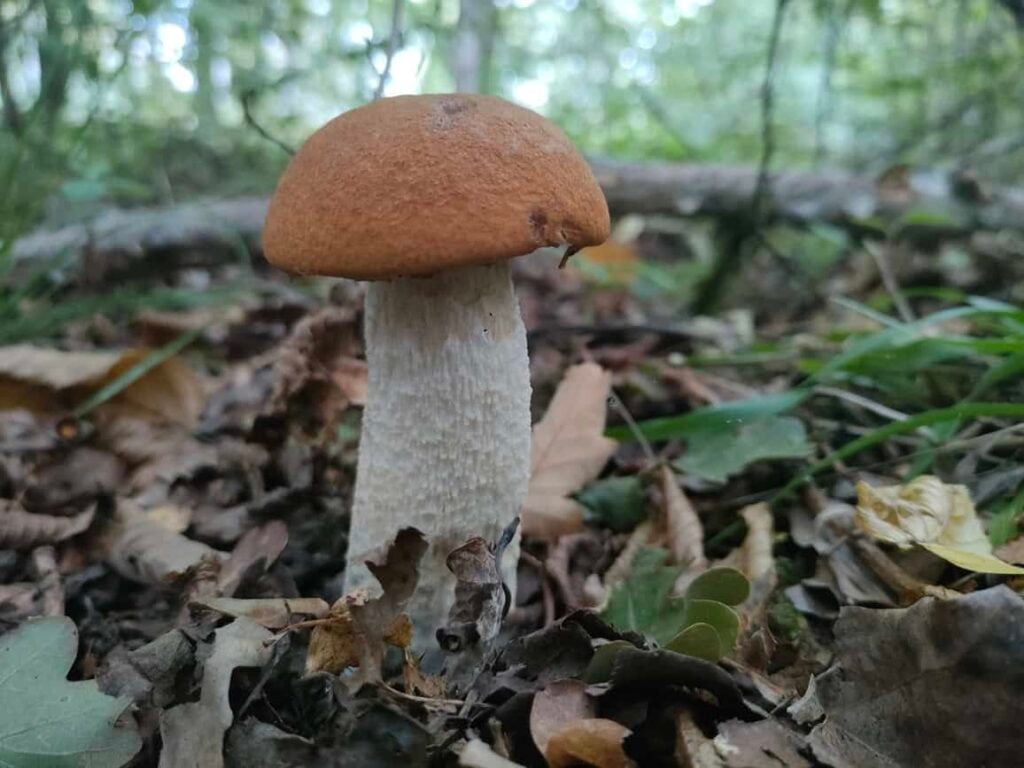
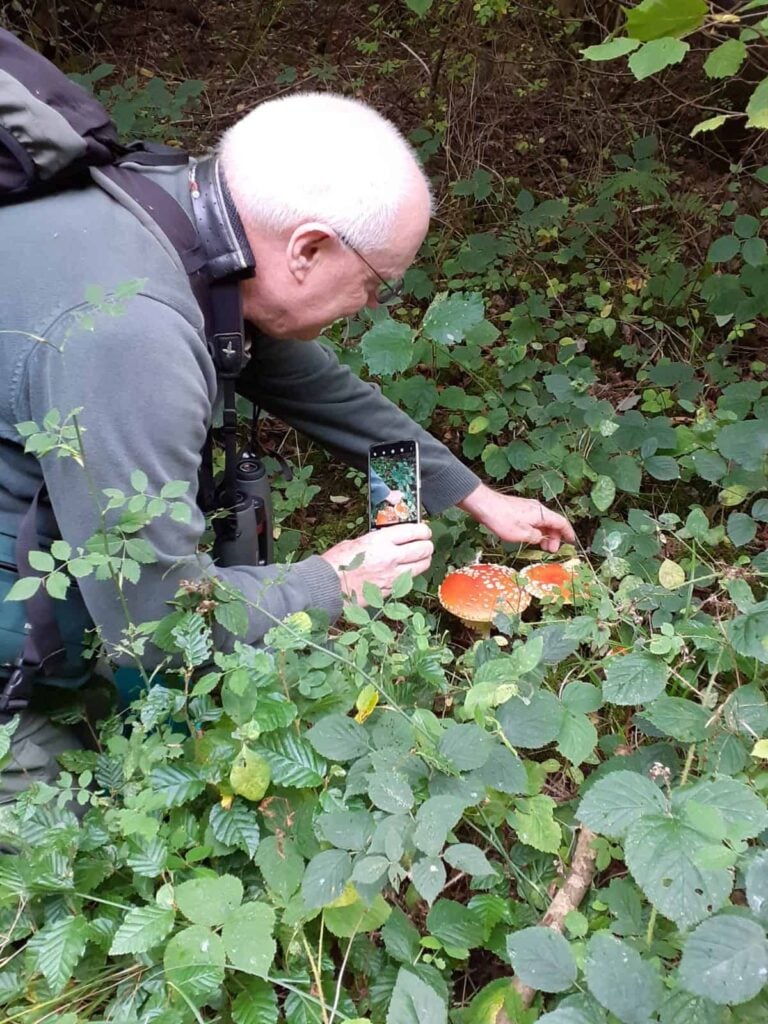
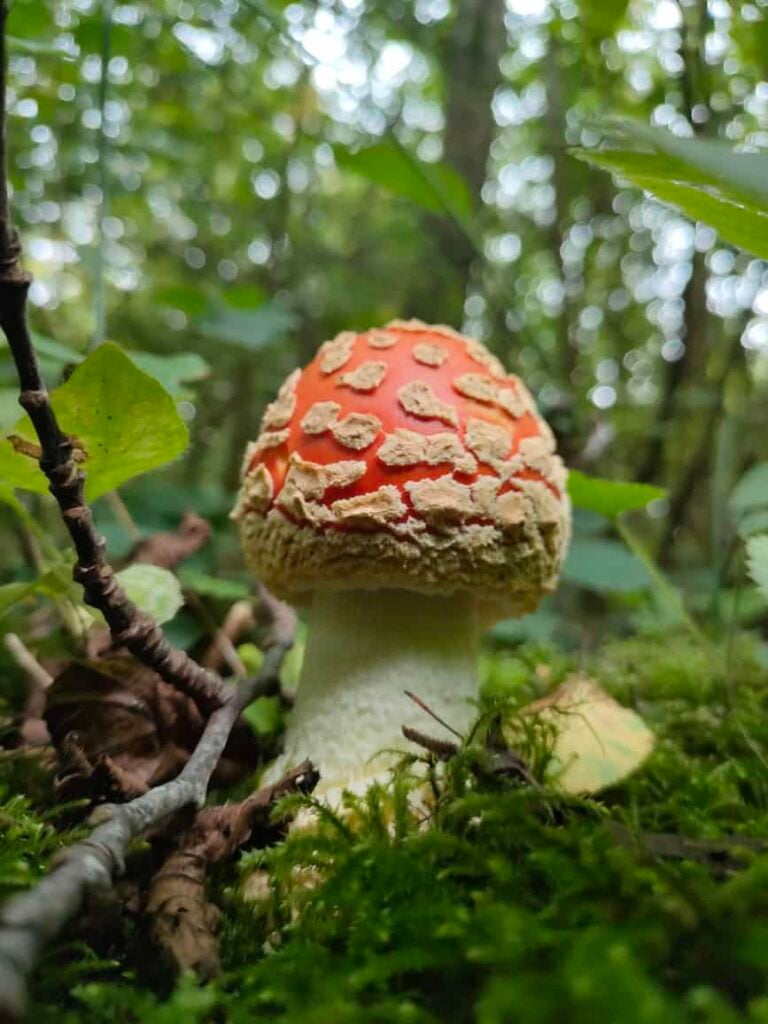
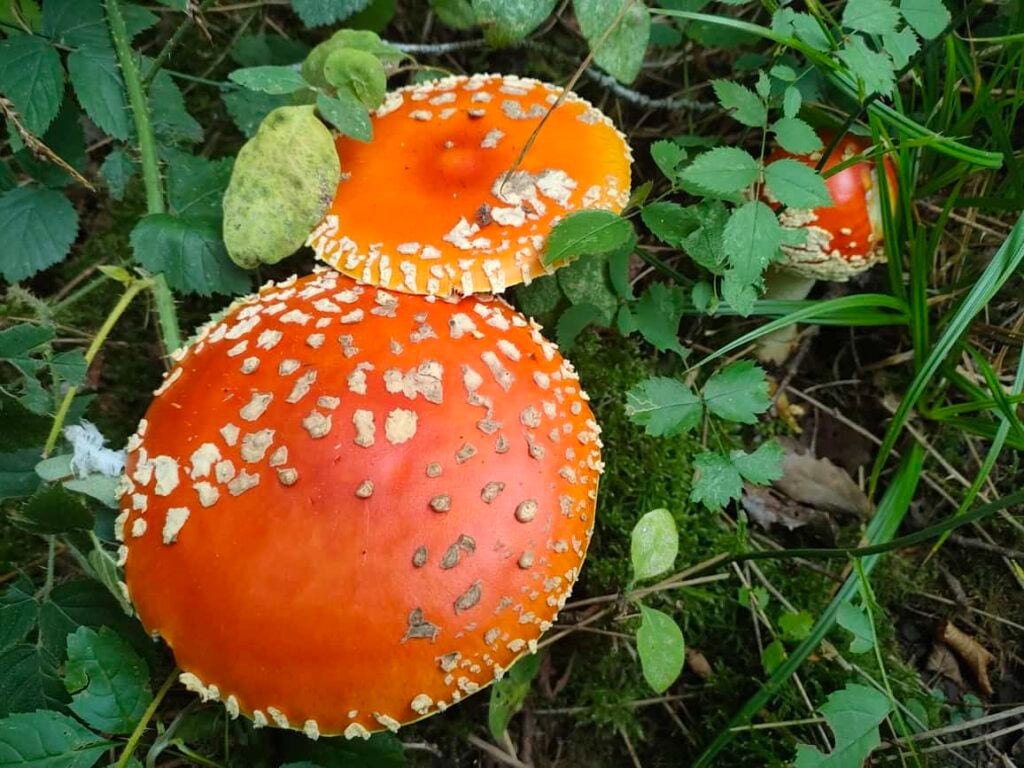
We found the uncommon, orange capped, Aspen Bolete Leccinum albostipitatum growing alongside a Poplar (Populus) tree. There were clusters of very large Fly Agaric Amanita muscaria, their scarlet caps with cream spots (volva remnants) clear to see.
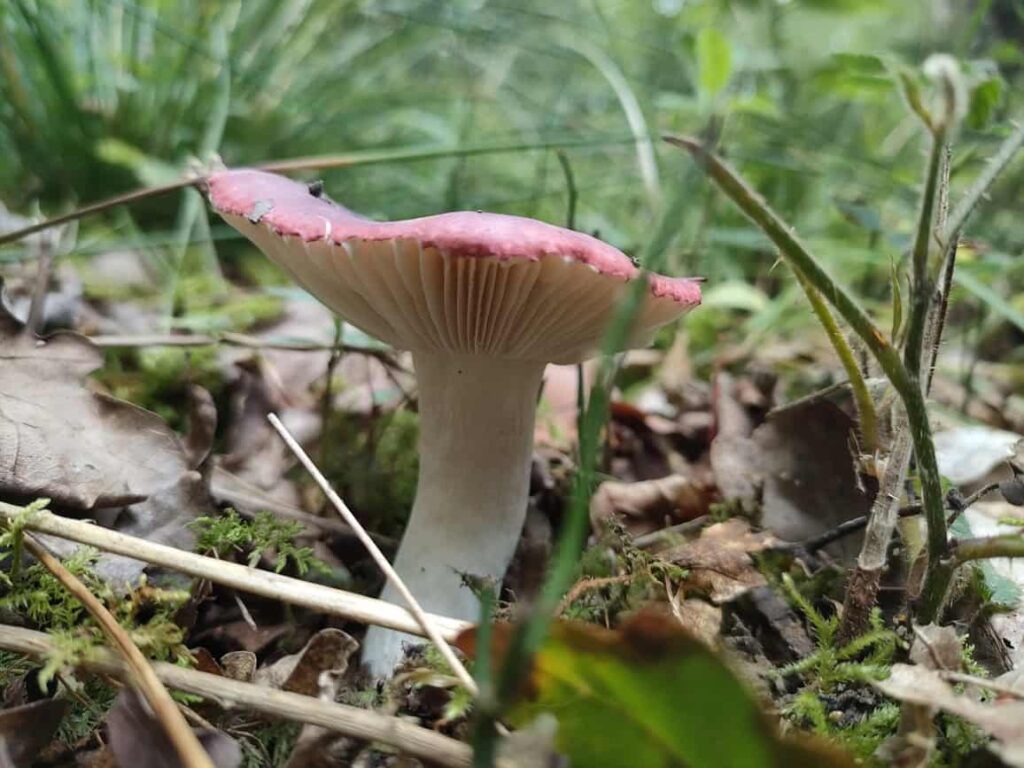
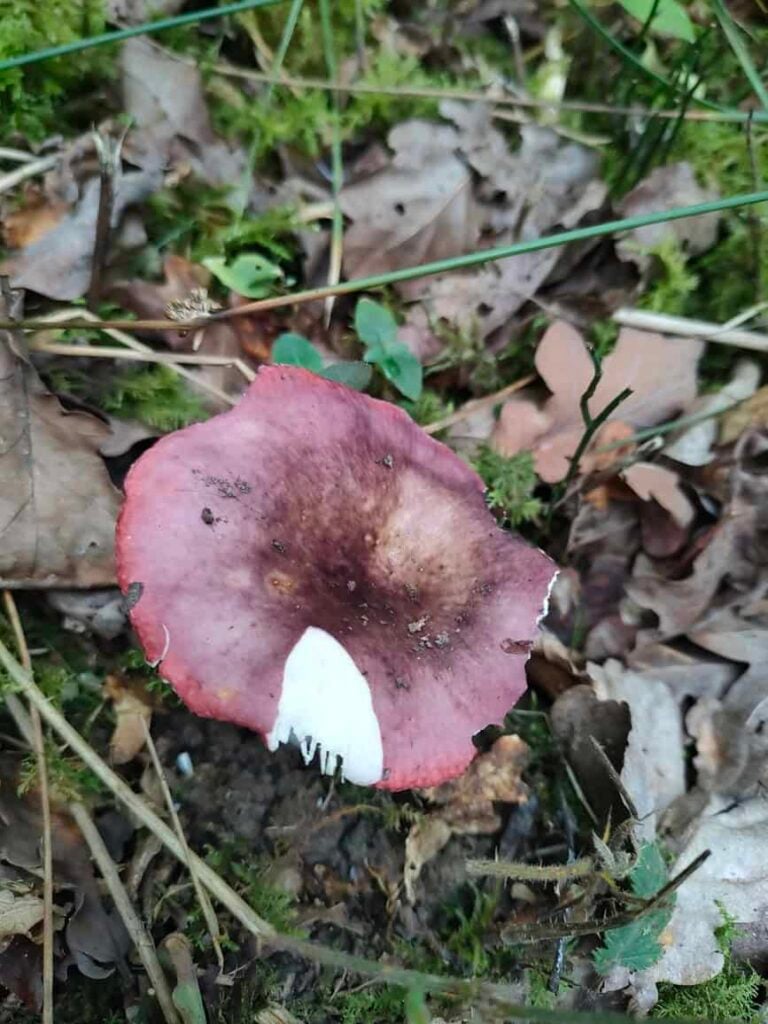
The Fragile Brittlegill Russula fragilis was more difficult to identify. I recognized the genus and remembered that the ‘cuticle peel’ test on the fresh specimen could be important. So, I carefully pinched the edge of the cap between my fingernails and gently peeled back the violet surface layer until it broke off, revealing white flesh beneath. It broke off at about 2/3rd of the cap radius. The specimen was identified later with the help of mycologist Geoffrey Kibby.
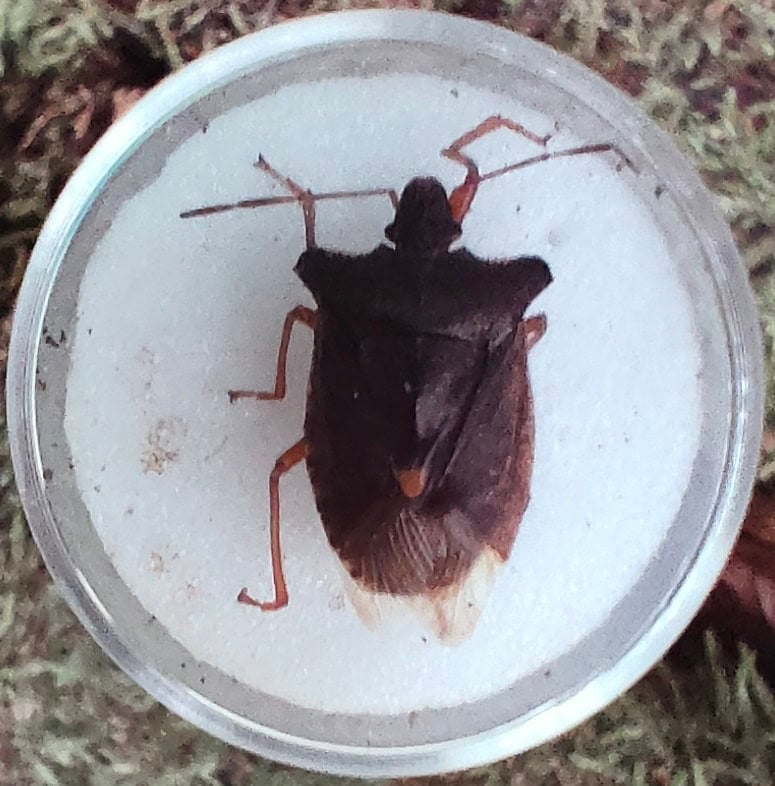
Sitting quietly beside a pond allowed wildlife to come to us. Many birds checked-in, including a tiny Goldcrest Regulus regulus and a flock of Long-tailed Tits Aegithalos caudatus. Whilst taking a break to eat some fruit cake, a Red-legged Shieldbug Pentatoma rufipes, with distinctive, square-cut shoulders and orange spot on its back (tip of scutellum), gatecrashed the party and landed in my lap!
We ended a wonderful day in Lavenham, admiring the medieval timbered buildings and enjoying a drink in the Airmen’s Bar at The Swan.
An unexpected bonus
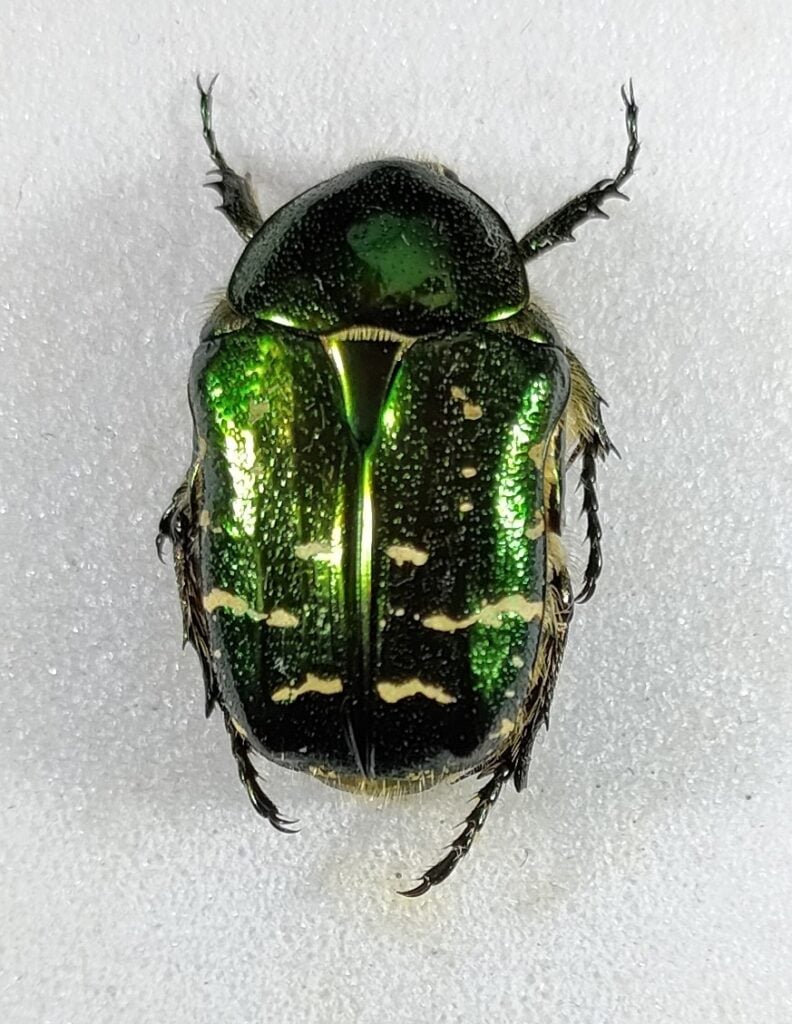
Back at our base in Nayland, I was delighted to spot a gleaming Rose Chafer Cetonia aurata. Metallic green, with creamy white streaks across smooth wing cases (elytra) and a large V-shape on the back where the wing cases meet (scutellum). It just goes to prove that encounters with wildlife can happen anywhere.
A Landscape of Nature and Art
The River Stour offers far more than Constable’s classic views. From kingfishers to fungi, ancient woodlands to saltmarsh estuaries, it is a landscape where art and natural history meet.
Want to learn more?
The Field Studies Council run a range of courses, both on-line and at study centres. In addition, there are a range of resources available at eclectic-ecologist
To help us all appreciate and enjoy biodiversity and better understand the changing state of nature the Field Studies Council has produced a wide range of high-quality identification resources such as the WildID fold-out guides and Aids to Identification in Difficult Groups of Animals & Plants (AIDGAP). All guides, including the NEW AIDGAP Guide to distinctive terrestrial beetles and WildID Distinctive fungi on wood, are available from the Field Studies Council online shop.