
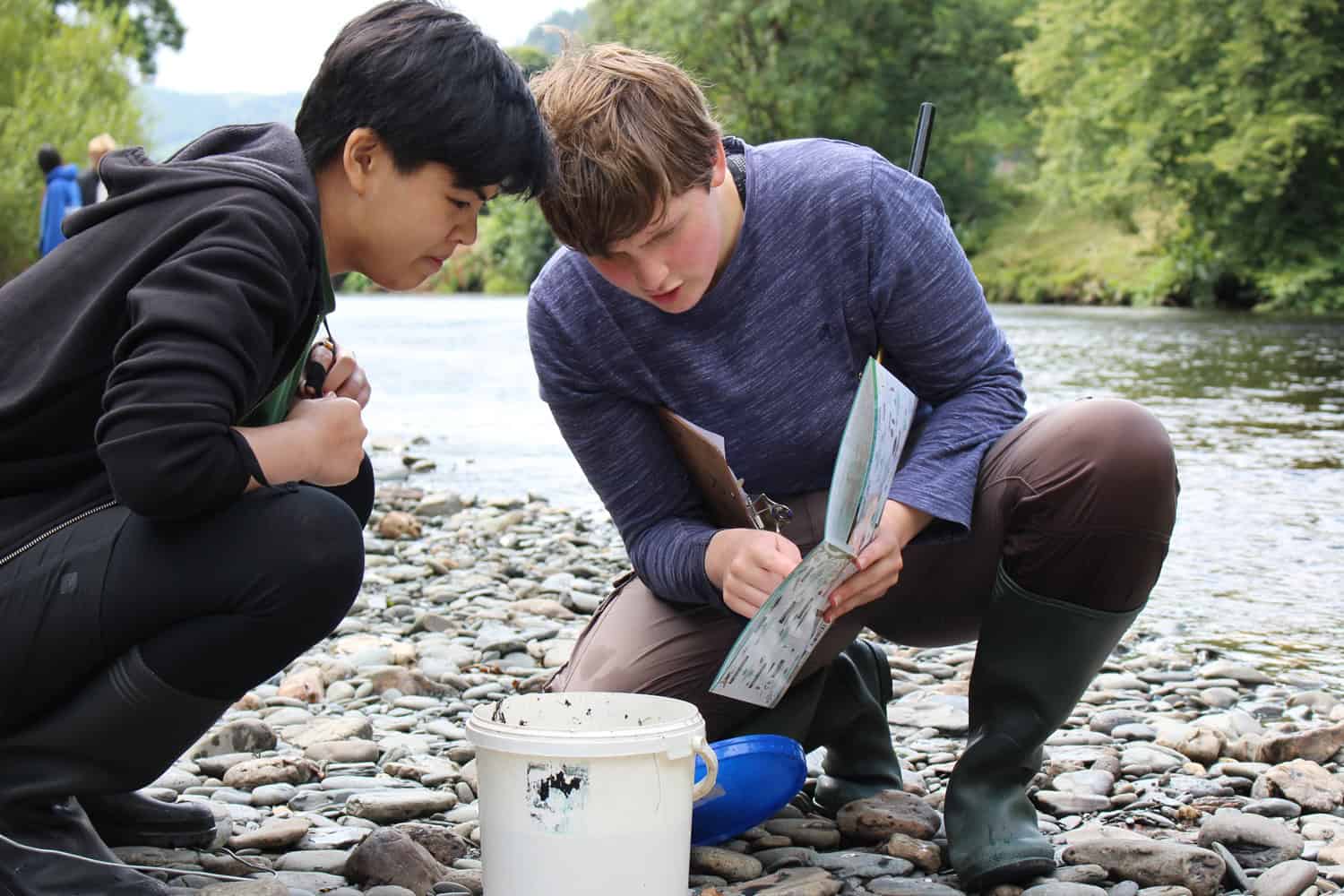
We have collaborated with Cambridge OCR to develop this course for the fieldwork and environmental learning required in the Level 3 AAQ Applied Science unit F180 – fundamentals of science, specifically the Biodiversity and Ecosystems topic.
This day of real science in action combines hands-on fieldwork with data analysis to deepen understanding of ecosystems and sampling techniques. Students will collect, analyse, and interpret data to build skills in scientific enquiry, critical thinking, and environmental awareness.
Supporting success in Applied Science
Fieldwork in Applied Science is the bridge between the controlled environment of a laboratory and the unpredictable beauty of the natural world. It involves taking scientific theories and testing them in “real-time” across various ecosystems across our diverse and accessible fieldwork sites. Our courses support teachers to deliver the biodiversity and ecosystems modules by bringing the classroom learning to life and allowing practical application of knowledge.
Course outcomes
Participating in an applied science course with us provides more than just data for a report; it builds a foundation for a future scientific career.
1. Master Technical Field Skills
You will gain proficiency in a wide range of sampling techniques, such as sampling techniques, precise measurements and fieldwork techniques in preparation for the NEA.
2. Data Literacy and Statistical Analysis
Fieldwork gives context in which to understand and develop skills in data analysis, statistical analysis and evaluative skills.
3. Personal and Professional Development
Beyond the science, these courses foster “soft skills” that are highly valued by universities and employers such as resilience, collaboration and critical thinking.
Example Timetable
This example timetable is based on a day running from 10:00-16:00 but times can be adjusted to suit your group and travel plans. There is also the option to extend the day to allow more time for fieldwork and more detailed follow up. Below is a typical programme but this can be adapted to meet your needs and/or the habitat availability at each of our centres.
Morning
Introduction to organisms and factors affecting distribution in freshwater environments.
Background content including relationships between ecosystem, community, population, habitat and niche. Food webs, trophic levels and energy transfer in ecosystems. Investigation set up to determine factors affecting the distribution of organisms in an ecosystem
Freshwater sampling
Measurement of biotic and abiotic factors, identification and density of organisms recorded.
Freshwater data analysis
Data analysis to draw simple conclusions such as energy efficiency, central tendencies, graphs. Links made to wider impacts of climate change and biodiversity loss.
Afternoon
Please choose from the following options:
Set up pitfall trap random sample
Two area comparison (woodland vs grassland) using random sampling to set pitfall traps for mobile invertebrate sampling. Soil sampling techniques. Benefits and limitations of random sampling.
Or
Transect investigation
Use of transects to sample plant abundance and abiotic factors to determine impact of trampling using quadrats.
How this course fulfills the specification
Although not an officially endorsed Cambridge OCR course, all content has been agreed to be relevant and supportive of learning necessary for 5.3.1 Unit F182: Investigating science. The example timetable covers the following:
- 4.1.1 the distribution of organisms
- 4.2.1 sampling techniques
- M0.3, M1.1, M1.2, M2.3
- 4.2.1 sampling techniques
- 4.2.2 practical 2: sampling
Added value of this course
- Develop personal skills
- Have fun
- Be inspired by a passion for the subject
- Build friendships
Why Choose Field Studies Council?
-

Expert tuition by fully trained staff
-

Stunning locations across the UK
-

Outstanding curriculum knowledge
-

Rigorous health and safety procedures
-

Support before and after your visit
-

Free places for visiting staff