
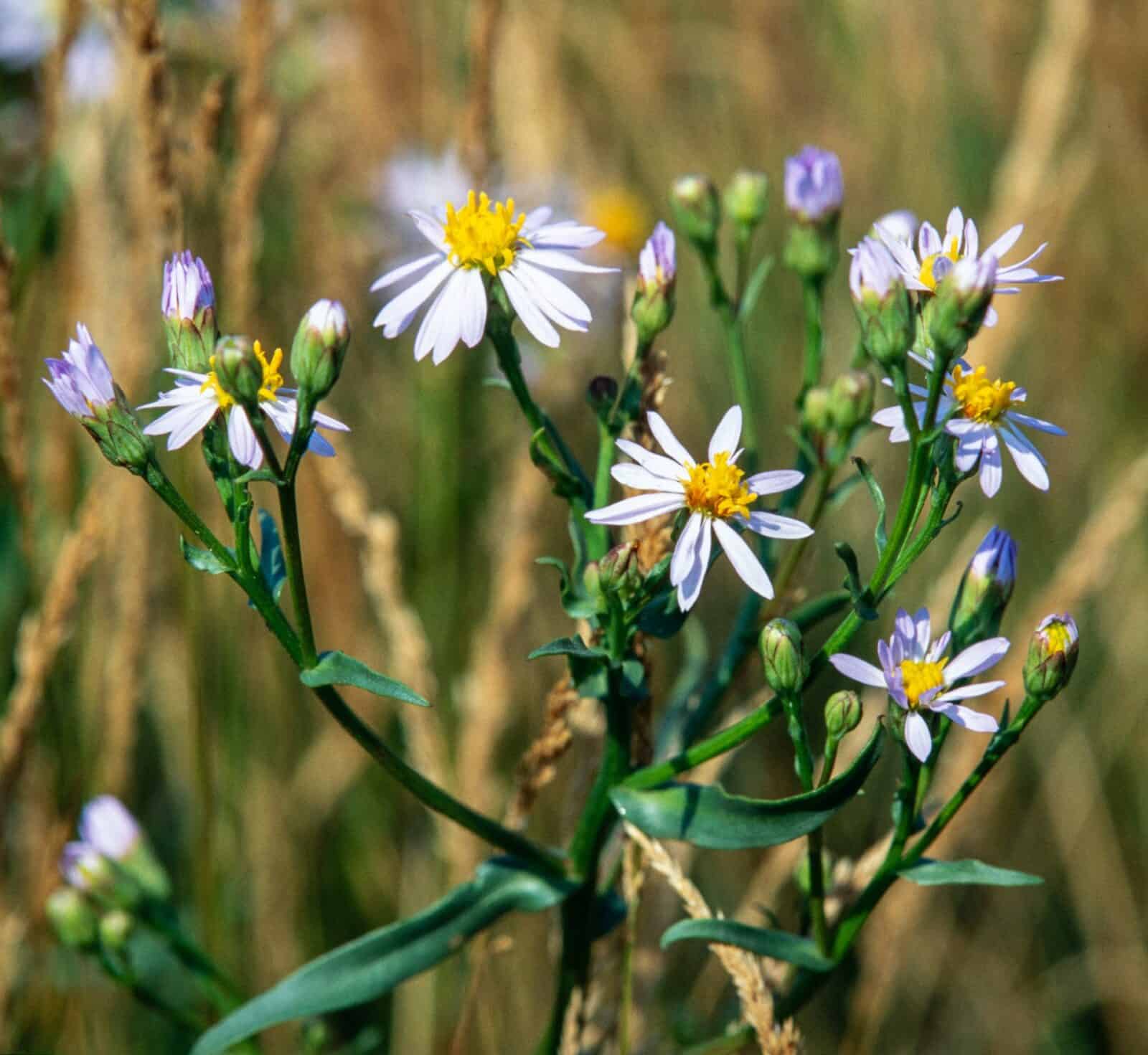
At the Field Studies Council, we often get requests to run courses for organisations across the country covering a wide range of Biodiversity topics. In 2026, by far the most popular topic for course requests has been saltmarshes!
Saltmarsh Habitats
Saltmarshes are one of the UK’s most valuable coastal habitats, providing important benefits for both wildlife and people. These dynamic wetlands support a rich variety of specially adapted plants, invertebrates, fish, and birds, including many rare and threatened species that depend on saltmarsh habitats for feeding, breeding, and shelter. Saltmarshes also act as natural coastal defences, reducing wave energy and helping to protect communities from flooding and erosion. In addition, they are highly effective carbon stores, capturing and locking away significant amounts of carbon in their vegetation and sediments, making them important in efforts to tackle climate change. Despite covering a relatively small area, UK saltmarshes play a vital role in maintaining biodiversity, improving water quality, and supporting resilient coastal ecosystems.
Although these habitats are incredibly important, we have lost 85% of our saltmarshes since 1860 (UKCEH), and they continue to be threatened by climate change, rising sea levels, human development, invasive species, and pollution. Training people to survey saltmarshes and engage with communities is essential to help with the restoration and protection of the UK’s saltmarshes.
Saltmarsh Training
Our training courses focus on exploring saltmarsh habitats. This usually includes identifying saltmarsh plants, learning how plant communities are zoned from the lower marsh to the upper marsh, and discussing the importance of saltmarshes and the threats they face.
This year, we’ve run nine courses across the country from RSPB Pagham Harbour on the south coast up to Wyre Estuary Country Park near Blackpool for organisations ranging from charities such as the WWT to public bodies including the Environment Agency and local authorities.
Five of those courses were run in partnership with the WWT as part of an exciting project at WWT Steart Marshes – The Steart: Connecting Coastal Communities (made possible with The National Lottery Heritage Fund). As part of this project, the Field Studies Council developed two new courses with the WWT ‘Saltmarshes: a Habitat Introduction’ (1-day) and ‘Saltmarshes: Identifying Plant Communities for Professionals’ (2-day). These courses were designed to introduce the community to saltmarshes and give learners the skills to start surveying, protect, and shout about how amazing saltmarshes are. You can read more about the project here.
Common UK Saltmarsh Plants
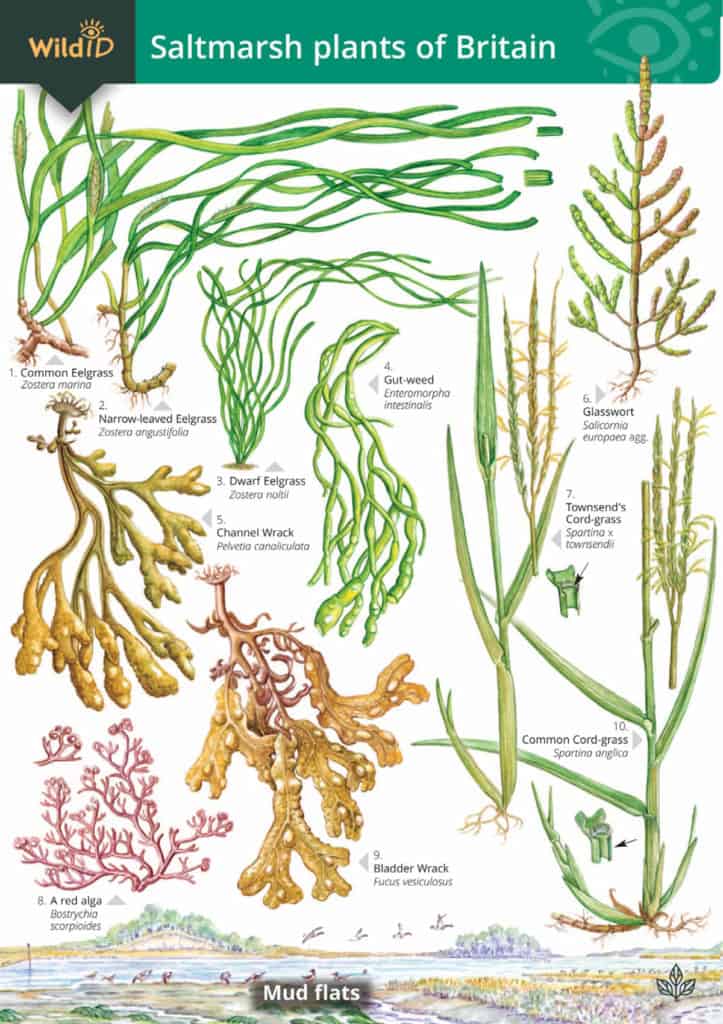
Common Glasswort (Salicornia europaea)
- A pioneer species that colonises bare mud in the lowest parts of the marsh (as well as being found higher up).
- The branched, fleshy, succulent stems are adapted to high salinity.
- Glasswort is usually a bright green, but can be tinged red or purple, especially in the autumn.
Sea Aster (Tripolium pannonicum)
- The flowers are distinctively daisy-like with a yellow centre and purple ray florets, with fleshy leaves.
- Sea Aster is an important nectar source for pollinators and is associated with the rare Aea Aster Mining Bee.
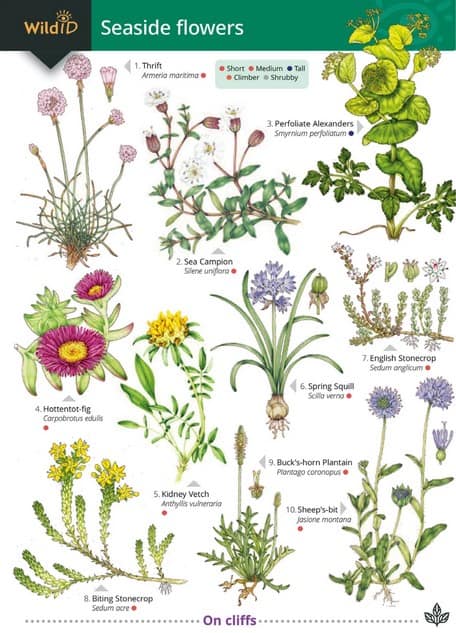
Common Sea Lavender (Limonium vulgare)
- One of the most recognisable and attractive saltmarsh species it is known for its clusters of tiny purple-blue flowers in late summer.
- The flowers have 5 petals and yellow anthers, with a rosette of leaves at the base of the stem.
Why not visit a saltmarsh and try and find these three species? We have two WildID Guides you can take with you to help you identify common saltmarsh species: Saltmarsh Guide or Seaside Flowers. When you are visiting a saltmarsh, make sure to stick to public footpaths and be aware of tide times, deep creeks, and mudflats.
Whether you’re a professional ecologist, local authority officer, volunteer or simply curious about coastal wildlife, learning more about saltmarshes is a great way to connect with one of the UK’s most important habitats. With these valuable ecosystems facing increasing pressures, understanding how to identify, monitor and protect them has never been more important.
Saltmarsh Tutor Profile – Ian Powell
After a few years of research work in coastal marine ecology, Ian Powell worked as an ecology tutor with the Field Studies Council at Slapton Ley (with lots of marine courses) and on overseas courses to South America. He has since taught undergraduate and master’s degrees in ecology and conservation biology at Edge Hill University, which has included running marine field courses at Millport. Ian also carries out regular botanical and butterfly surveys in the Yorkshire Dales National Park.
I would thoroughly recommend using the Field Studies Council for bespoke training. Our recent coastal plant ID course was excellent, the tutor was extremely knowledgeable and able to adapt to a wide range of knowledge levels within the group, making sure everybody got something from the course regardless of their prior knowledge. Booking was easy and the team were able to respond to any of my questions quickly. Our course was adapted to fulfil our needs with ease and with little effort on my part. The attendees from our team now feel more confident about delivering engagement sessions with communities in these habitats, so it has fulfilled our main aim. I would recommend these courses to any local authorities looking to train members of staff.
Ellie Brown – Our Future Coast – Wyre Council
The Saltmarsh Plant Species Identification course on 30 June 2026 received tremendous feedback from everyone involved. Our trainer, Ian Powell, brought a wealth of knowledge and enthusiasm for saltmarsh habitats, which shone through throughout the day. His engaging and accessible delivery enabled participants to gain a deeper understanding of these valuable environments and their importance to coastal ecosystems. The Field Studies Council was selected to deliver the training because it is widely recognised as a centre of excellence and has a proven track record of delivering successful saltmarsh identification courses. The booking process was straightforward and efficiently addressed all of the requirements that local authorities consider essential, including insurance, risk management, and health and safety arrangements. Based on the quality of the training, customer service and overall experience, I would have no hesitation in recommending the Field Studies Council as a training provider for local authorities and other organisations working within the natural environment sector. The combination of expert instruction, practical fieldwork and enthusiastic participation made the course a resounding success, helping to build knowledge, skills and appreciation of one of our most important coastal habitats.
Jane Cunningham MPP Project Officer, Chichester District Council