
We are committed to reducing our environmental impact, protecting nature, and helping people experience nature and sustainability in action. Across our learning locations, teaching, catering, travel and estate management, we are working to cut carbon emissions, use resources responsibly and support nature recovery.
“It’s clear that environmental sustainability should be at the top of the Government’s agenda when it comes to prioritising spending. Supporting environmental education, sustainable development, cleaner industry and a movement towards a low-carbon economy is essential..”
Mark Castle, Field Studies Council CEO
* Environmental associations for Universities and Colleges (EAUC)
** Energy Savings Opportunity Scheme (ESOS)
Reducing our carbon footprint
Since 2011, we have reduced our carbon emissions from energy use (Scope 1 and 2) by 77.5%. We have achieved this progress by embedding sustainability into strategic and operational decision making across Field Studies Council.
This was achieved through a combination of:
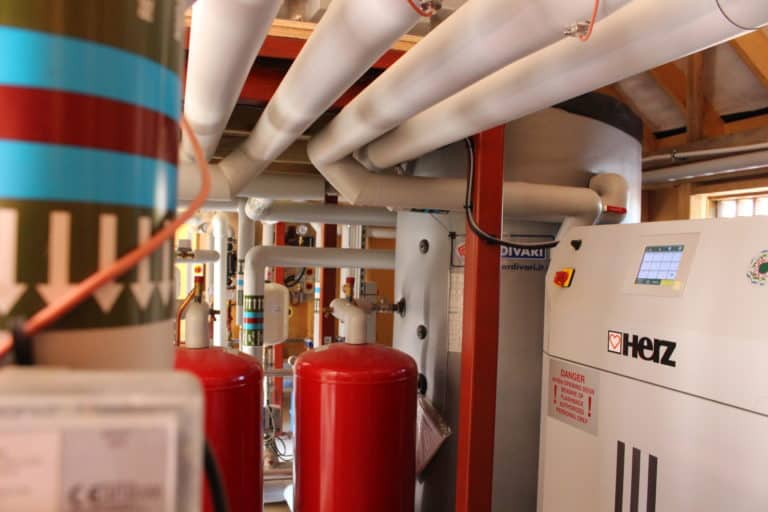
- Shifting many of our Field Centres to renewable heating and hot water systems. For example, Field Studies Council Blencathra which operates on a biomass heating system.
- Installing solar Photovoltaic (PV) at five of our field centres. At Field Studies Council Dale Fort, the solar array generates 20% of annual energy use.
- Improving how we measure, monitor and report our carbon emissions and energy use so we can track progress and target future projects.
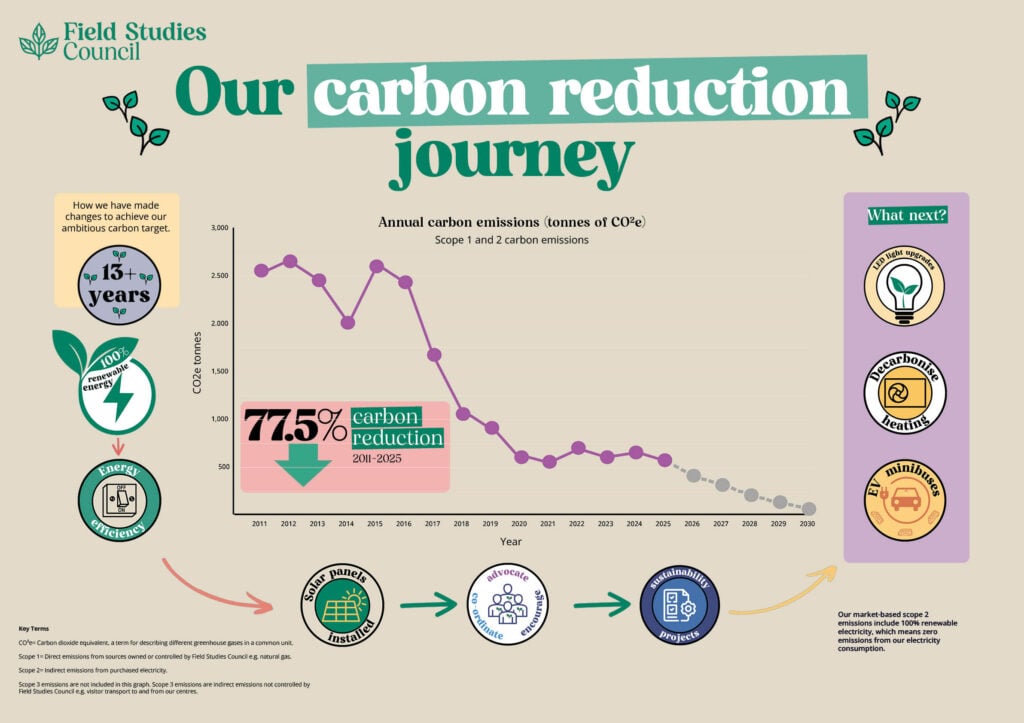
Our 2025 emissions from energy use (Scope 1 and 2*) were 9% lower than in 2024. This reduction of 59 tCO₂e is roughly equivalent to driving an average UK car 285,000 miles, enough to circle the Earth 11 times
Our recent reductions were achieved through a combination of:
- Lower use of mains gas, propane and oil to heat our buildings
- Kitchen electrification projects
- Energy efficiency initiatives for example improved heating controls
- Improvements to carbon data quality and energy reporting
- Our renewable energy contract which helped us retain zero Scope 2 emissions
*Find out about Scope 1 and 2 emissions here.
Carbon reduction targets
Our validated science-based targets commit us to further reducing our emissions by 2034, in line with the latest climate science. We have set ourselves the challenging target of reducing our emissions by 20tCO₂e every year until 2034. Read more about our plans at the foot of the page.
Our kitchens follow the Green Kitchen Standard
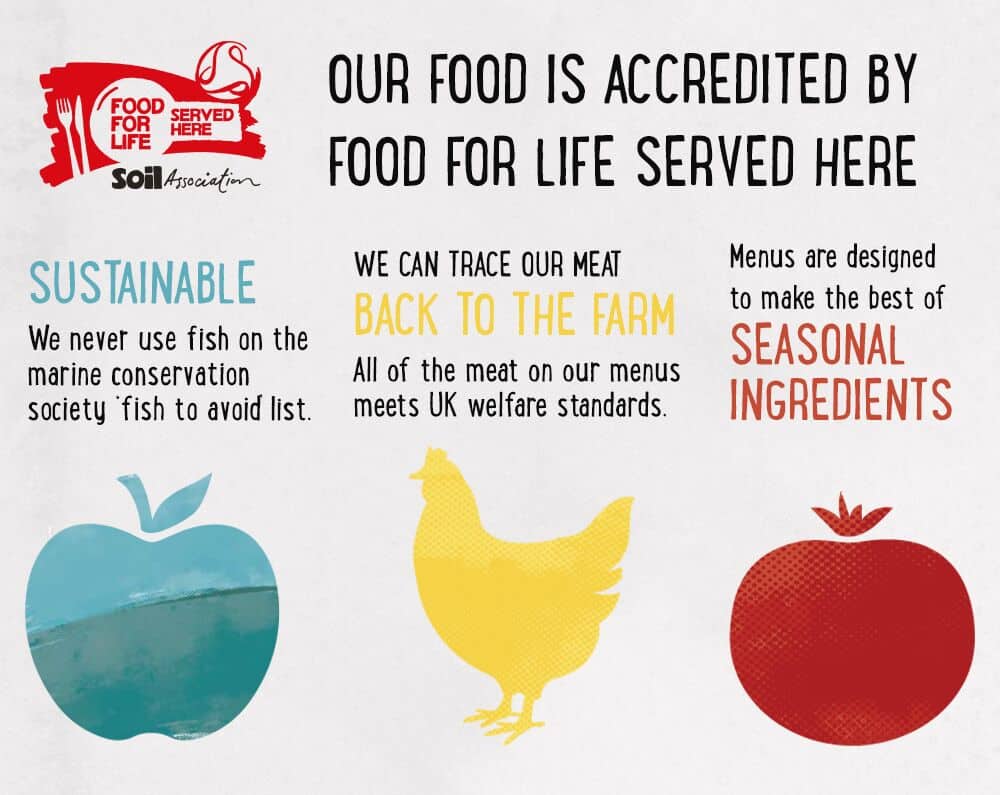
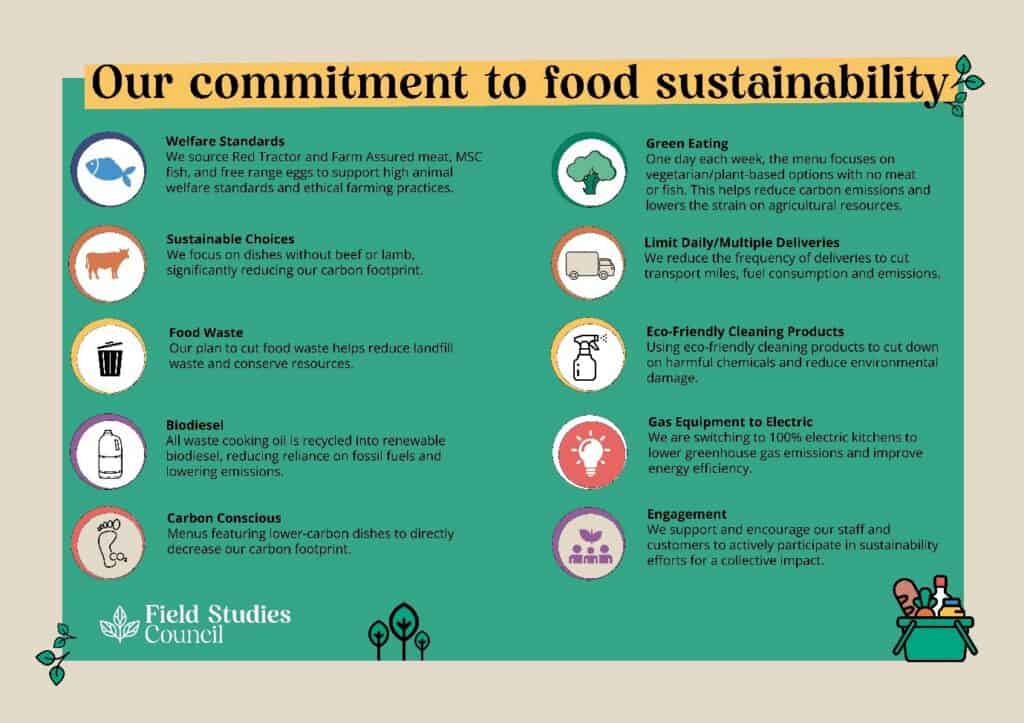
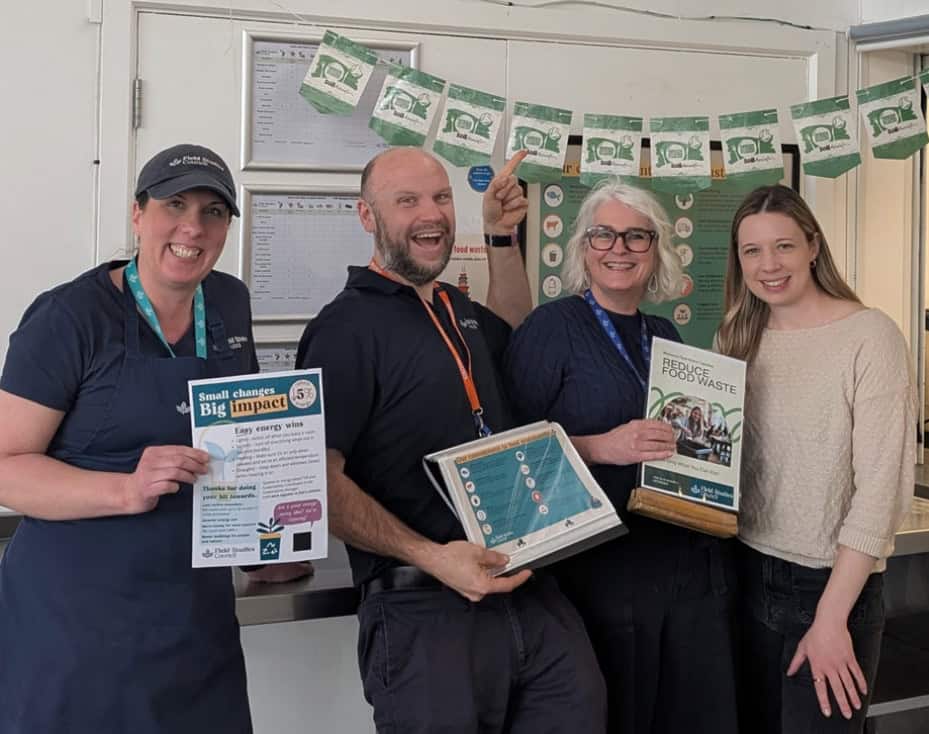
Building on our Food for Life Award, now embedded in our everyday catering standards, we continue to improve sustainability across our kitchens. Our teams focus on our top 10 food sustainability commitments and are making practical improvements in how we manage energy, water and waste.
In 2026 we were proud to be awarded the Green Kitchen Standard certification from the Soil Association for our sustainable kitchen practices.
Green Kitchen Standard certification recognises caterers that take practical steps to manage energy, water and waste sustainably. Certified caterers work in line with their energy, water and waste management policies, monitor performance and set reduction targets.
Supporting our staff
Eligible staff can access Cycle to Work and Electric Vehicle Salary Sacrifice schemes, helping them choose more sustainable ways to commute.
Our staff at Field Studies Council Castle Head commuted 2700+ miles on their bikes in 2025, the equivalent of cycling from Lands End to John O’Groats three times!
Our staff, including senior leaders, have taken part in Carbon Literacy training to improve understanding of the impact of our choices as individuals and as a charity.
We’re supporting more staff to complete Carbon Literacy training via our externally accredited Carbon Literacy training programme specifically designed for our staff.
Electric Vehicles
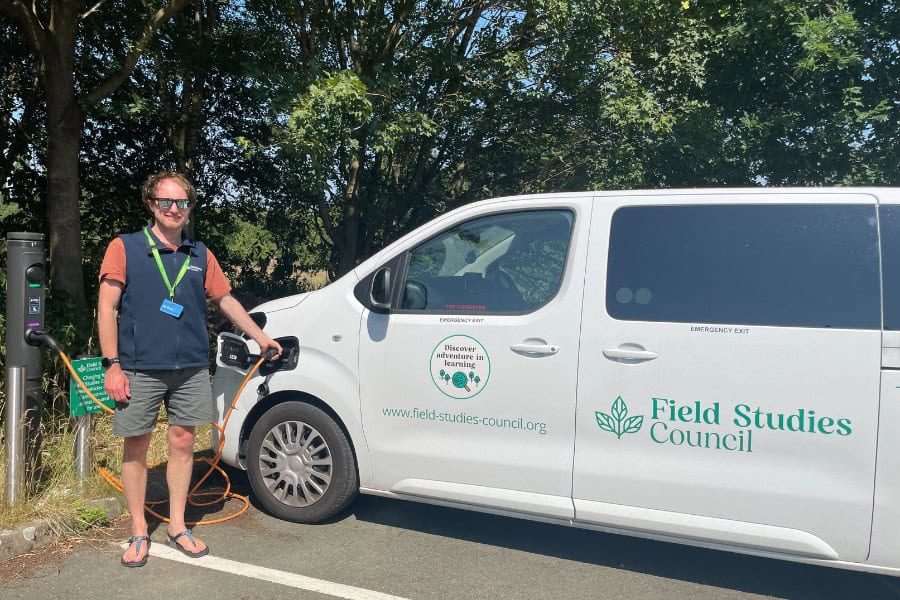
We often travel by minibus to reach our field sites. In early 2026, we replaced ten 9-seater diesel minibuses with electric vehicles. We are already seeing reductions in fleet emissions and will share more information soon.
Our teaching
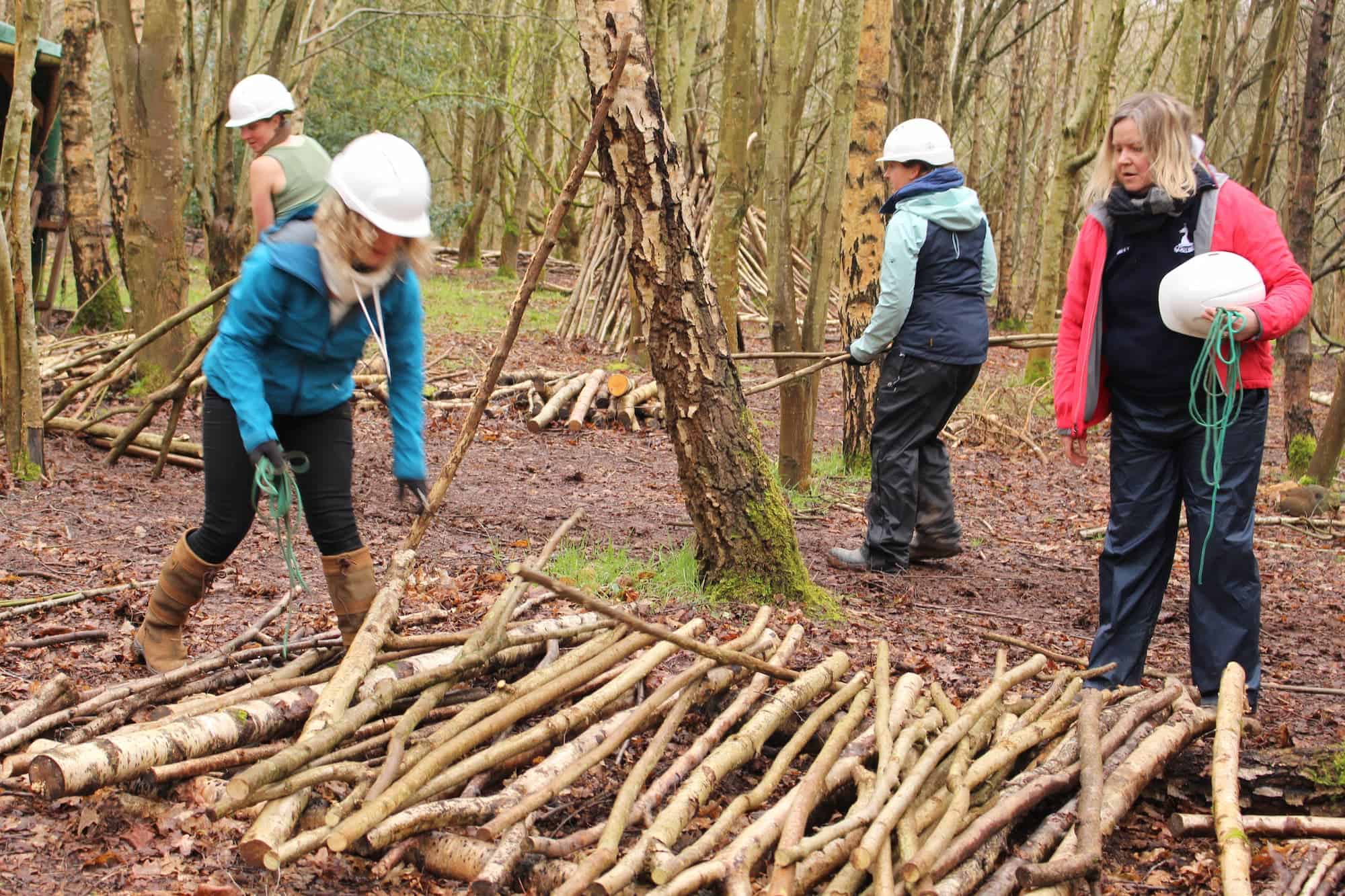
We are committed to linking sustainability into all our teaching sessions, regardless of subject, age group or field site. Learning with Field Studies Council gives people the chance to see and experience sustainability in action.
What next?
Our biggest opportunities for future carbon reductions come from reducing our direct use of fossil fuels and continuing to electrify our infrastructure. Our priorities are to decarbonise more heating systems, electrify more equipment and facilities, and add more electric vehicles to reduce fleet transport emissions.
In 2026 we have already replaced 10 diesel minibuses with electric minibuses which will further reduce our 2026 and future carbon emissions.
These results reflect the positive impact of our staff and visitors. Every action that reduces energy use, improves efficiency, or supports low-carbon travel, does contribute to our progress.
We are proud of the progress we have made in reducing emissions and environmental impact, and we are committed to continuing this work.