These free-to-attend, hour-long Natural History Lives webinars explore a wide variety of topics, including recording schemes, conservation projects, and the latest natural history research. They’re perfect for anyone curious about the natural world, with no prior experience needed.
Click on the topics below to learn more about each webinar, and book them by selecting one or all of the webinars at the bottom of this page. Please note that bookings close 1 working day before the webinar start time.
Exploring Resources for Studying UK Beetles
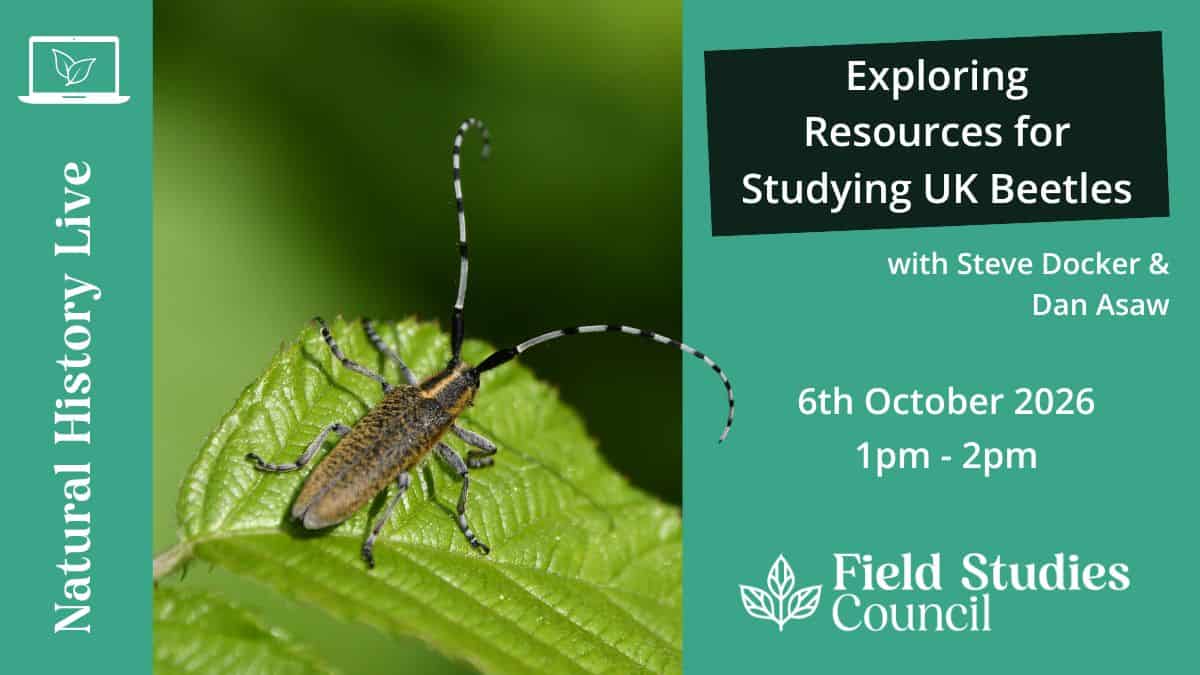
Date and time: Tuesday 6th October 2026, 1pm – 2pm
Beetles (Coleoptera) play a vital role in maintaining healthy ecosystems, acting as decomposers, predators, and pollinators. Understanding their diversity is essential for conservation and assessing ecosystem health. Yet, despite their importance, beetles remain one of the most understudied groups in the UK—largely due to their immense diversity perceived steep learning curve for beginners and huge range of literature.
This free-to-attend webinar is designed to help those starting out in UK Coleoptera studies navigate the wide range of literature and identification resources available.
What you’ll learn
This webinar will provide guidance on which tools may be useful at different stages of learning, Whether you’re a beginner or looking for the most cost effective way to improve studies, this session will give you an insight to make your beetle studies more effective and rewarding.
This webinar will include:
- An overview of literature and resources available to aid with UK beetle identification.
- Examples of different types of identification resources.
- Key considerations to make when selecting beetle literature.
The tutor
Dan Asaw leads the Biodiversity Training Programme Team, creating dynamic learning resources across a range of natural history subjects. But his true passion? Beetles. With over a decade of studying UK Coleoptera in his spare time, Dan has taught numerous beetle courses, including family identification at Liverpool Museum. His mission: make beetle identification accessible and exciting for everyone.
Steve is a Resource Development Officer with Field Studies Council Publications. He is also an active biological recorder in his spare time with an eclectic mix of interests including fungi, birds and invertebrates, especially beetles. Steve is particularly interested in the development of resources that enable the accurate and rapid identification of species. He enjoys working with specialists and artists to capture knowledge and make it available to a wider audience.
Rewilding Hepple
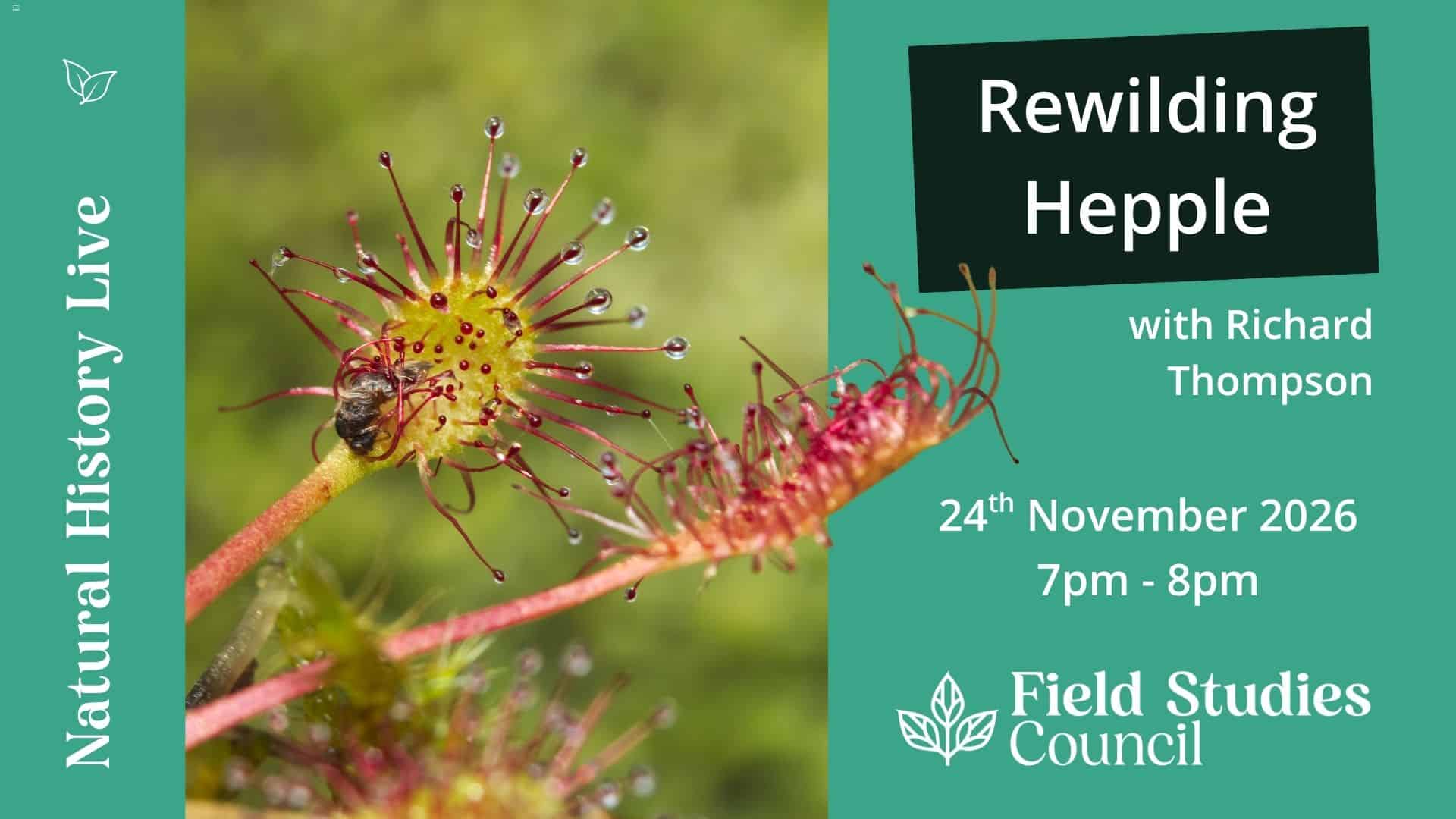
Date and time: Tuesday 24th November 2026, 7pm – 8pm
Discover how large-scale nature recovery is being put into practice at Hepple Wilds, an ambitious rewilding initiative in Northumberland. This free webinar offers an inspiring introduction to the project, exploring how a working landscape is being transformed to support wildlife, natural processes, and long-term ecological resilience.
Through an overview of the site, you’ll learn how Hepple Wilds is combining ecological restoration with innovative land management. The session will highlight the vision behind the project and the practical steps being taken to allow nature to recover at scale.
What you’ll learn
By taking a closer look at the development of Hepple Wilds, we will explore the progress made so far, including habitat changes, species responses, and the reintroduction of natural processes. We’ll also discuss some of the key challenges faced along the way, from land management decisions to balancing conservation goals with real-world constraints.
Finally, you’ll gain insight into the successes and lessons learned from the project, and how these can inform wider rewilding efforts across the UK. Whether you’re new to rewilding or already engaged in conservation, this session will provide a valuable look at how landscape-scale recovery can be achieved in practice.
This webinar will cover:
- An overview of the Hepple Wilds project and its vision
- Progress and ecological changes observed on site
- Challenges, successes, and lessons learned in rewilding initiatives
About the tutor
Richard Thompson has worked as an ecologist and wildlife guide across the Northern UK for the past 8 years. He is currently part of the team at the Hepple Wilds rewilding project in Northumberland, which manages over 4,000 acres of habitat including former grouse moorland, blanket bog, woodlands, wetlands and mixed field systems with natural grazing regimes.
Field work to findings: The Role of Coding in Environmental Studies
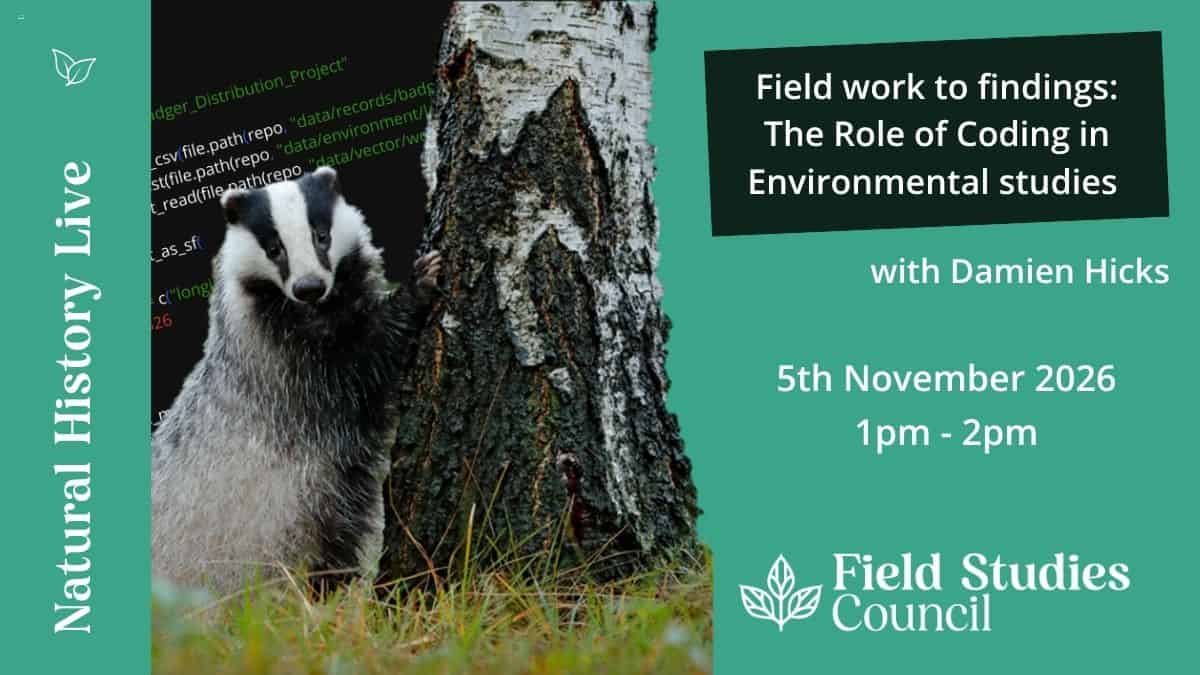
Date and time: Thursday 5th November 2026, 1pm – 2pm
Coding might seem worlds away from field studies, species recording, ecology and environmental science, but it is increasingly shaping how we understand and manage the natural world. From analysing wildlife tracking data and processing satellite imagery to modelling climate change and automating repetitive tasks, coding has become a powerful tool for researchers and practitioners alike. This one-hour session will explore why people choose to learn to code, how it is used in real-world environmental and geographical work, and why even complete beginners can develop programming skills.
What you’ll learn
This session will introduce the role of coding in field studies and environmental research, highlighting practical examples rather than technical jargon. You’ll discover how coding helps scientists collect, manage and analyse large datasets, create maps and visualisations, and answer both simple and complex research questions. We’ll discuss the different types of problems coding can solve, the skills employers increasingly value, and how learning even a little programming can open new opportunities in research, conservation, sustainability and beyond. Whether you’re curious, sceptical or considering learning to code yourself, this talk will offer insights into why coding has become such an important skill.
This webinar will cover:
- What coding is
- Advantages over using existing software
- Examples of coding in field studies and environmental science
- Mapping, visualisation and communicating results
- Beginner friendly routes into learning coding
About the tutor
Damien Hicks has spent 25 years surveying and identifying species in the field, followed by the analysis and modelling of those data in the lab. His favourite parts of this work are joining international expeditions and collaborating with research teams from across the academic, public and private sector. Current projects include spatial epidemiology of species records, DNA identification of pests and pathogens, and time series modelling of tens of millions of rows of species data.
Animals Live in Concert: The Evolution and Future of Sound Recording
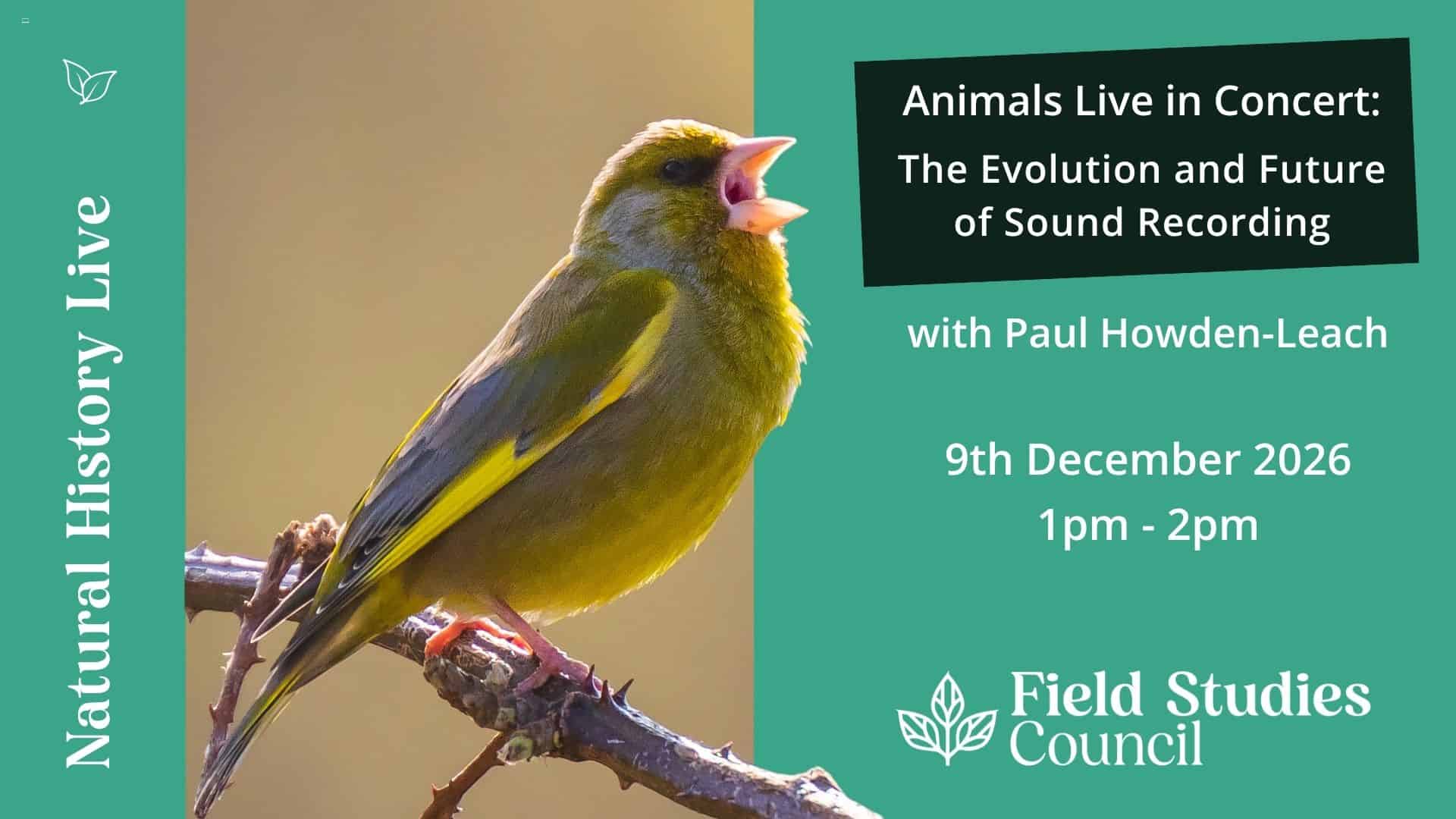
Date and time: Wednesday 9th December 2026, 1pm – 2pm
Discover how wildlife sound recording has evolved into one of the most exciting and accessible ways to survey and identify animals. This talk explores the journey from the early days of recording, when pioneers faced significant technical challenges, to the sophisticated tools and methods available today.
By looking at the equipment which is currently available we will cover methods of recording and data analysis, through listening and looking at sounds, hopefully removing some of the hurdles which might make this technique appear daunting.
Finally, you’ll learn how to get started in wildlife sound recording yourself and how this powerful technique can support conservation efforts at both local and global scales. Whether you’re a beginner or already curious about bioacoustics, this session will show you how to become part of a growing movement helping to reveal the hidden sounds of the natural world.
This webinar will cover:
- The evolution of wildlife sound recording
- Current recording methods and equipment
- How to get started with wildlife sound recording for conservation
The Tutor
Paul Howden-Leach is a field ecologist with over 25 years’ experience, specialising in bat and bird bioacoustics. He runs Skyline Ecology, an ecological consultancy based in the Peak District, focusing on protected species and sound analysis. Paul also works with Wildlife Acoustics in the USA and regularly speaks at conferences on the value of bioacoustics. He delivers global training for researchers, citizen scientists, and school groups, and advises academic institutions, businesses, and media organisations including the BBC Natural History Unit. His interests span acoustic, ultrasonic, and infrasonic recording, and he has created soundscapes for community and international projects.
You will receive an email the morning of the event with joining details and the webinar link. If you have not received an email 2 hours prior to the event, please email us at: [email protected]
Can’t attend live? Recordings are uploaded to our YouTube channel within one calendar month, so you can catch up anytime.
To help us to continue to offer charitable opportunities covering natural history training, we would greatly appreciate any donations you can offer – donate to the biodiversity programme here.
Opportunities to attend this course
-

Thu 05, November 2026 1:00pm - Thu 05, November 2026 2:00pm
An introduction to the role of coding in field studies and environmental research
-
Tue 24, November 2026 7:00pm - Tue 24, November 2026 8:00pm
Rewilding Hepple
-
Wed 09, December 2026 1:00pm - Wed 09, December 2026 2:00pm
Animals Live in Concert: The Evolution and Future of Sound Recording
Click here to view all our upcoming Natural History courses.
Sign up for our Biodiversity Newsletter to hear about new releases and for exclusive discounts!