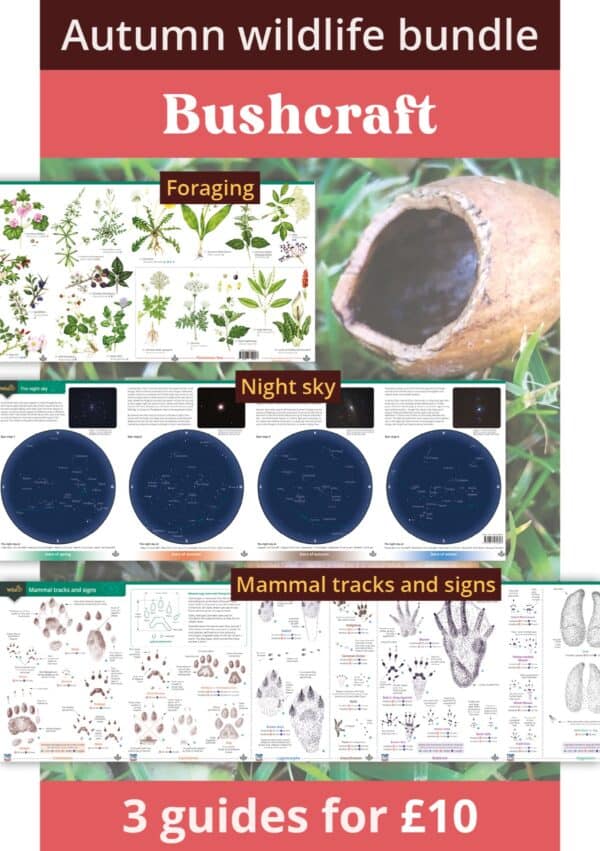
Autumn Bushcraft Bundle
Autumn is a season of hidden activity and abundant harvest, perfect for exploring the natural world through bushcraft.

Autumn is a season of hidden activity and abundant harvest, perfect for exploring the natural world through bushcraft.
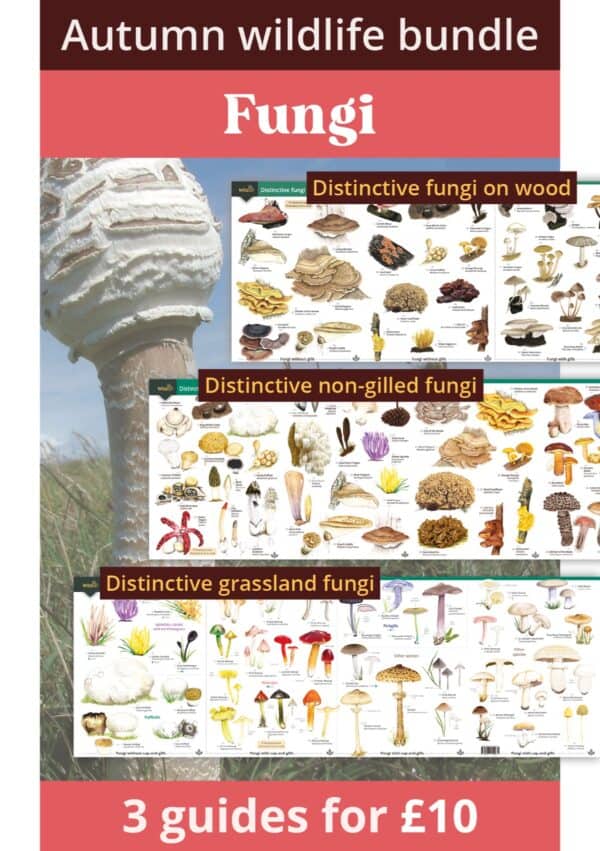
Between the heat of summer and the hard frosts of winter, September and October are fantastic for fungi. These 3 guides feature over 100 distinctive species not easy to confuse with others.
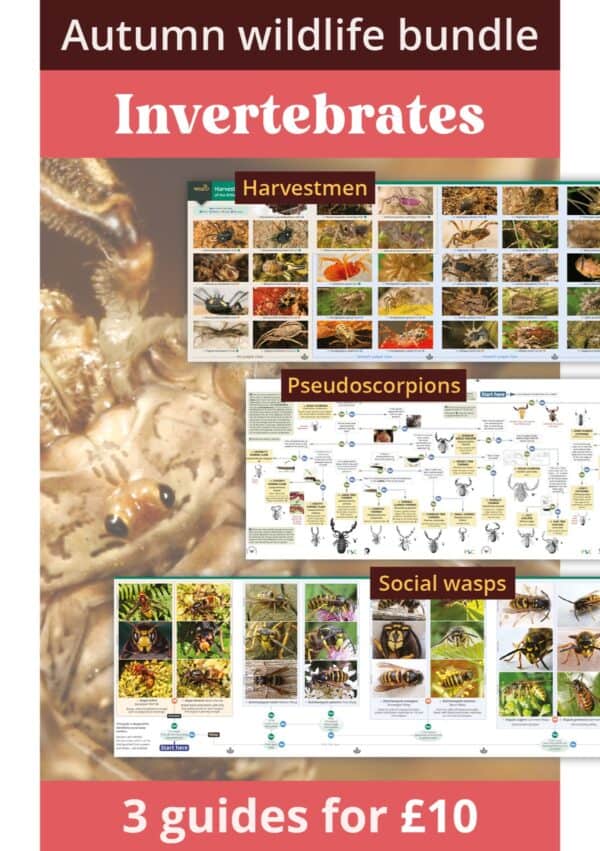
If you fancy stretching your ID skills, here are three invertebrate groups worth tackling in the autumn, each with a good guide to get you started.
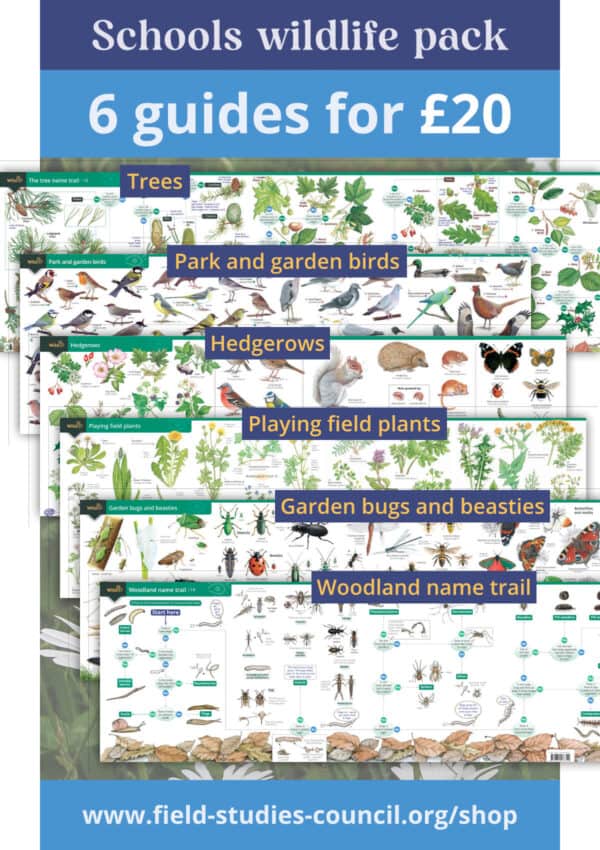
Explore wildlife in the school grounds, from birds and minibeasts to wild flowers and trees. 6 WildID laminated fold-out guides for £20.
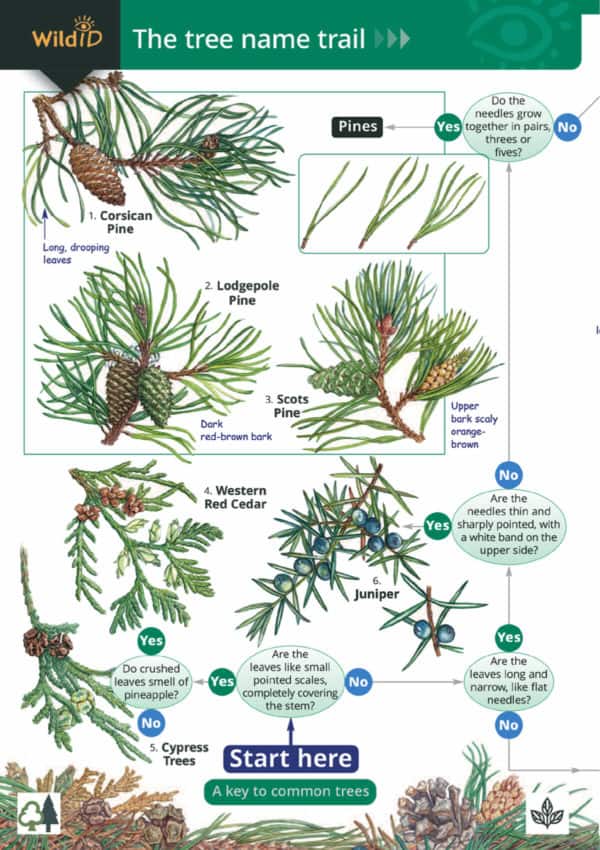
Can you tell apart maple and sycamore? Beech and hornbeam? Pine, cedar, spruce and fir? Straightforward questions will quickly guide you to the right answers. Co-created with the Forestry Commission.
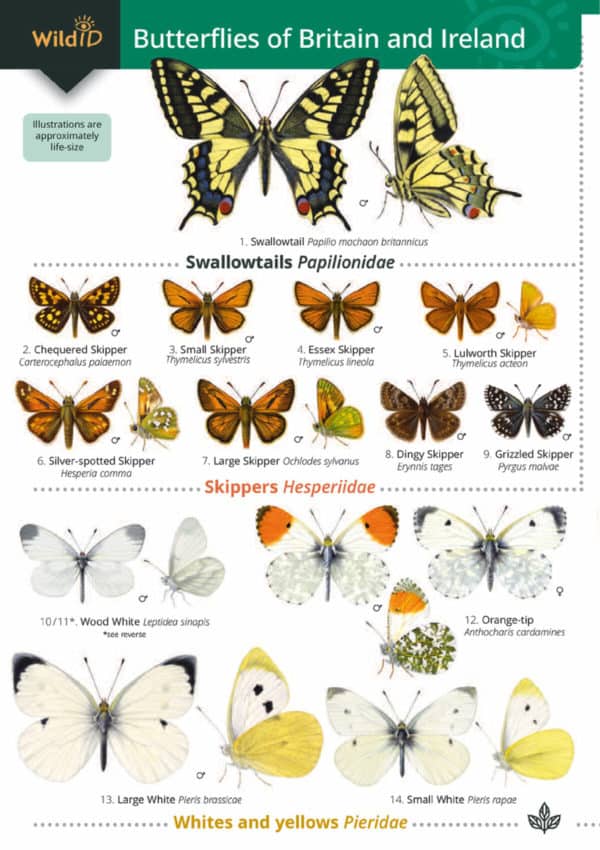
Covering all 60 wild butterflies of Britain and Ireland, with beautiful colour life-sized paintings by acclaimed artist Richard Lewington. Co-created with Butterfly Conservation.
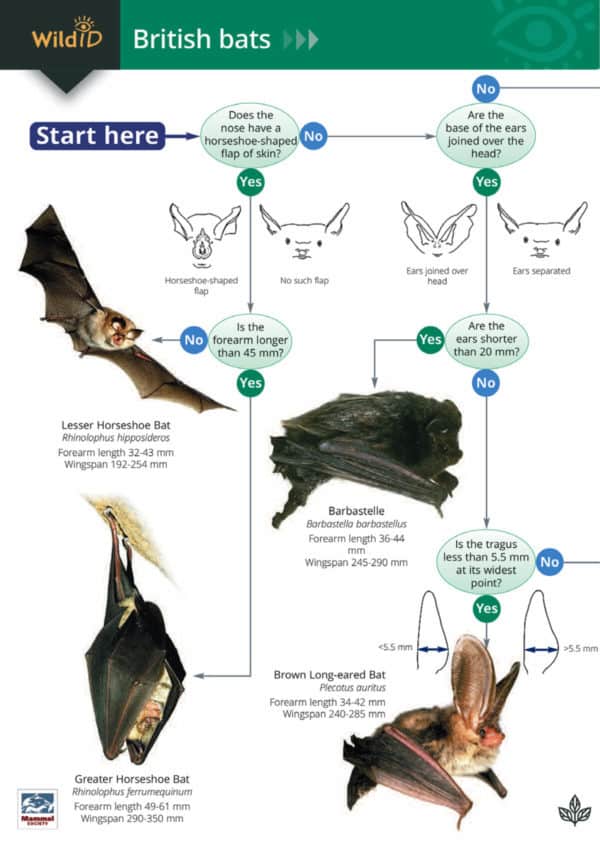
WildID Bats is two guides in one: a night-time guide for identifying flying bats, using calls and flight patterns, plus a daytime guide for key for bats at rest.
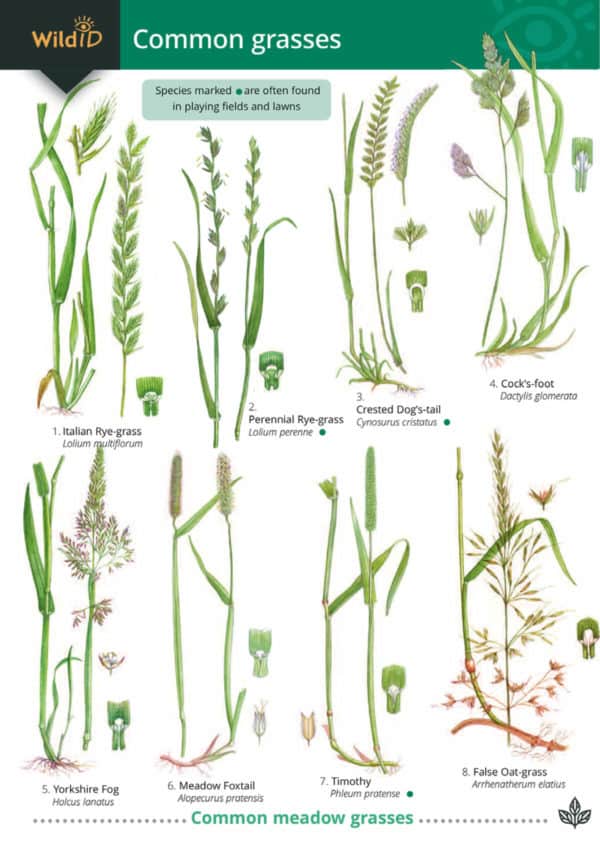
Want to start identifying grasses? WildID grasses guide features a manageable list of 30 species, all widespread and common. Descriptions and diagrams demystify specialist terms, from awns to spikelets.
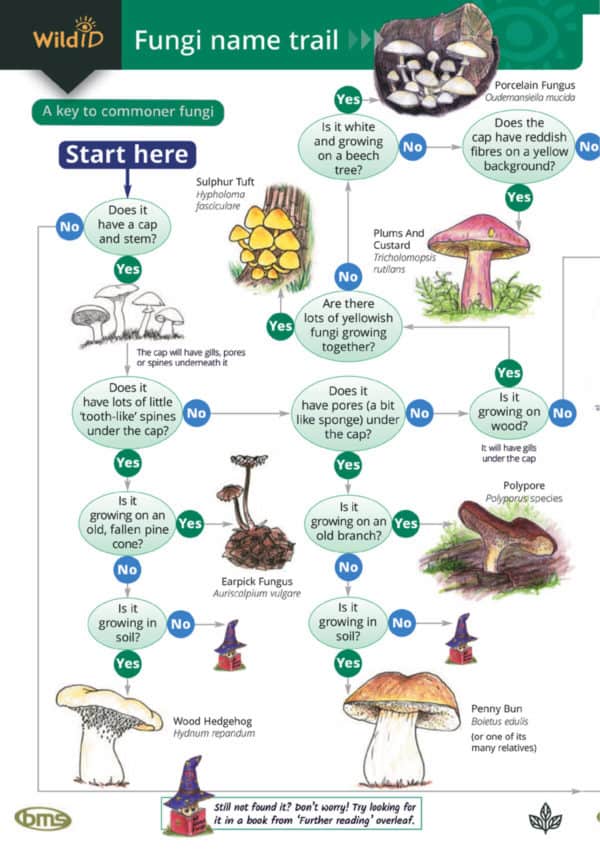
Quickly identify mushrooms and toadstools found in gardens, grassy places and woodlands. This is not a guide to edible fungi. Created with the British Mycological Society.
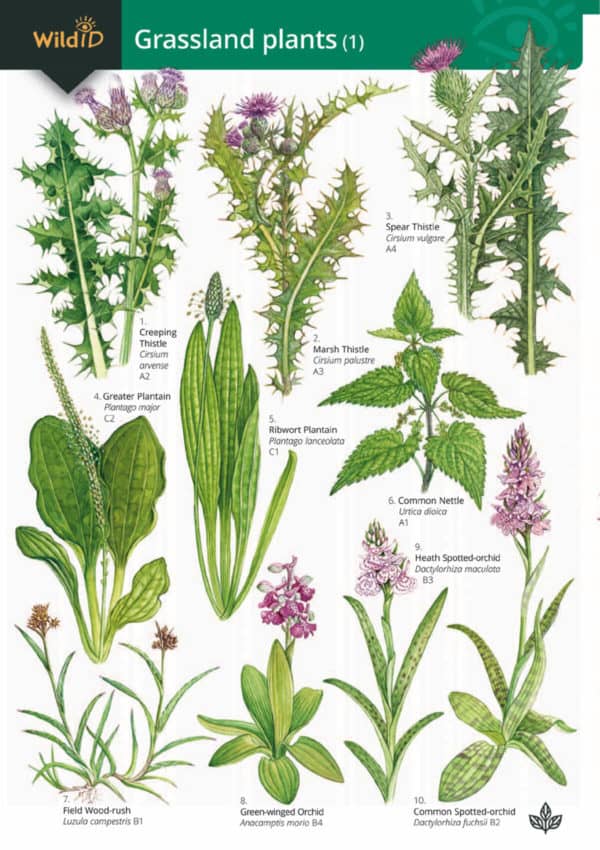
Featuring 64 flowering plants of grasslands on lowland acid and neutral soils. Also includes a vegetative key. Use this concise fold-out guide to quickly put a name to the flowers that you see.
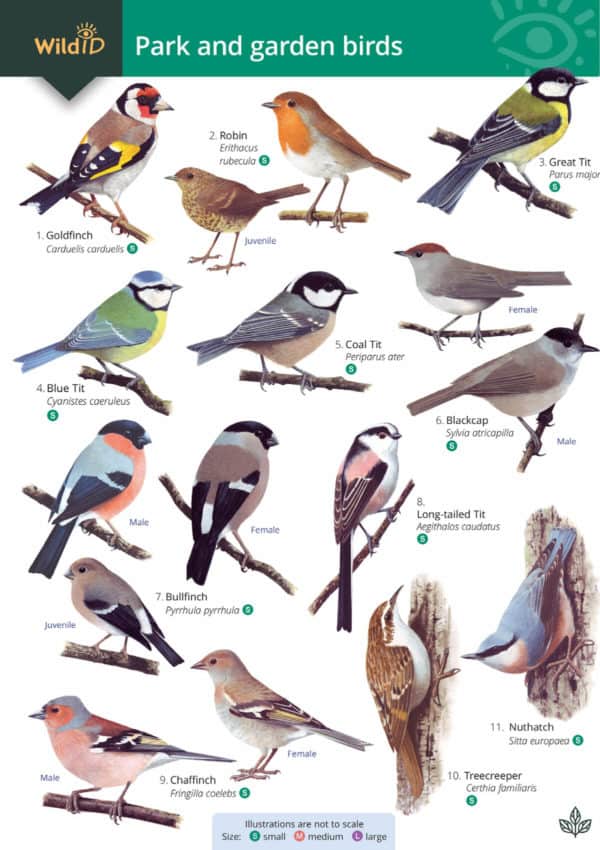
Is that a chaffinch, greenfinch or bullfinch at the bird feeder? Do you know a great tit from a blue tit? Covering the top 50 birds seen in parks and gardens, including ponds and rivers.
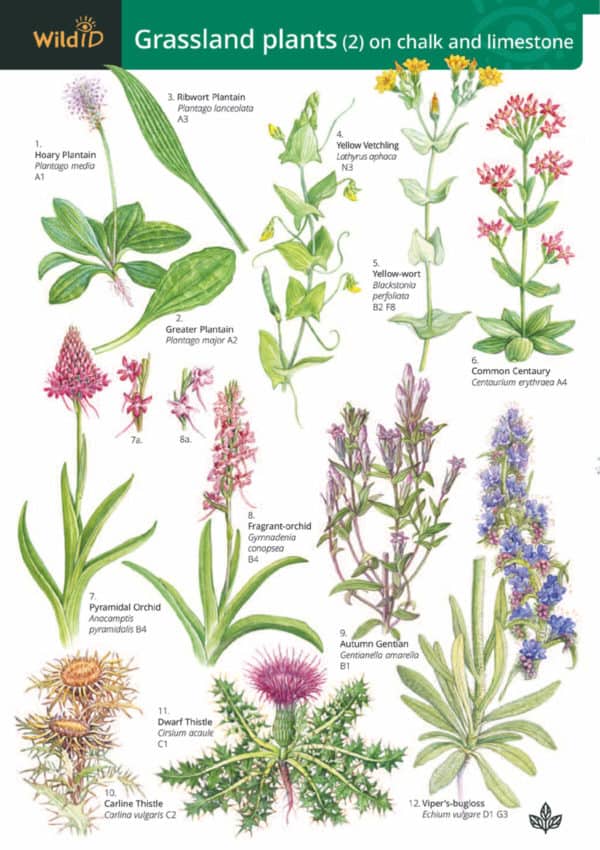
Featuring 63 flowering plants of grasslands on lowland chalk and limestone soils. Also includes a vegetative key.

Showing 33 different nuts, cones, flying seeds and fleshy fruit produced by trees and shrubs, from acorns to sloes. How many can you find?
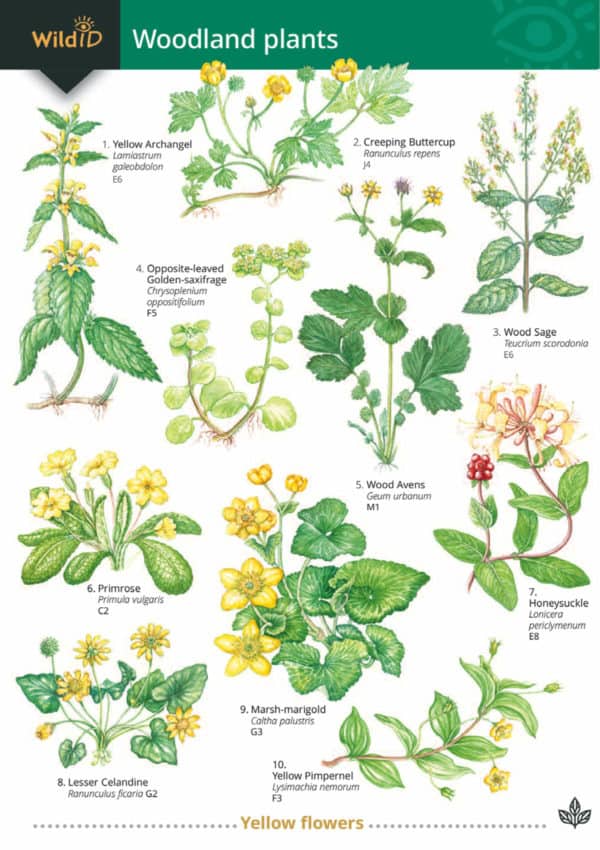
From bluebell to wood sage, and dog's mercury to yellow archangel, this guide includes 41 species of low-growing flowers and climbers.
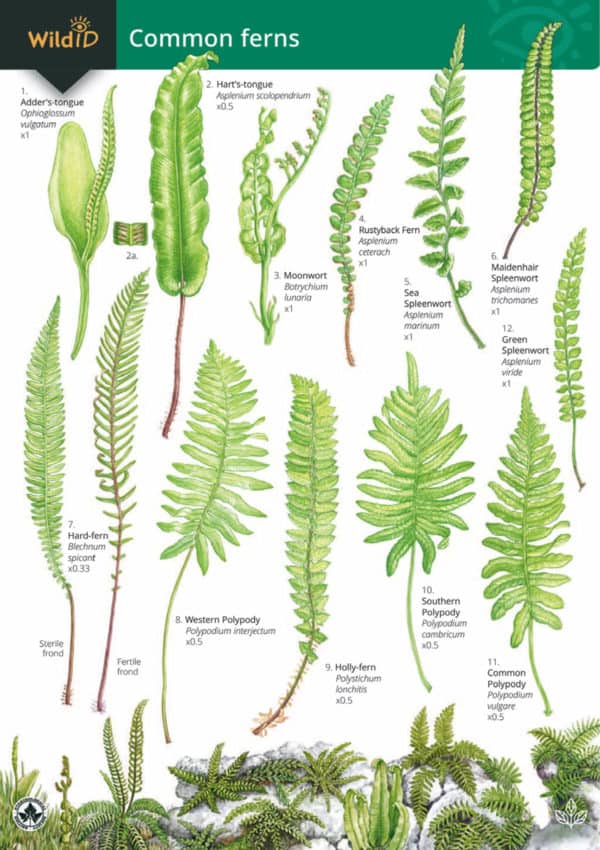
From Hart's-tongue to Hard-fern, from Male-fern to Moonwort, the Ferns guide features the commonest 38 species of ferns found in Britain and Ireland.
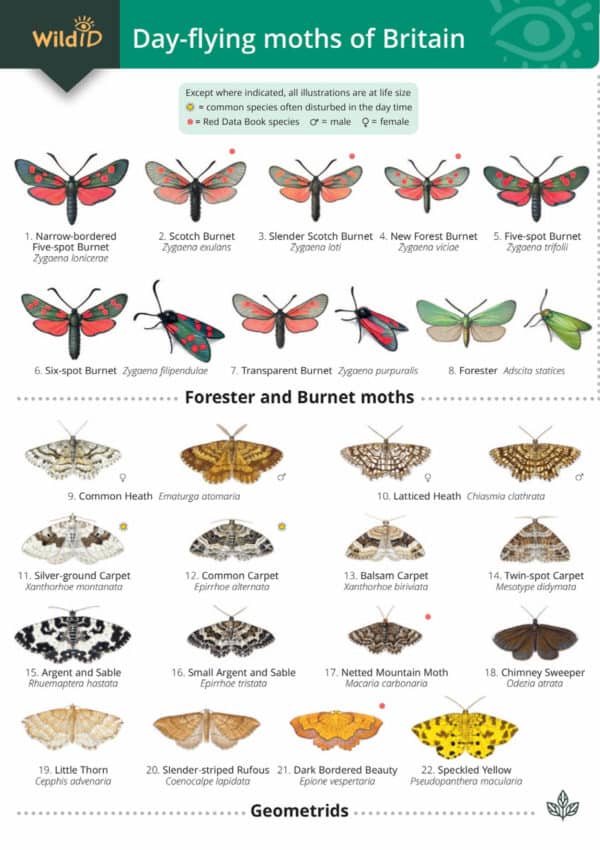
Although most moths fly at night, a good number are active during the day. This guide shows 103 species which fly in the daytime, including tiger moths, burnet moths and clearwings.