
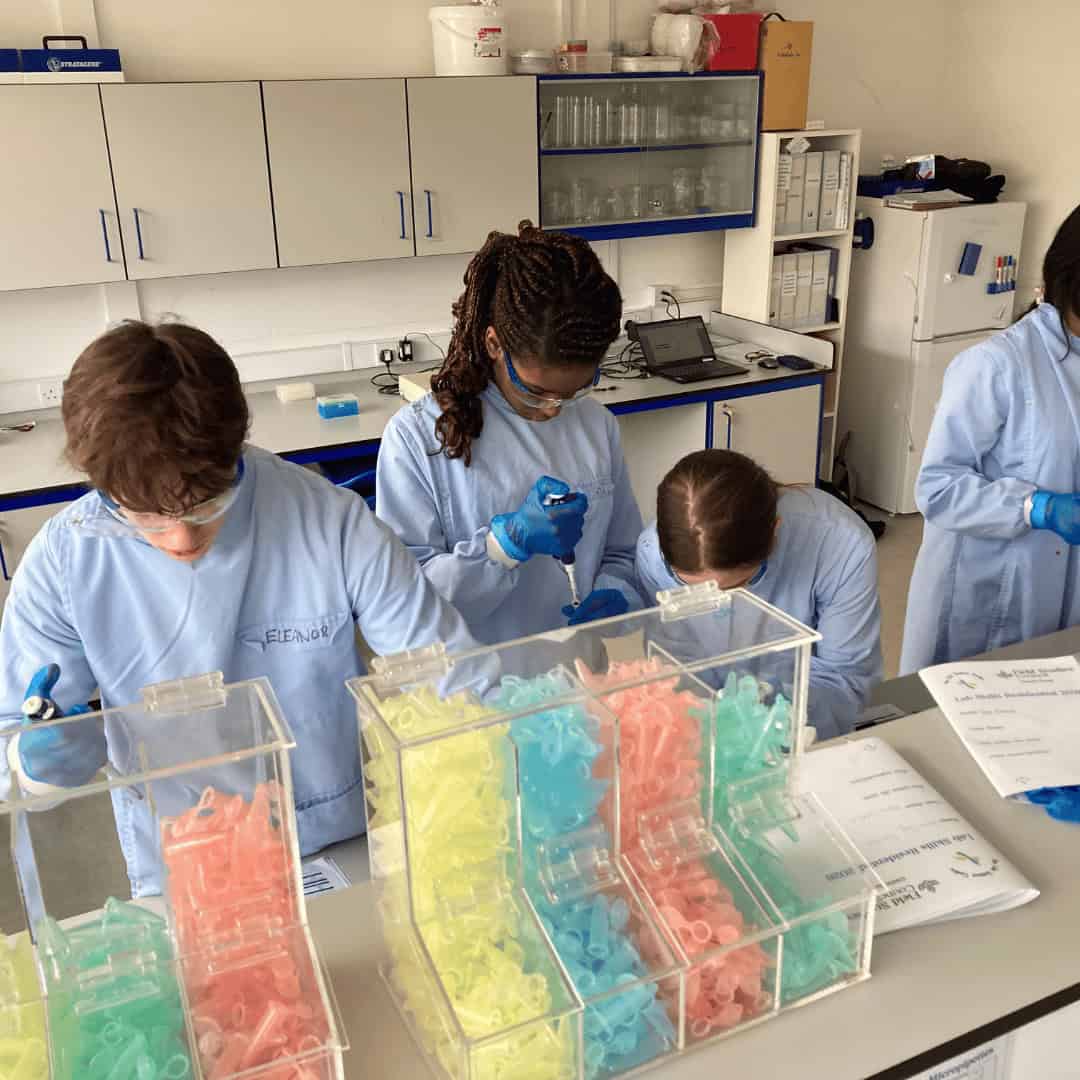
Our life science lab investigations course is a fantastic opportunity to gain hands-on experience in a variety of laboratory skills and techniques.
It would be of particular interest to students hoping to pursue a career in biochemistry, medicine, pharmacy, marine biology or other disciplines with a focus on laboratory techniques. You will spend your week at one of our field centre’s and experience working in an industrial standard laboratory.
You will be working in teams to complete workplace-linked science investigations exploring sampling and analytical techniques.
Lab work can be combined with adventurous outdoor activities. This allows students to develop problem-solving, effective communication and team working skills. These are all essential for those wishing to pursue a career in science.
The final topics and order of study will be determined by site suitability, any special needs and our tutor’s expert knowledge. We also have some optional replacement activities; most sessions are 1 hour. If you would like to include one of these activities our tutors will try to fit them into your programme.
This course is suitable for the residential section of the Gold Duke of Edinburgh Award. Always check with your leader before booking.
Example Timetable
Day 1
Midday arrival
13:30-17:00 - Activity
17:15-18:15 follow up
Day 1
09:30- 17:00 Full day activity
17:15-18:15 follow up
Day 2
09:30- 17:00 Full day activity
17:15-18:15 follow up
Last Day
09:30-12:30 - Activity
Course Options
Intro to Laboratory and Micro Pipetting
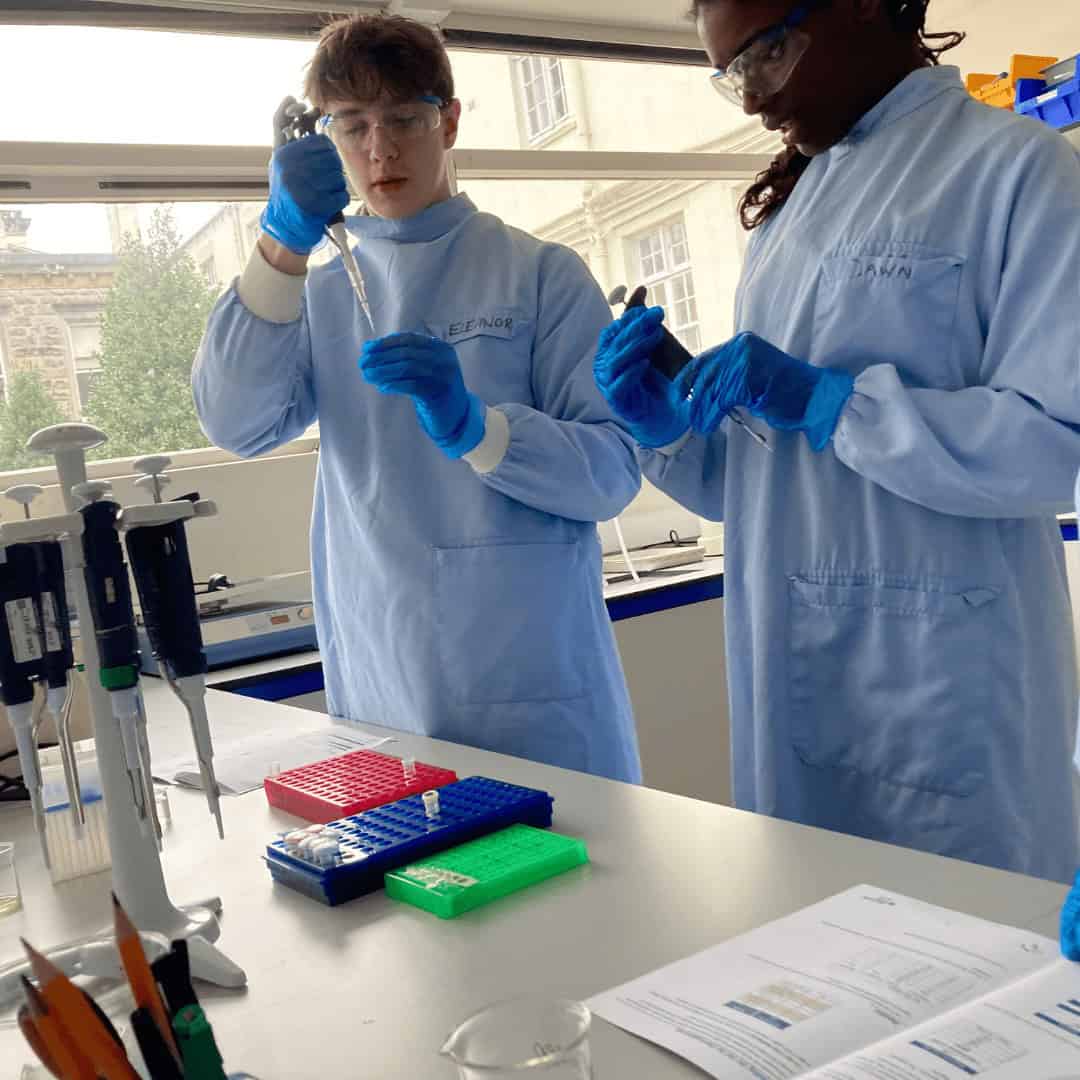
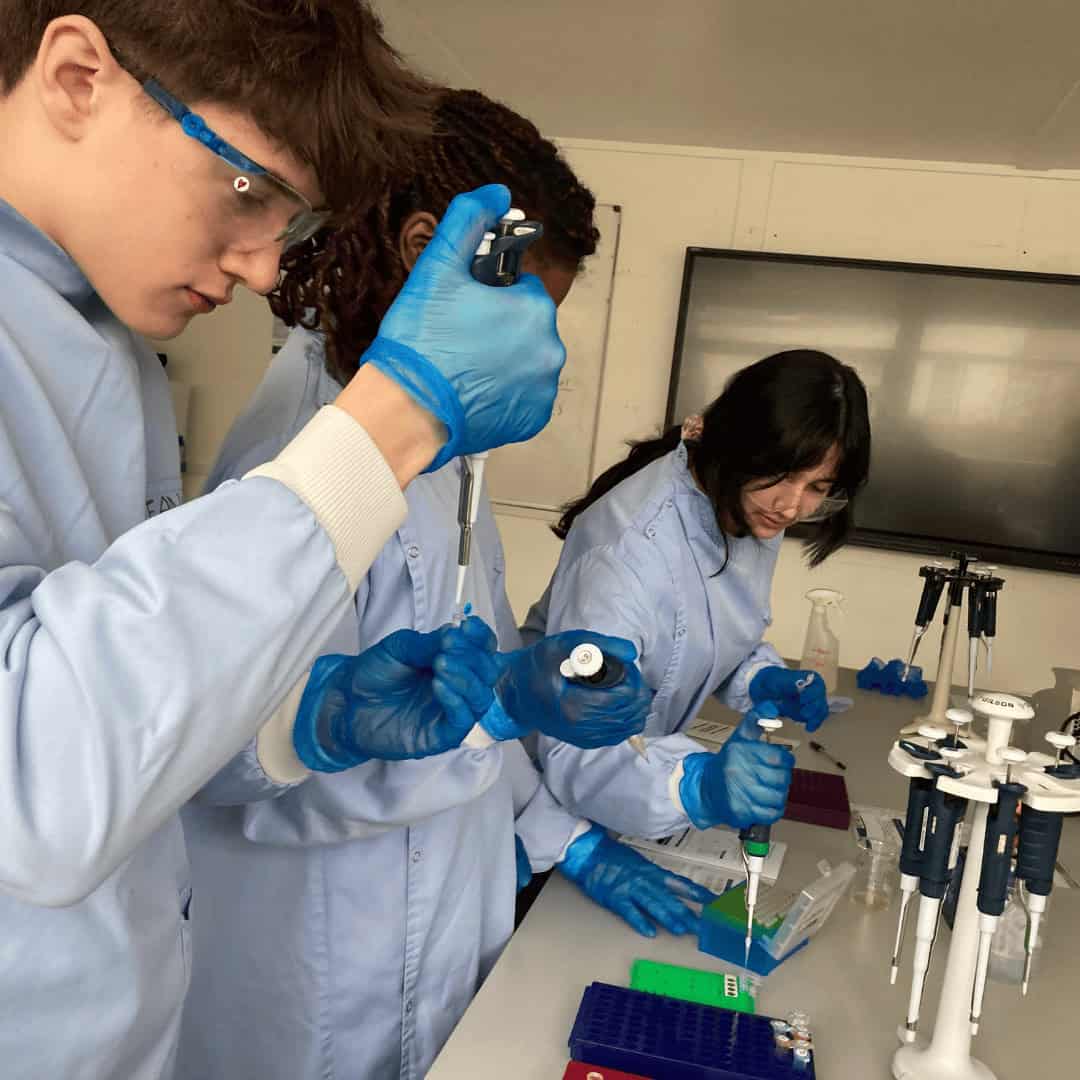
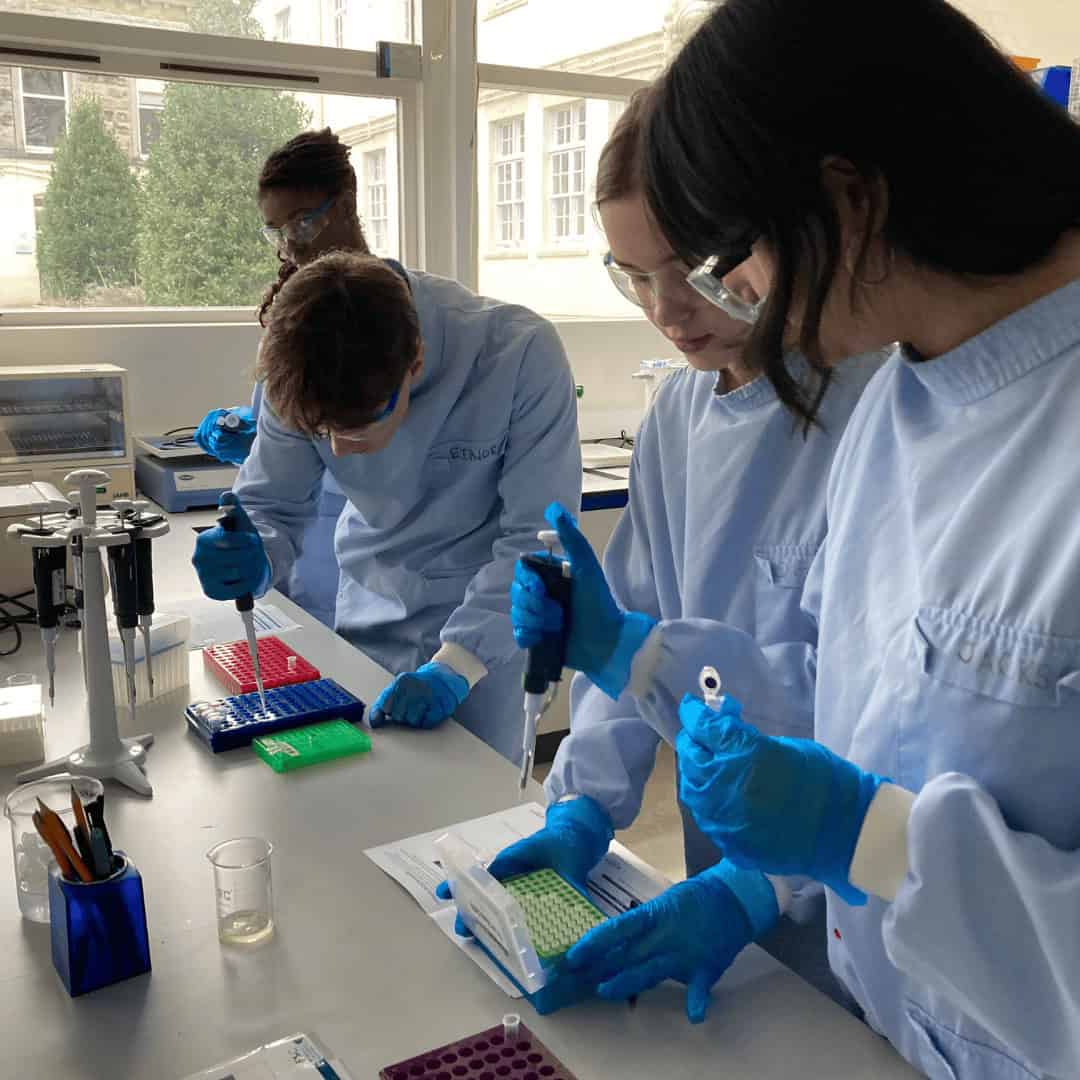
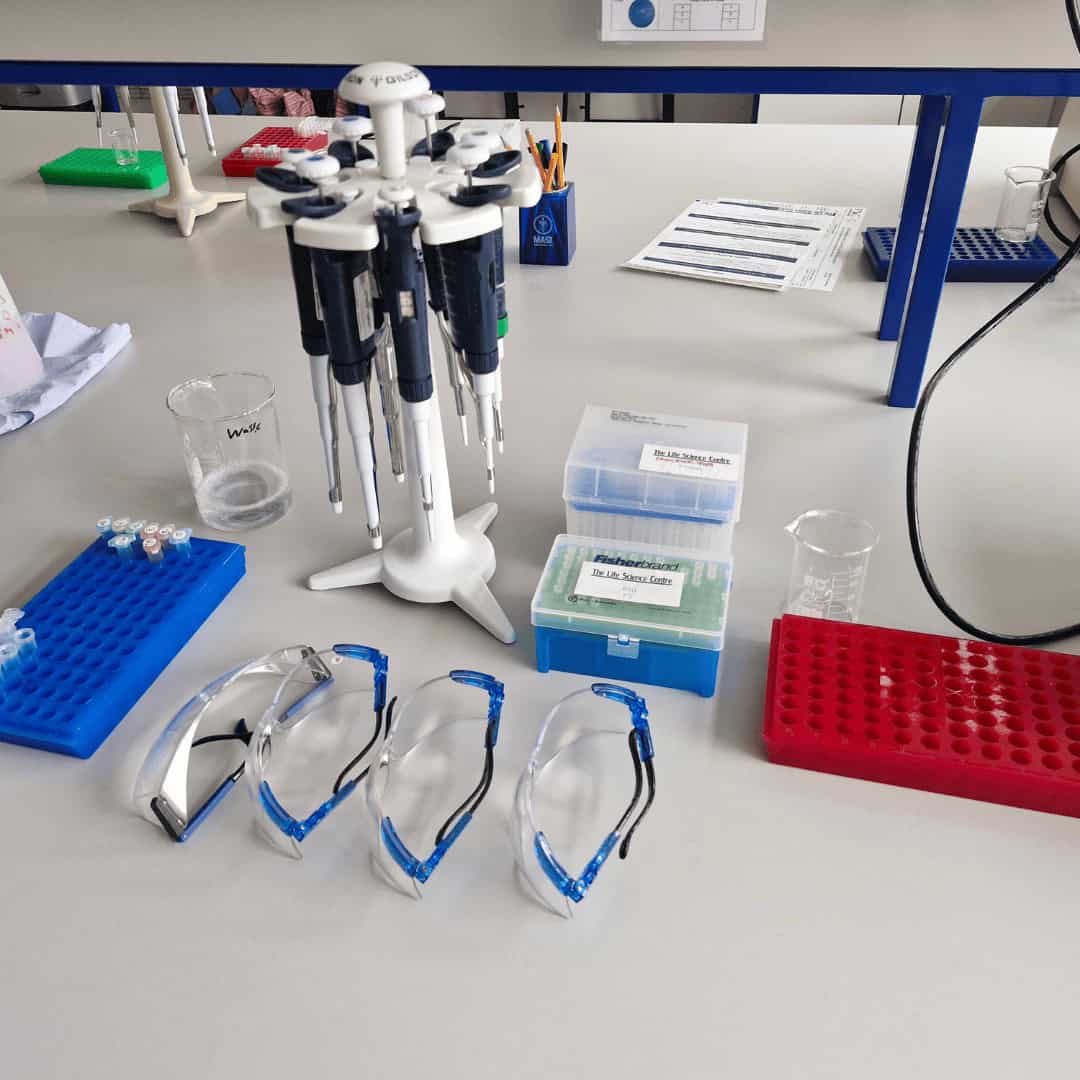
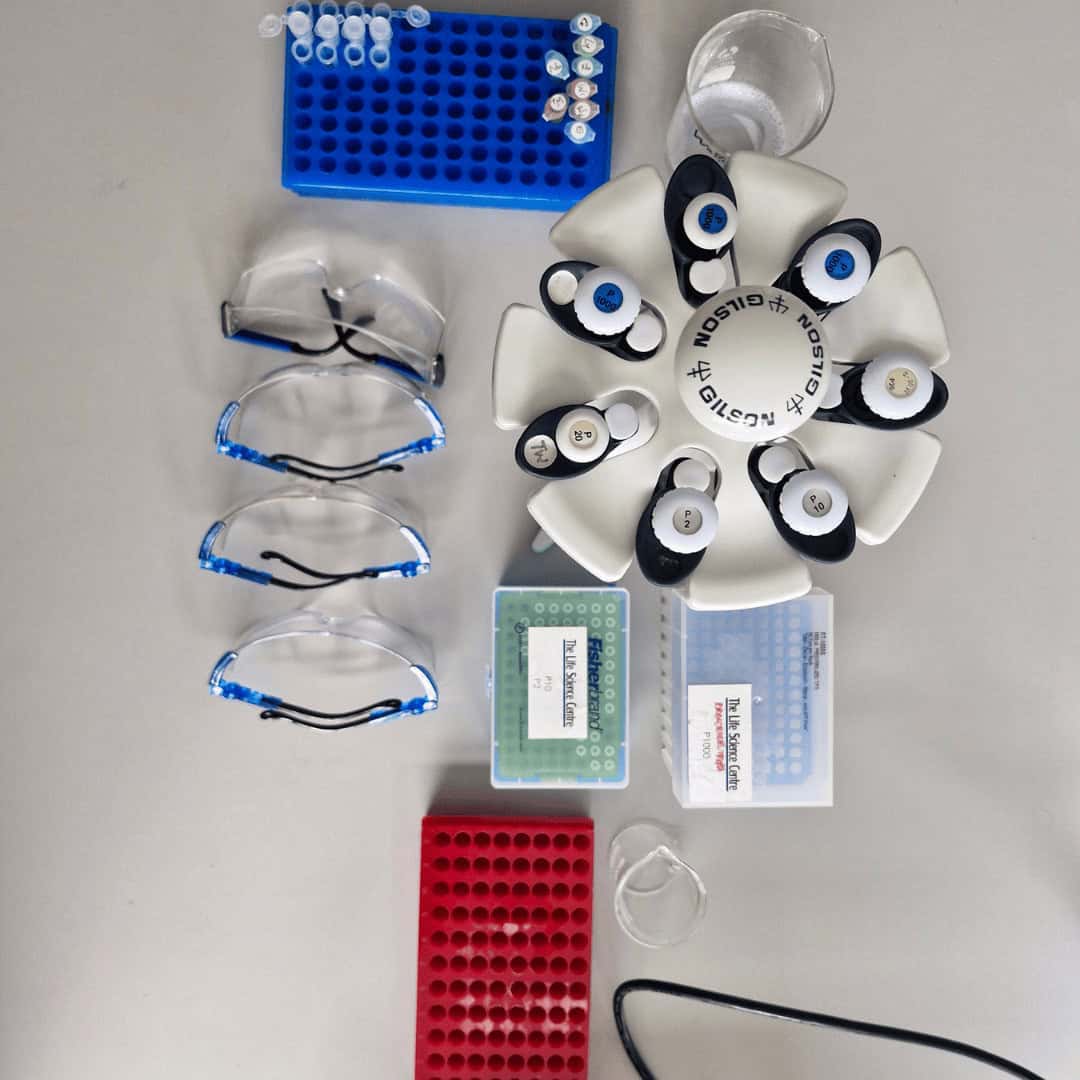
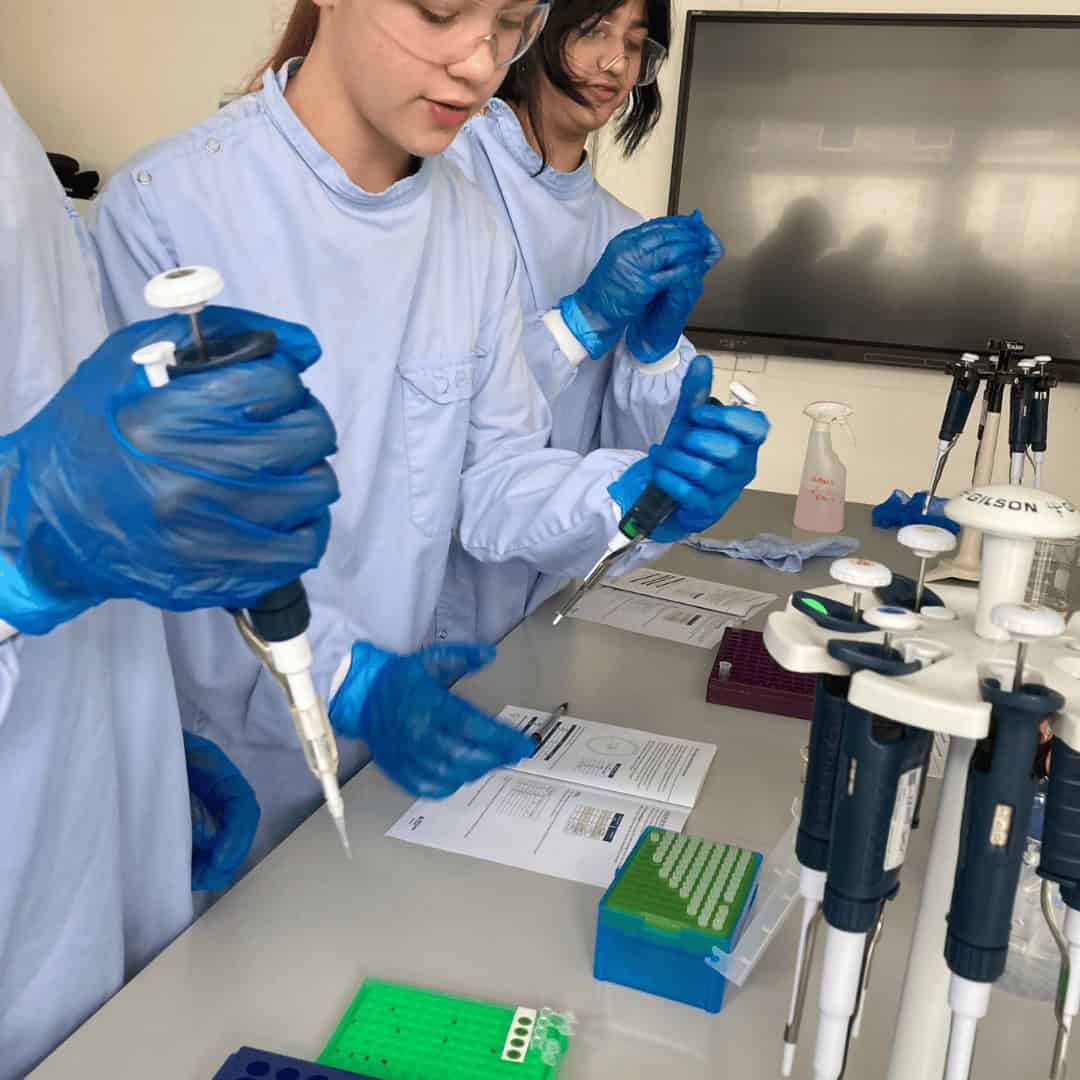
In this introductory laboratory skills session, students learn the essential foundations of working safely and professionally in a real scientific environment. They begin by exploring key health and safety practices before being introduced to aseptic technique, understanding how to prevent contamination when handling biological materials. Students also gain hands on experience using Gilson micropipettes, learning how to accurately measure and transfer tiny liquid volumes in microlitres (µl) with precision. This session builds confidence with core lab skills that underpin all future practical work and prepares students for more advanced experiments in microbiology and molecular biology.
Investigating the use of genetic engineering for human insulin production:
Isolate DNA from bacterial cultures;restriction enzyme reactions and gel electrophoresis
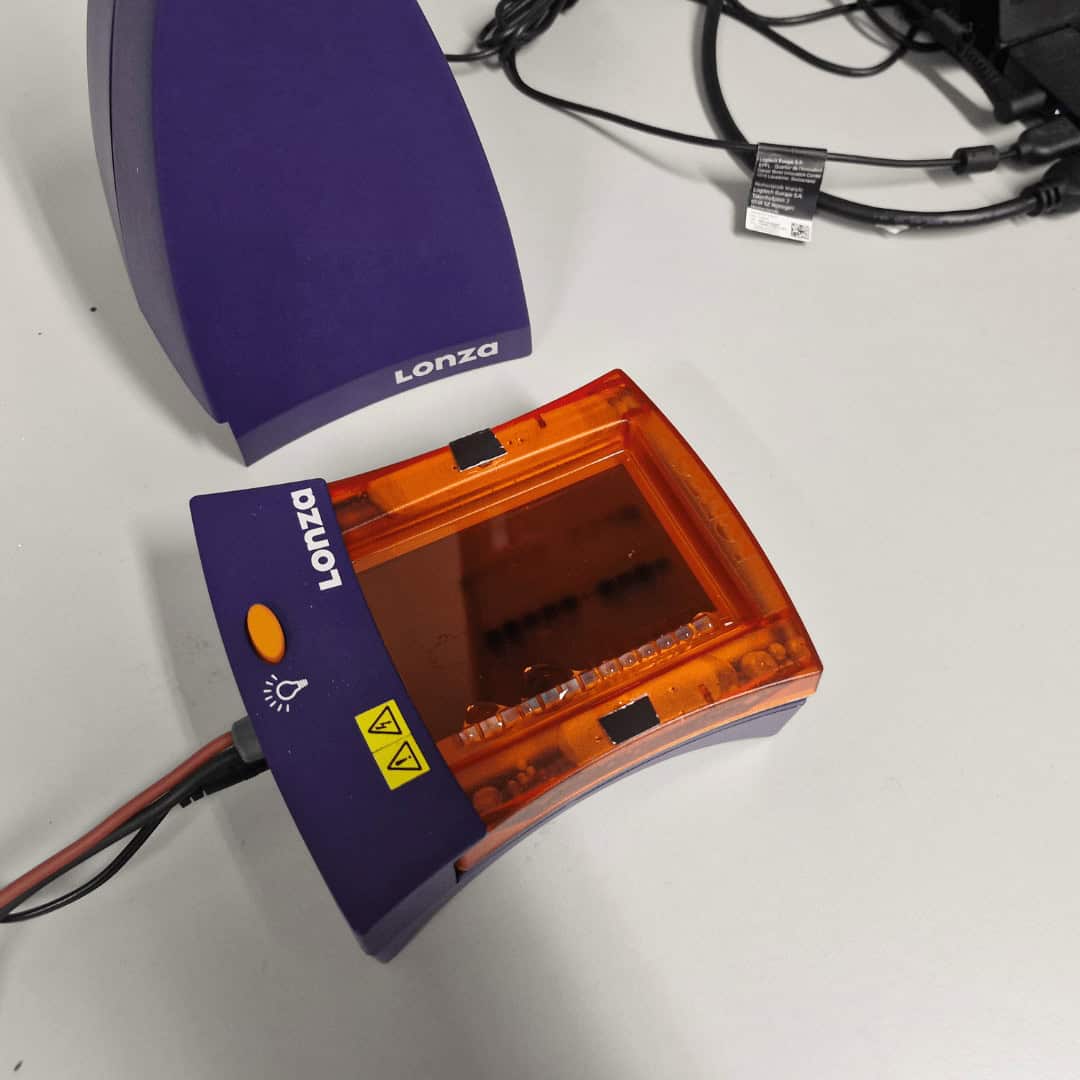
In this hands-on molecular biology session, students will plate and grow E. coli colonies, grow-on the clones then isolate DNA to look for successful plasmid insertions. Students then use restriction enzymes to cut the DNA into defined fragments, then separate and visualise these fragments using gel electrophoresis. Through this complete biotechnology workflow, students experience real laboratory techniques that reinforce A level concepts in genetic engineering, enzyme action, and DNA profiling. The session is highly practical, engaging, and designed to build confidence with core molecular methods while linking directly to exam spec content.
Forensics
In this immersive forensics session, students step into the role of crime scene investigators as they explore a range of analytical techniques used in forensic science. They will examine handwriting, footprints, and fingerprints to identify suspects; use ink chromatography and chlorophyll thin layer chromatography to analyse samples; investigate microfibres under magnification; assess toxic plants as potential evidence; and even study maggots from body cavities to understand insect growth rate and how it informs time of death estimations. This highly interactive workshop brings together biology, chemistry, and investigative thinking, giving students a practical insight into how scientific evidence is gathered, analysed, and interpreted in real forensic cases
Breast cancer screening - PCR and gel electrophoresis in Medicine
In this medically-focused molecular biology session, students use polymerase chain reaction (PCR) to amplify a target section of DNA, exploring how this powerful technique is applied in modern diagnostics such as detecting genetic conditions, identifying pathogens, and analysing patient samples. We use proxy breast cancer screening to actively run PCR and gel electrophoresis techniques.
They will then run their PCR products on a gel using electrophoresis to visualise and interpret what different banding patterns mean. This engaging, hands on practical experience helps students understand real clinical applications of PCR while reinforcing key A level concepts in genetic testing, molecular diagnostics, and DNA analysis.
Replacement Activities - Optional activities that replace a classroom session
Daytime or follow-up activities
Team challenges
A series of thought-provoking activities requiring teamwork and co-operation. This activity is becoming more popular because of the benefits that can be derived from encouraging young people to work together, consider problems, discuss possible solutions and most importantly, to learn from their mistakes. An excellent first session to a course, to get groups thinking on a teamwork theme! An experienced member of staff will encourage the group to develop by following a logical progression through a series of activities and reviews. Lots of fun even if you do not succeed first time!
Low ropes
Castle Head has a purpose-built Low Ropes Course which is designed to encourage the students to work as a team to overcome the obstacles which they are faced with. The group have to work together to get everybody around the whole course without touching the ground. It is often combined with a series of problem solving exercises to give a structured progression of teambuilding tasks. The low ropes course includes balance beams, rope bridges, zip wire and scramble nets.
Orienteering
Castle Head has an orienteering course, set up by one of the North West’s top coaches. The activity begins with the basics of map work and navigation using a few simple games and route-finding techniques. This leads individuals, taking part, through a variety of courses of increasing difficulty. At the heart of the activity is scope for individual progression and achievement.
High ropes
Choose from High all aboard, Jacobs ladder or Vertical challenge. When its not their turn the students help their peers by belaying, keeping the climbers safe using ropes.
Crate stack
Students work in pairs to build a tower of crates whilst standing on top of the tower. How high will they get? The rest of the team help by belaying, keeping the climbers safe using ropes, and by passing the climbers more crates.
Obstacle course
Based in the woods in the Centre grounds the obstacle course consists of a series of challenges of varying degrees of difficulty. This can be a timed event for either teams or individuals, or completed as a whole team challenge. It is often combined with a series of problem solving exercises and/or the Low Ropes Course to give a structured progression of teambuilding tasks and individual challenges. The obstacle course consists of tunnels, balance beams and cargo nets.
Follow up activities:
Camp Fire
Hot chocolate, marshmallows & chat. A chance for students to reflect on what they have learnt so far on the course. Singing is optional!
Mammal and moth traps
Students will set up small humane mammal and moth traps to be left out overnight. In the morning, time will be needed to open traps to discover what’s inside.
Night Walk
Follow up activity: A chance to experience the surrounding area in an unfamiliar context.
How this course fulfills the specification
Specification links:
- AQA: ATa; Competency 1, 2, 3, 4
- OCR: 1.2.2; CPAC 1: Follow written procedures and work safely; CPAC 2: Handle equipment and biological materials correctly; CPAC 3: Make and record accurate measurements; CPAC 5: Use scientific knowledge to explain practical work.
- Pearson Edexcel: CPAC 1, 2, 3, 4
- AQA- Competency 1, 2, 3, 4, 5; ATi, 3.8.4; 3.8.4.1; 3.8.4.2
- OCR -A 6.1.3. 6.1.3 (c); 6.2
- Pearson Edexcel- CPAC 1, 2, 3, 4, 5; A Core Practical 9, 14; 6.2.2, 6.1.1, 6.2.3,
- AQA: Competency 1, 2, 3, 4, 5; Required Practical 7; ATa, ATg, ATg; 3.7.4.1, 3.2.1, 3.5.1, 3.3.3.1, & 3.4.4
- OCR: 4.2.1, 4.1.1, 5.2.1, 2.1.1, 3.1.4, & 4.2.2
- Pearson Edexcel: 6.4.1, 5.2.2, 6.4.2, & 9.1.3
- AQA: Competency 1, 2, 3, 4, 5; 3.8.1; 3.8.2; 3.8.3; 3.8.4
- OCR A: 4.1; 6.1.3 (e)
- Pearson Edexcel A: Core Practical 14; 2.1.2; 2.1.15; 2.1.16; 6.1.1; 6.4
Added value of this course
Develop skills
- Communication | Resilience | Independent thinking | Leadership
Numeracy | Literacy | Investigative skills | Observation
Enhance Knowledge
- Ask questions.
- Apply knowledge in the real world and make links.
- Make sense of new places and understand our place and role within this.
Enjoy
- Have fun | Make friendships | Connect with nature
Why Choose Field Studies Council?
-

Expert tuition by fully trained staff
-

Stunning locations across the UK
-

Outstanding curriculum knowledge
-

Rigorous health and safety procedures
-

Support before and after your visit
-

Free places for visiting staff