

| Field Studies Council is a trusted national partner for Scottish local authorities seeking to deliver high-quality residential outdoor education consistently and at scale. With more than 80 years of experience and a long history of working with schools, councils and public bodies, we help reduce pressure on local authority teams by managing delivery logistics, providing established residential capacity, and ensuring programmes are delivered safely, inclusively and effectively. Our proven model helps councils provide equitable access to outdoor learning opportunities while maintaining confidence in quality, governance and educational outcomes. At the heart of our Scottish provision is Millport on the Isle of Cumbrae, a flagship centre with a strong track record of supporting young people through residential outdoor and environmental learning. Purpose-built for immersive outdoor experiences and supported by experienced professional staff, Millport offers accessible, high-quality provision for learners with a wide range of needs and abilities. Whether supporting ongoing delivery, expanding capacity, or providing continuity during periods of change, Field Studies Council offers local authorities a reliable, inclusive and scalable solution for residential outdoor education across Scotland. |
Island Environmental Exploration and Adventure is a five-day residential experience that brings environmental science, geography, sustainability, outdoor adventure and teamwork together in one unforgettable island-based programme.
Our S1-S3 5 day residential course uses the distinctive setting of Millport to help pupils develop a strong sense of place while building confidence, curiosity and practical skills through hands-on fieldwork, outdoor challenges and reflective learning.
5 day residential activities
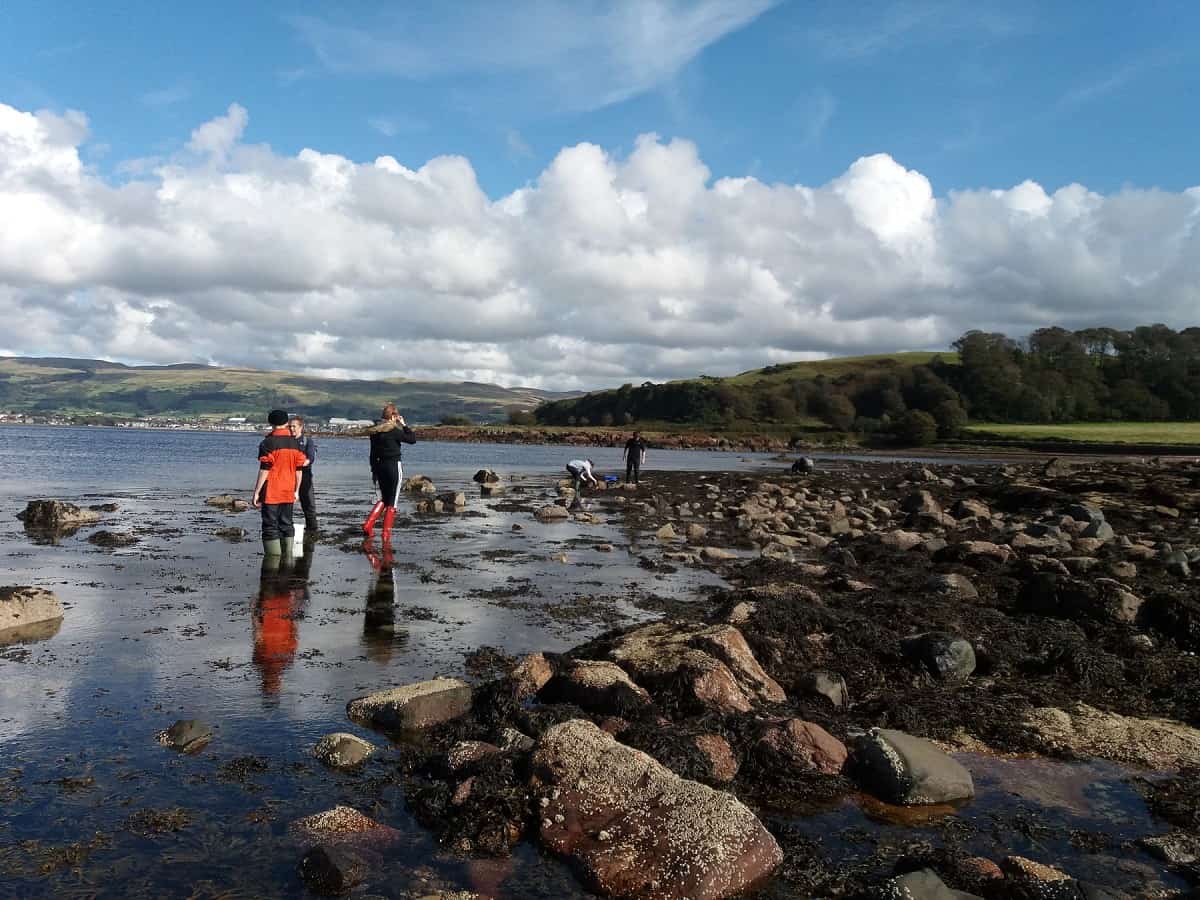
Across the week, pupils investigate coastal and terrestrial habitats, explore biodiversity through rock pooling and minibeast sampling, consider human impacts through beach litter and sustainability activities, and take part in adventurous challenges such as orienteering, bushcraft, raft building or climbing. These experiences connect directly with science, geography, technology and health and wellbeing outcomes, while supporting the development of Scotland’s four capacities: successful learners, confident individuals, responsible citizens and effective contributors.
5 day residential content and programme
By combining real-world environmental investigation with adventure, creativity and collaboration, this residential helps young people see the relevance of STEM, sustainability and outdoor learning in their own lives. Pupils leave with stronger teamwork and communication skills, greater resilience, a deeper connection to the natural world, and practical ideas for making a positive difference back at school and at home.
Please contact us below to discuss the content requirements of your S1-S3 5 day residential with our team.





Example Timetable
Example programme: Detailed 5-Day residential programme.
Day 1
Island perspectives and team dynamics
Morning
Journey mapping and Ferry crossing. Sense of place begins with pre-course task for journey.
Centre induction and rooming.
Afternoon
Island Navigation and Landscape Analysis. Build a detailed sense of place by interpreting the island landscape. Pupils apply map-reading and navigation skills, select routes and share responsibility for completing team challenges.
Four capacities:
- Confident Individuals – pupils will make informed decisions in an unfamiliar setting, evaluate their progress and adapt their approach when challenges arise.
- Effective Contributors – pupils will negotiate roles, communicate evidence and take shared responsibility for successful navigation.
Evening
Team Building Challenge. Collaborative challenges require pupils to plan, test and refine solutions while managing time, roles and competing ideas.
Four capacities
- Confident Individuals – pupils will take appropriate risks, respond constructively to setbacks and recognise how their choices affect the group.
- Effective Contributors – pupils will justify ideas, listen critically and use feedback to improve their team’s strategy.
Day 2
Morning
Ecological field enquiry
Morning
Rocky Shore Ecosystem Survey. Pupils use systematic sampling, species identification and field observations to investigate patterns in the rocky-shore ecosystem. They consider reliability, explain adaptations and evaluate human impacts through a beach litter survey, supported by an expert-led aquarium visit.
Four capacities
- Successful Learners –pupils will collect and interpret field evidence, identify ecological relationships and evaluate the limitations of their investigation
- Responsible Citizens – pupils will assess pressures on coastal environments and use evidence to propose realistic actions for their protection.
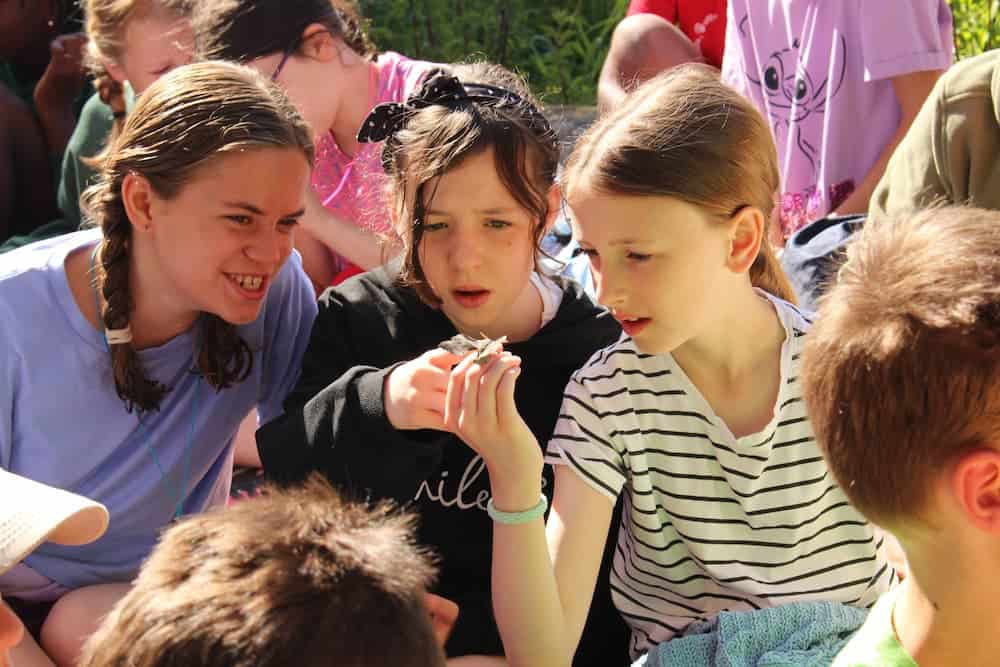
Invertebrate Biodiversity Sampling. Pupils compare invertebrate communities across contrasting habitats. Working with greater independence, they select suitable sampling methods, record evidence and use their findings to explain adaptation, interaction and interdependence.
Four capacities
- Confident individuals –pupils will make reasoned methodological choices, manage practical responsibilities and respond to unexpected field conditions.
- Successful Learners – pupils will compare data between habitats and construct evidence-based explanations for observed ecological patterns.
Evening
Nocturnal Nature. Pupils investigate how nocturnal animals are adapted to their environment. They develop hypotheses, deploy humane small-mammal traps and use camera traps and bat detectors, then evaluate what the resulting evidence can and cannot show.
Four capacities
- Successful Learners – pupils will connect adaptation theory with field evidence, recognise uncertainty and suggest improvements to the investigation.
Day 3
Challenge, leadership and resilience
Adventure Challenge: choose from Archery, Rock Climbing and Raft Building or Buggy build. Pupils set personal and team goals, assess risk and take increasing responsibility for planning and performance. Structured review points help them transfer communication, leadership and problem-solving strategies between activities.
Four capacities:
- Confident Individuals – pupils will manage challenge and risk, demonstrate perseverance and evaluate how their decisions influence performance.
- Effective Contributors – pupils will lead and support others, resolve differences and adapt team strategies using evidence from reflection.
Evening
Orienteering. Teams apply map interpretation, orientation and route-choice skills to plan an efficient approach to the course. Pupils monitor progress, adjust decisions and balance speed with accuracy.
Four capacities:
- Confident Individuals – pupils will use judgement under time pressure and review the consequences of their route choices.
- Effective Contributors – pupils will allocate roles, communicate concise navigational information and support collective decision-making.
Day 4
Sustainable systems and solutions
Morning
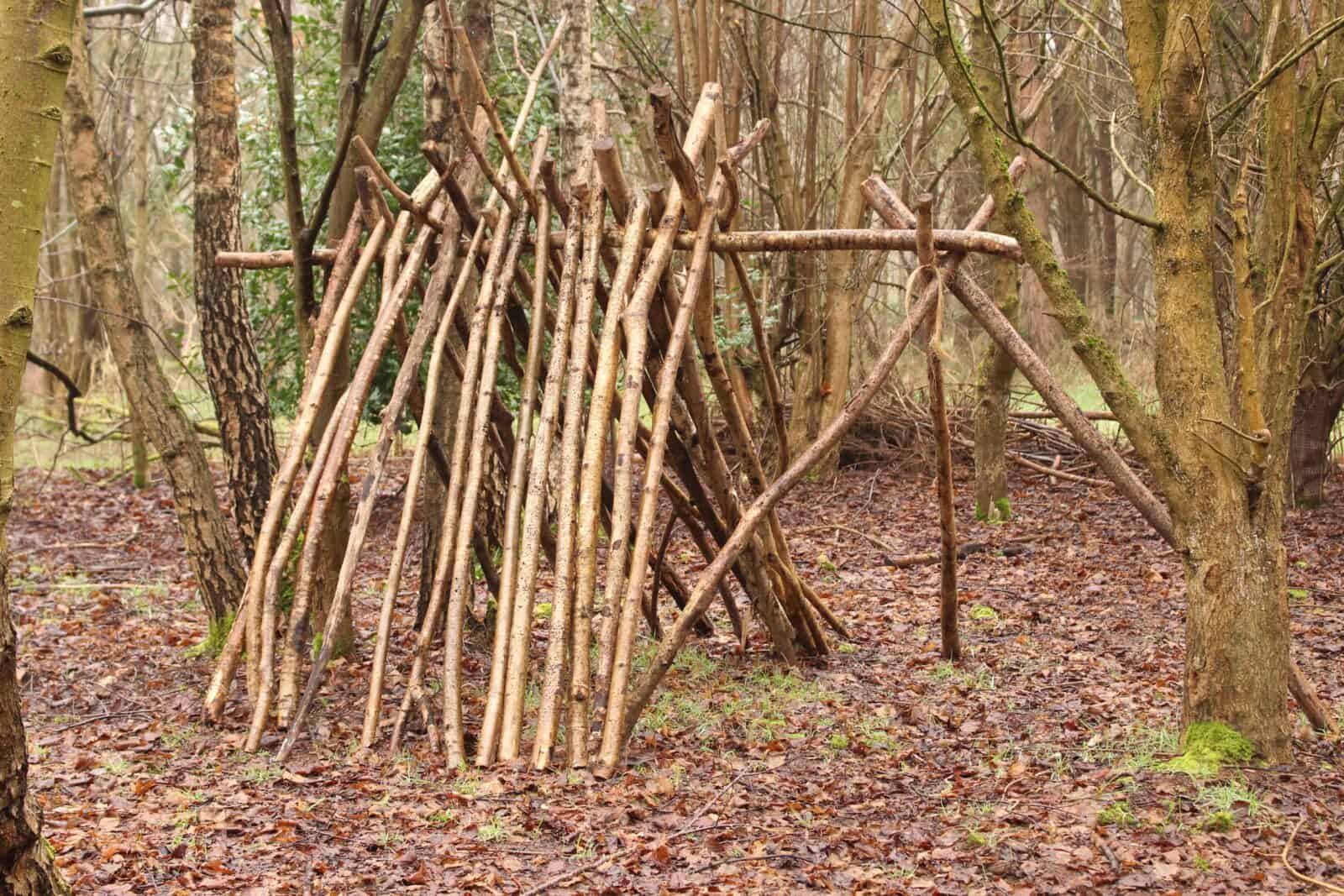
Wilderness Bushcraft Skills. Pupils work within agreed safety parameters to prioritise needs, select resources and refine approaches to fire-lighting, long-distance communication and shelter building. They compare traditional techniques with modern choices and consider resource efficiency.
Four capacities:
- Successful Learners – pupils will apply scientific and technological principles, test solutions and explain how evidence informed improvements.
- Responsible Citizens – pupils will evaluate the environmental costs of different choices and identify practical principles for lower-impact living.
Afternoon
Sustainable Millport Design Brief. Through applied STEAM tasks, pupils analyse renewable-energy options, sustainable design and the social, economic and environmental impacts of tourism. They use agreed criteria to develop and defend a proposal for a “Sustainable Millport”, complete a carbon-footprint trail and identify measurable personal actions.
Four capacities:
- Successful Learners – pupils will synthesise evidence from science, geography and technology to compare options and justify a design response.
- Responsible Citizens – pupils will consider trade-offs, different stakeholder perspectives and the likely impact of proposed actions.
Evening
Campfire Review and Skills Transfer. Pupils use structured reflection to identify turning points in their week, explain how they responded to challenge and recognise skills that can transfer to school, home and future learning.
Four capacities:
- Confident Individuals – pupils will evaluate their contribution, articulate evidence of growth and set a meaningful next step.
Day 5
Evidence, evaluation and next steps
Morning
Learning Showcase and Action Plan. Pupils select evidence from the week and create a concise presentation or performance for a defined audience. They explain significant learning, evaluate progress against goals and propose a realistic action to carry forward at school or home.
Four capacities
- Confident Individuals – pupils will communicate learning with clarity, respond to questions and set a purposeful personal target.
- Effective Contributors – pupils will curate evidence collaboratively, divide responsibility equitably and adapt their communication for an audience.
Midday: depart centre after farewells.
Added value of this course
Develop skills
- Communication | Resilience | Independent thinking | Leadership
- Numeracy | Literacy | Investigative skills | Observation
Enhance Knowledge
- Ask questions
- Apply knowledge in the real world and make links
- Make sense of new places and understand our place and role within this
Enjoy
Have fun | Make friendships | Connect with nature
Why Choose Field Studies Council?
-

Expert tuition by fully trained staff
-

Stunning locations across the UK
-

Outstanding curriculum knowledge
-

Rigorous health and safety procedures
-

Support before and after your visit
-

Free places for visiting staff