Longhorn beetles guide
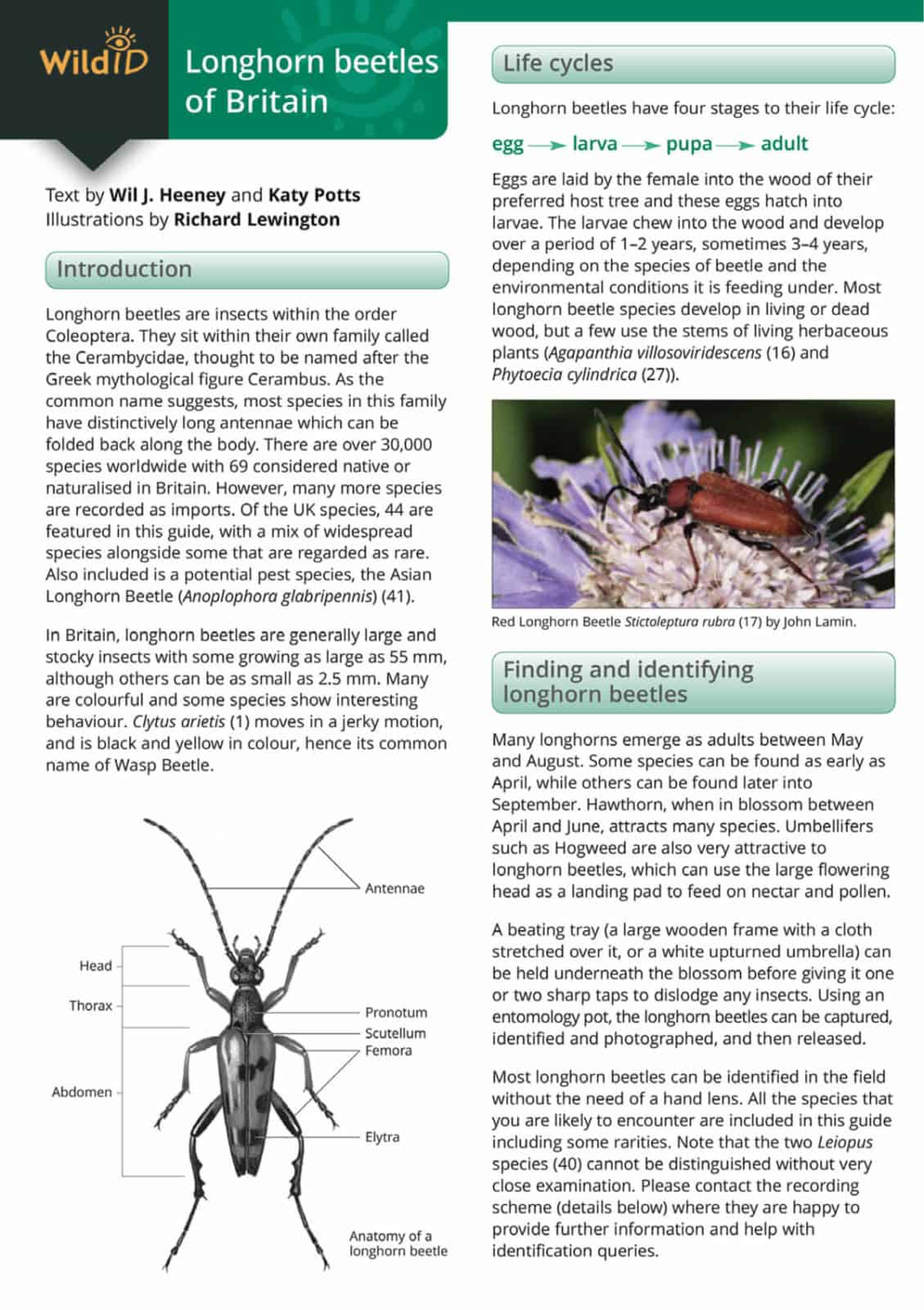
WildID Longhorn beetles fold-out guide is the first popular field guide for many years to these spectacular insects.
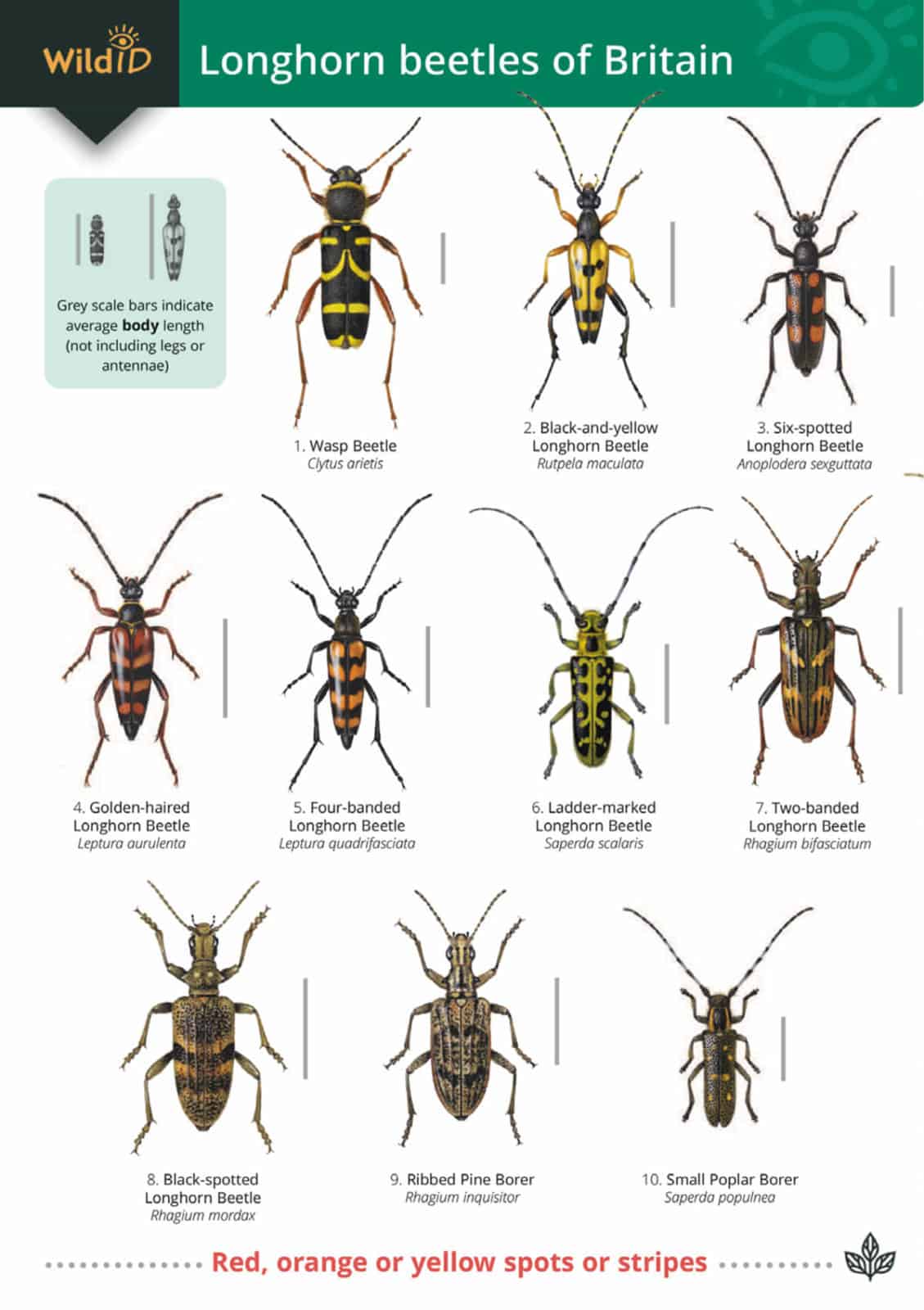
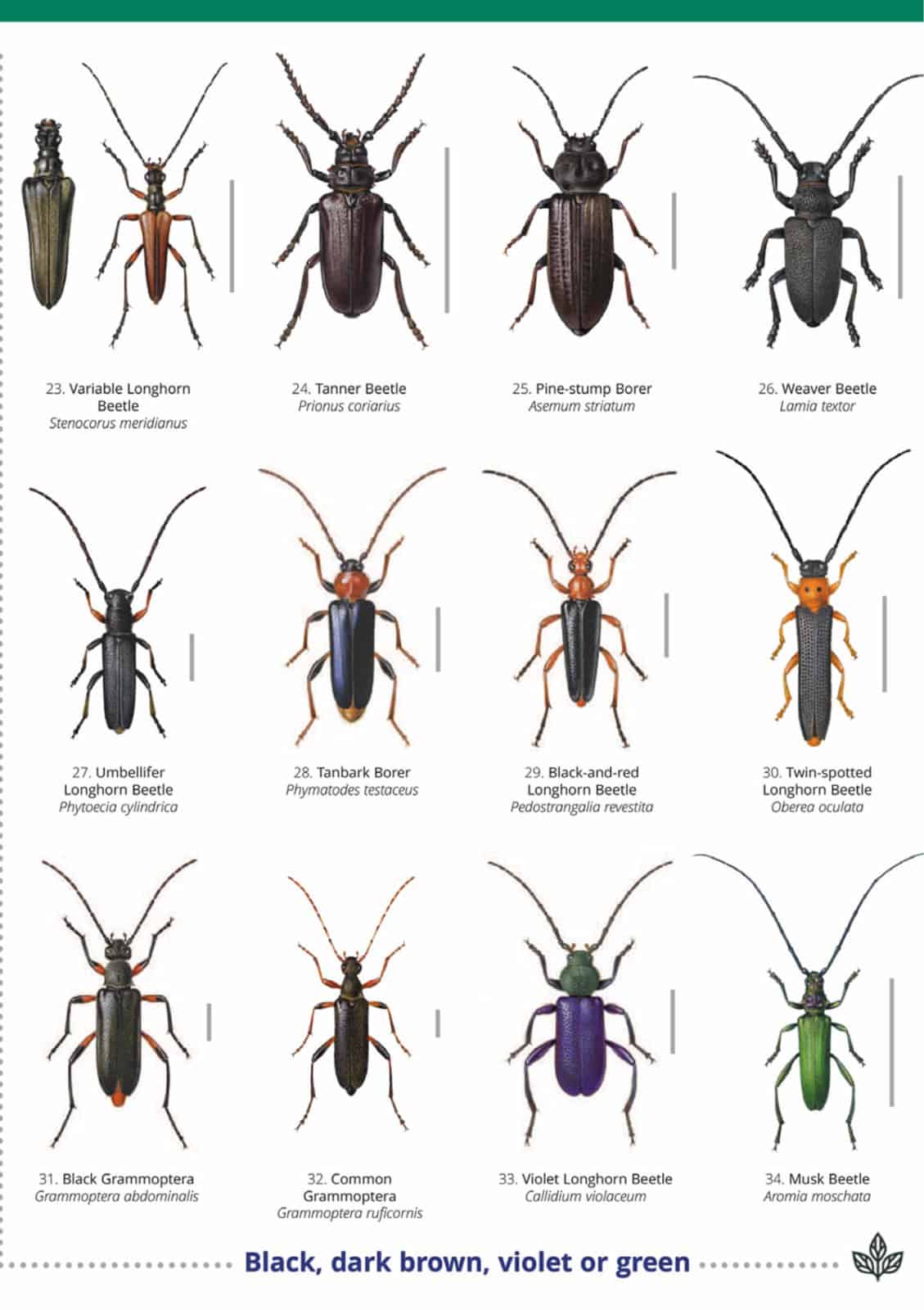
- Identification guide to 42 species of Britain and Ireland
- Colour paintings by Richard Lewington show the key markings and body shape of each species.
- Accompanying text covers the status, distribution, habitat and size of each species
- Practical for use outdoors: lightweight, rucksack-sized, splash-proof
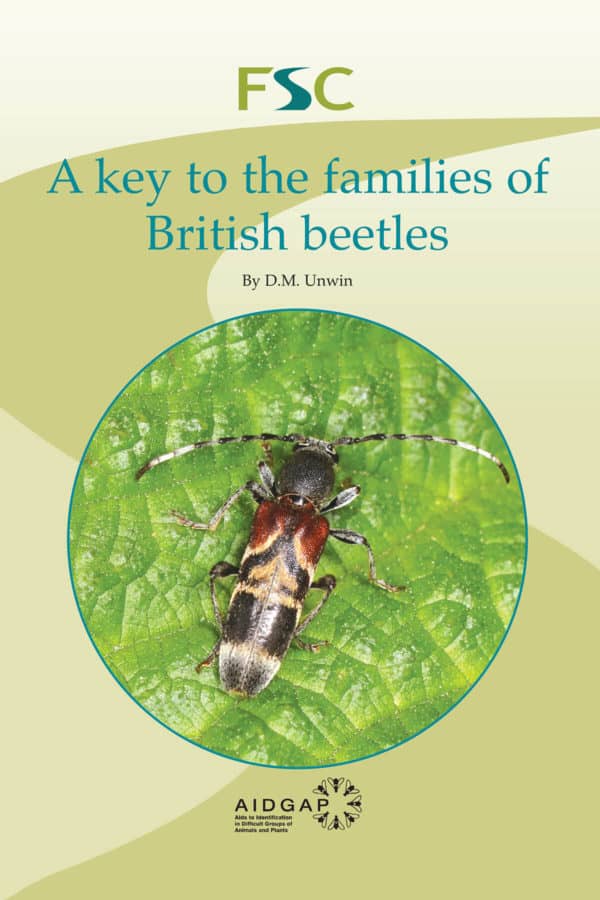
Although not as well known as butterflies, bees and ladybirds, the longhorn beetles are one of Britain’s most spectacular families of insects. As their name suggests, the distinctively long antennae help distinguish the group.
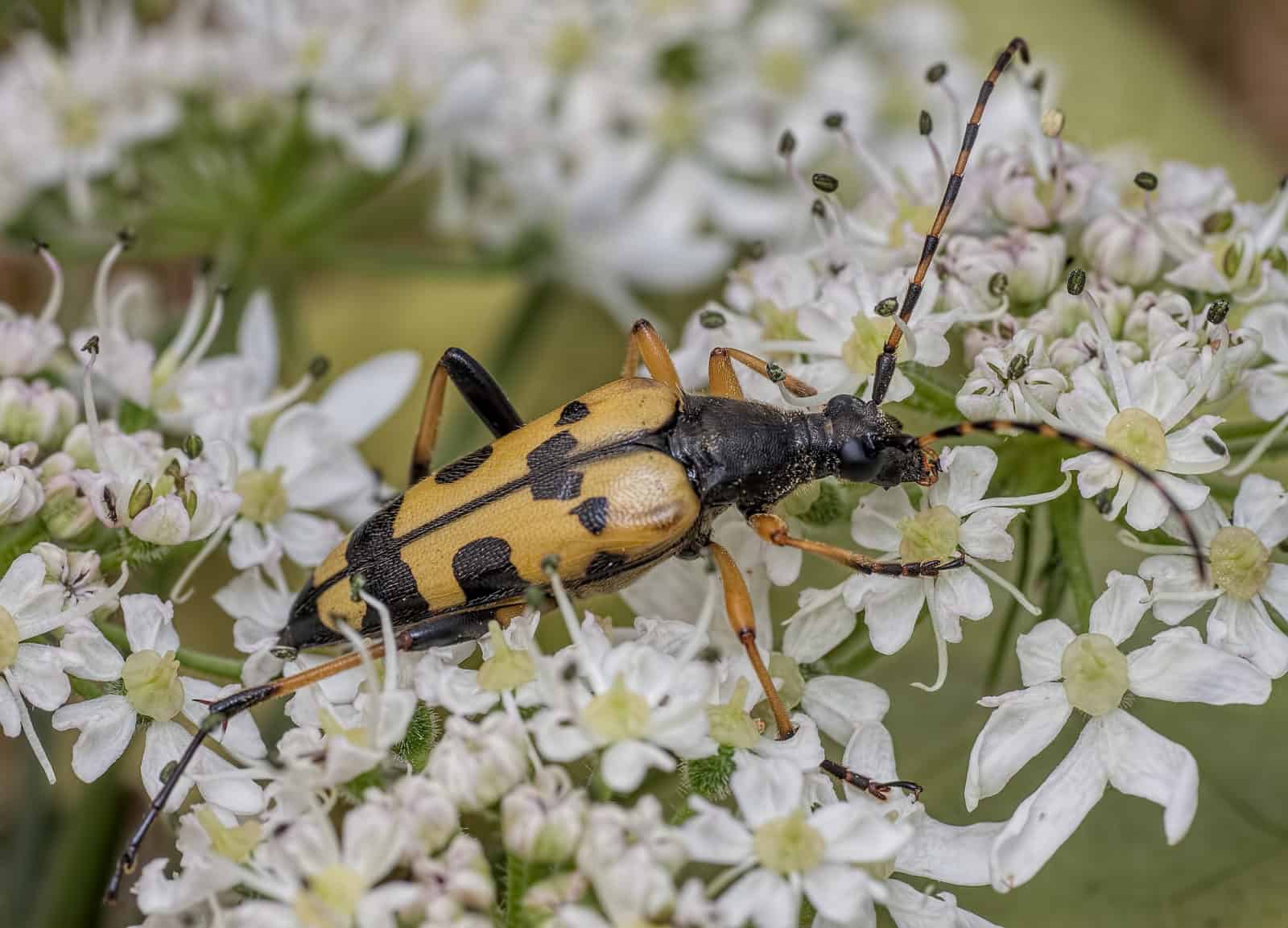
The species found in Britain are generally large and stocky. Some grow as long as 55 mm (not including the legs and antennae), while others can be as small as 2.5mm. Many are colourful and some species show interesting behaviour. The Wasp Beetle, for instance, is black and yellow in colour, and moves in a jerky motion. It is common in hedgerows and woodland.
Almost all longhorn beetles can be identified from live insects in the field. Most don’t even need a hand lens. Many longhorn beetles emerge as adults between May and August. Some species are active as adults as early as April. Hawthorn, when in blossom between April and June, attracts many species. Later in the summer, hogweed is very attractive to longhorn beetles. Flower-rich hedgerows, especially when close to woodland, can be a great place to hunt for longhorns!
Field Studies Council worked with the National Longhorn Beetle Recording Scheme to produce the Longhorn beetles guide.