Rocky shore lichens guide
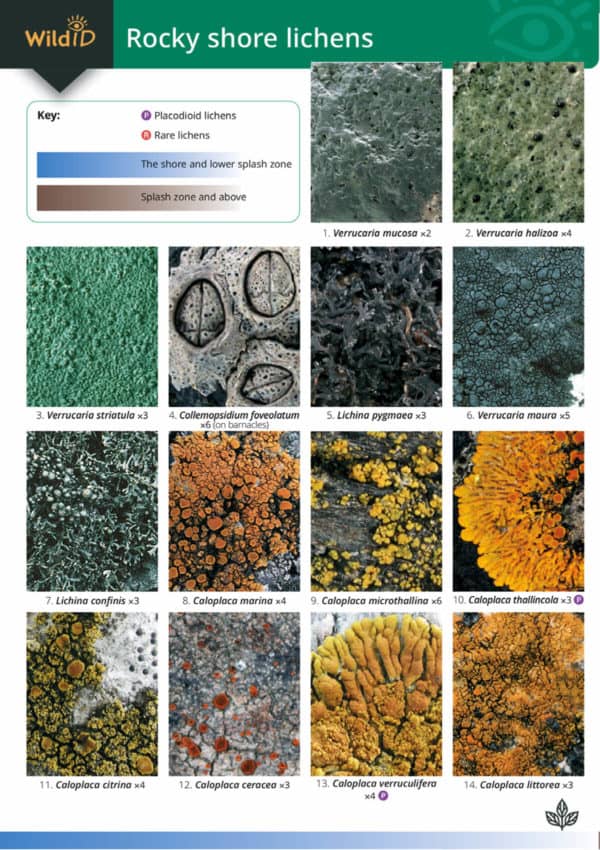
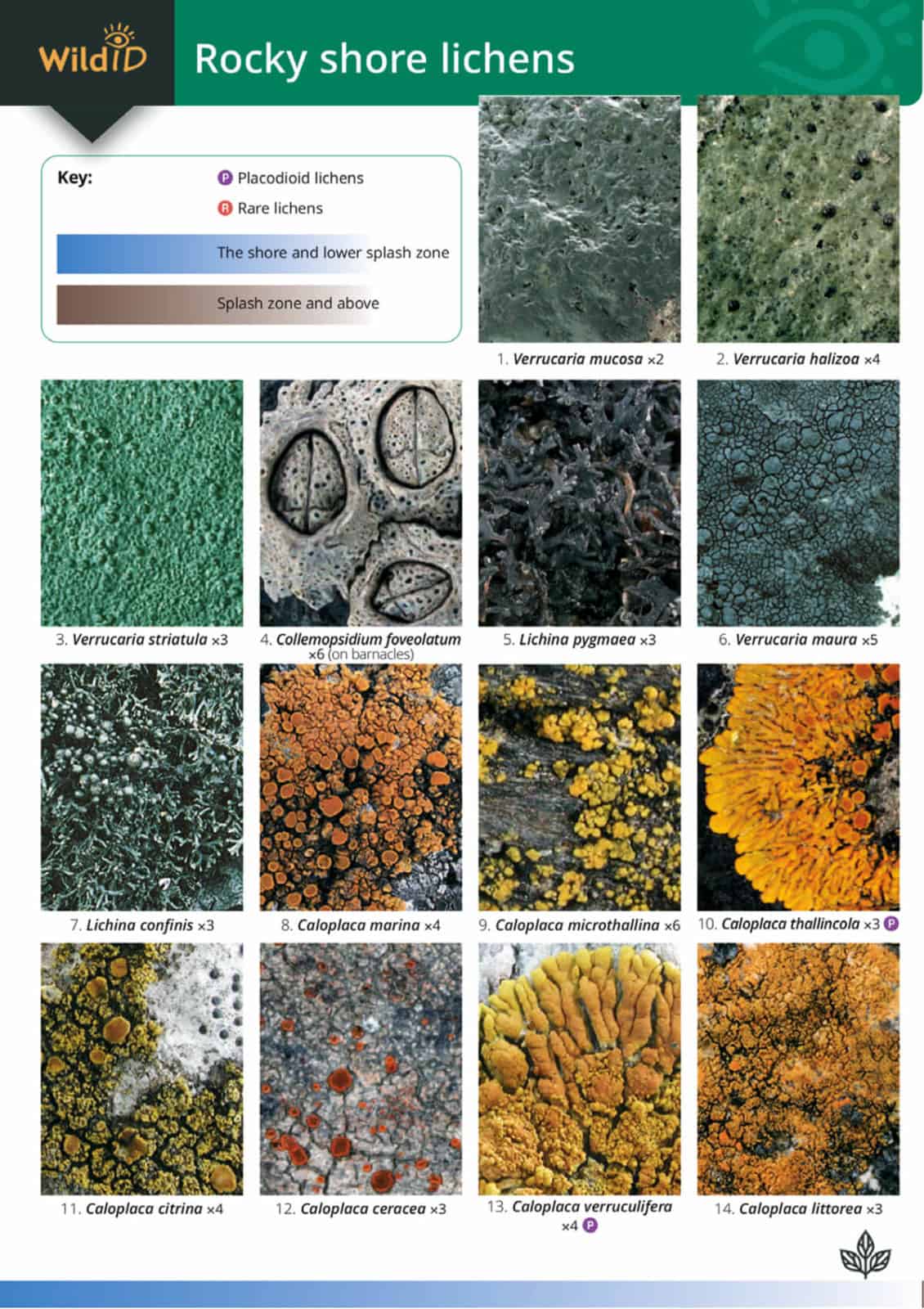
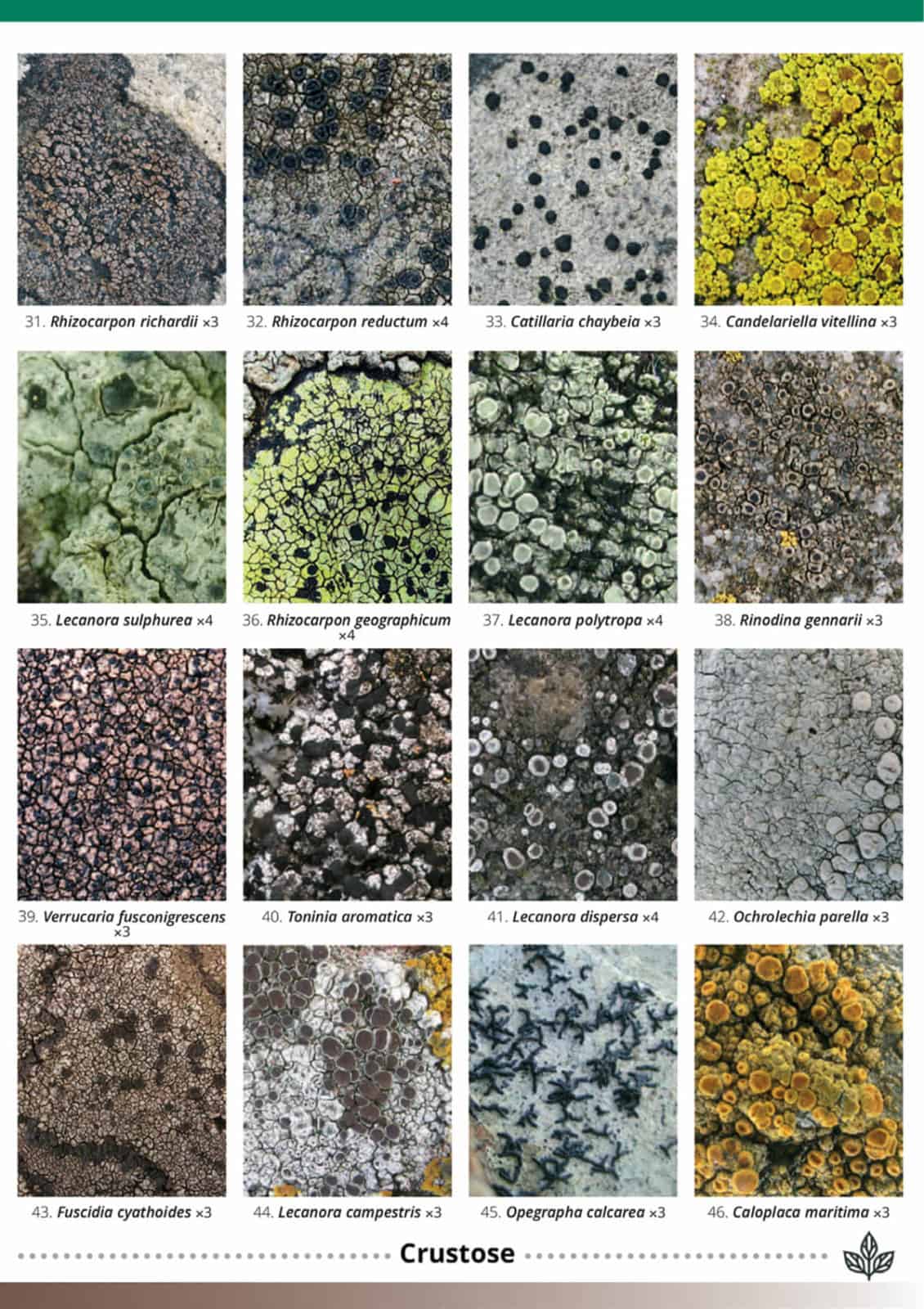
WildID Rocky shore lichens is an identification guide to common lichens from the low tide mark up to the limit of sea spray.
- Identification guide to 62 lichen species
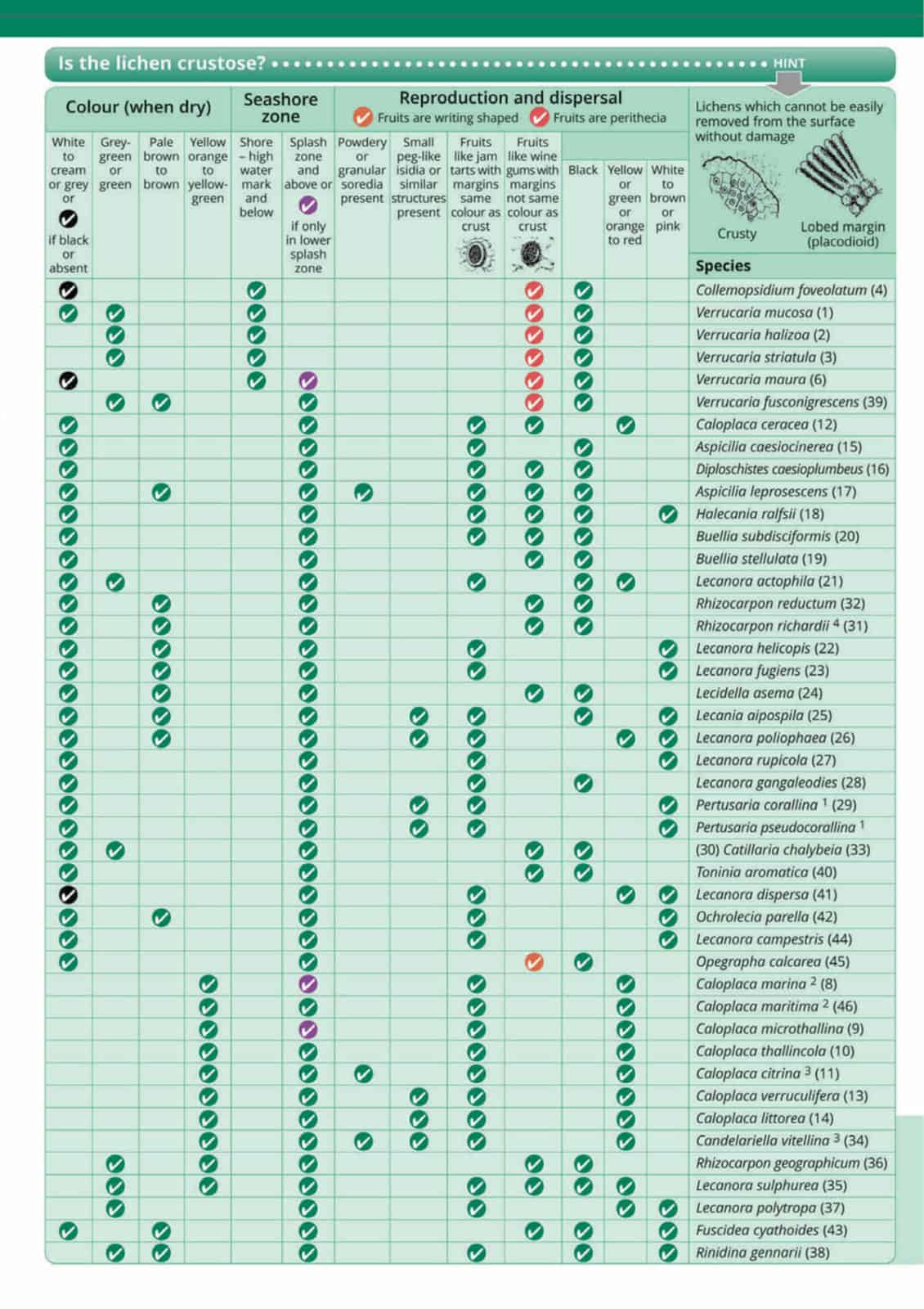
- Also includes an easy-to-use visual lichen identification guide
- Practical for use outdoors: lightweight, rucksack-sized, splash-proof
A rocky seashore is a very difficult environment for most living organisms. Below high tide mark, the sea submerges the shore for part of the day. Above high tide mark, breaking waves soak surfaces with salty spray. When this spray dries out it leaves a coating of salt. Overall lichens are some of the relatively few organisms that can survive these challenging conditions.
Lichens are present throughout the year, so you can search for them at any time, even in the winter. You do not need to take any special equipment with you, although a hand lens or magnifying glass are useful, since some key features are small and difficult to recognise.
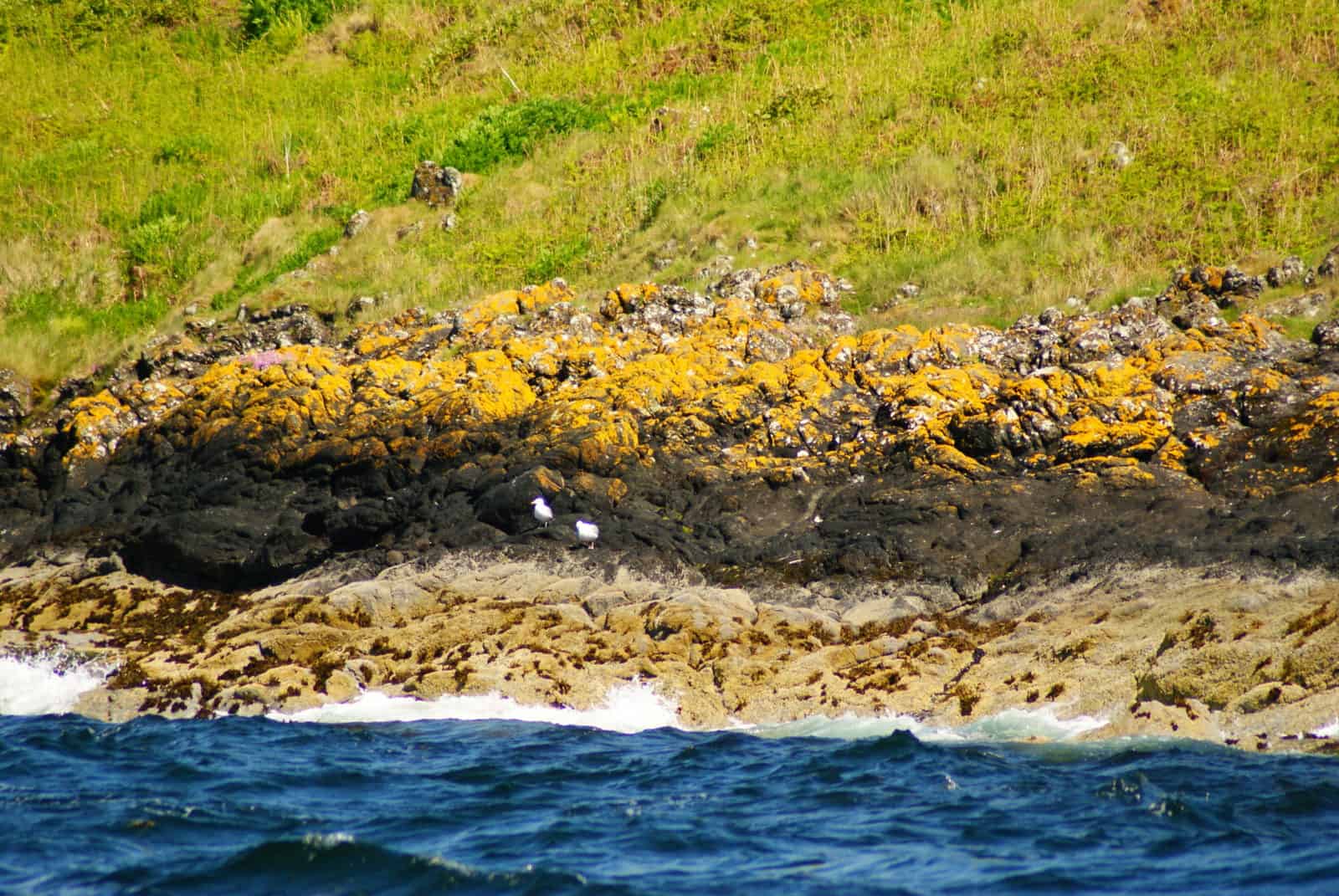
Often the seashore is divided into several zones.
- Lower shore – only uncovered at low spring tides. There are few lichens. Lichens do not occur below this level, as they need light for photosynthesis.
- Middle shore – covered and uncovered twice a day by the tide, so wave action is powerful. Thus the few species that survive grow inside shells or they are smooth and crustose.
- Upper shore – rarely submerged by the tide. Black tar lichen is often dominant. Indeed the upper shore is sometimes called the ‘black zone’.
- Splash zone – never submerged, only affected by spray. This zone contains many colourful Caloplaca species, and is sometimes called the ‘orange zone’. It merges into the ‘grey zone’, where mainly grey lichens grade into normal inland lichens.