Woodlands: trees, flowers and fungi
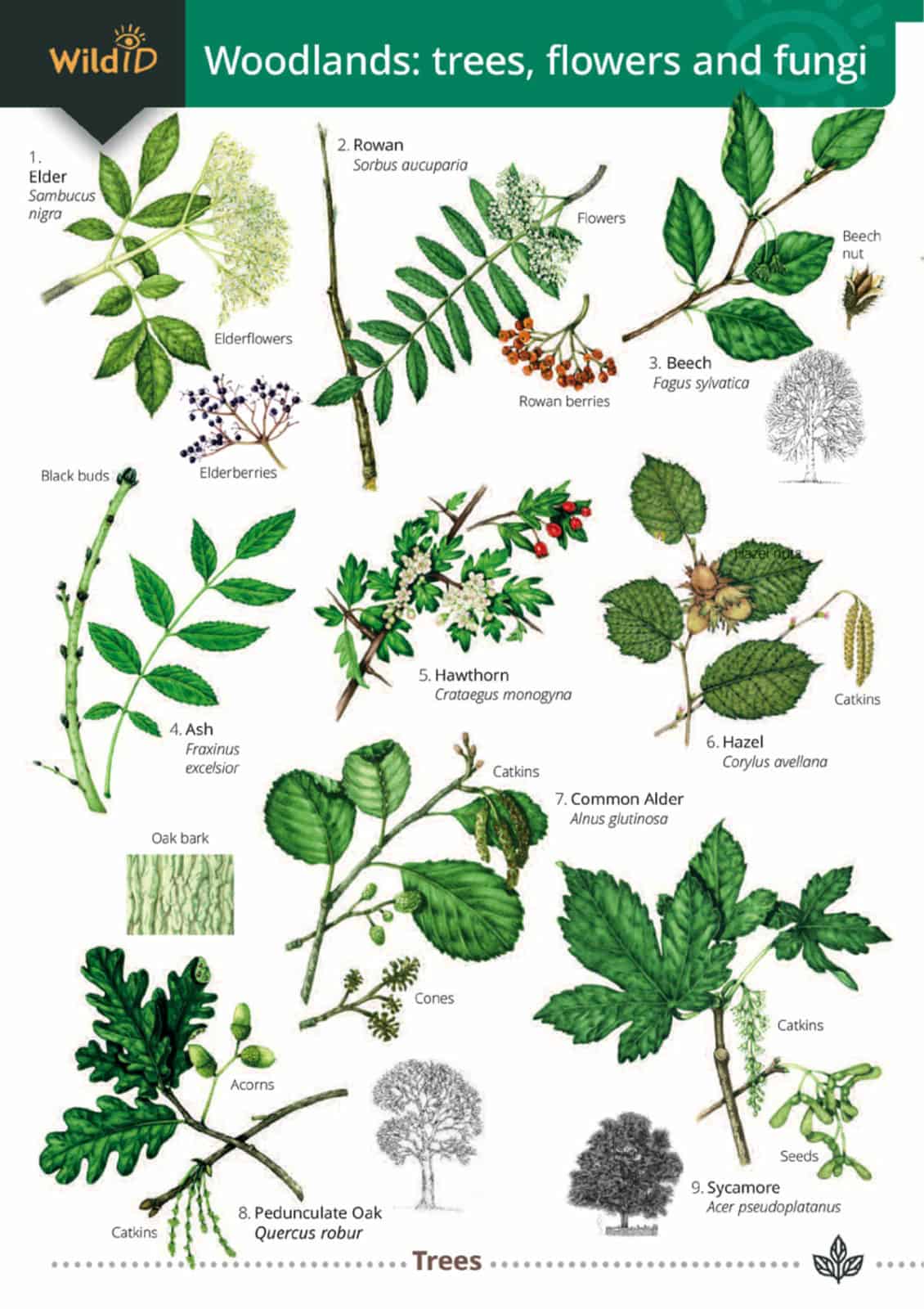
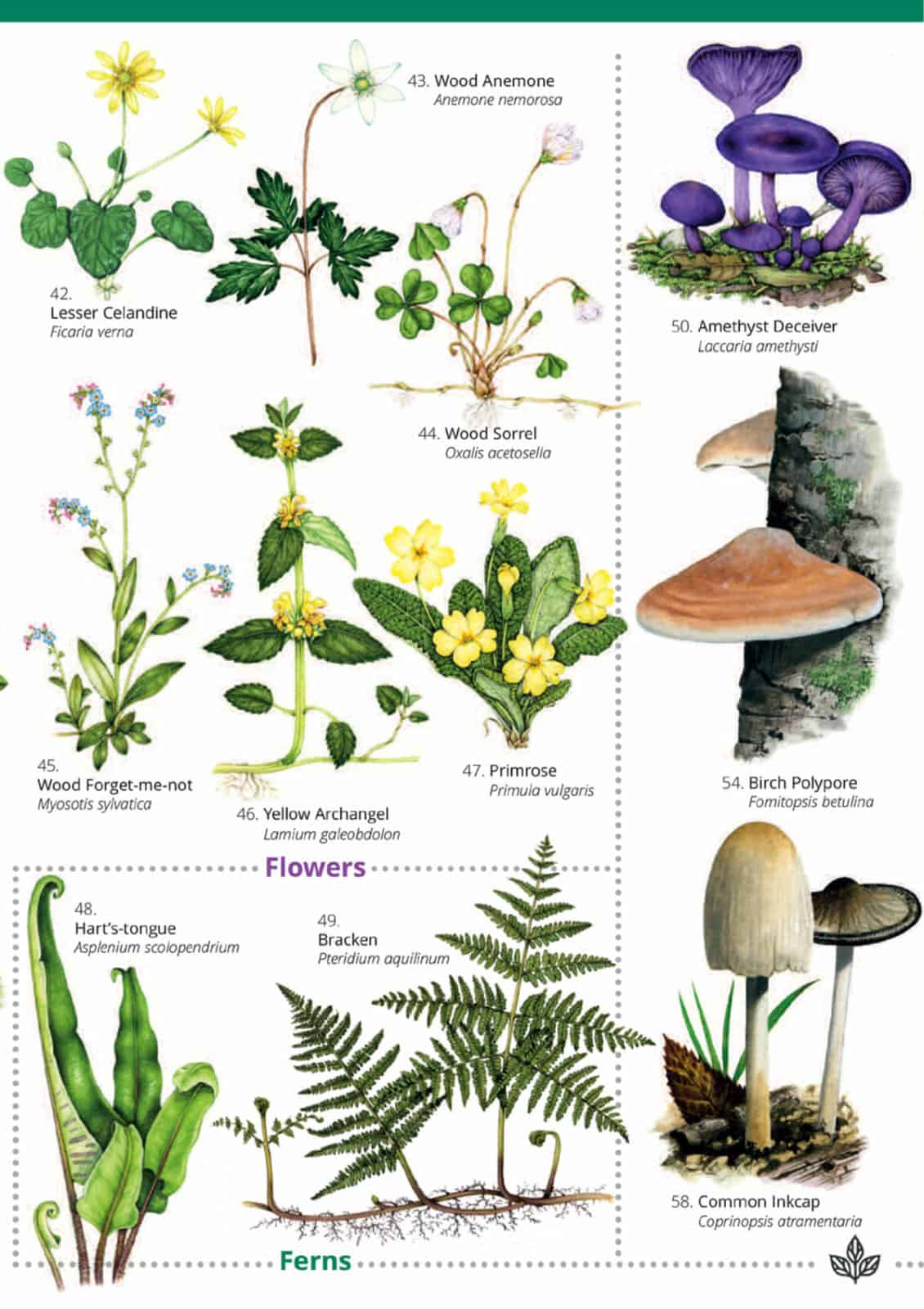
WildID Woodlands: Trees, flowers and fungi fold-out guide features 61 species of trees, wild flowers, ferns and fungi of woodland.
- Identification guide to 61 species of trees, wild flowers, ferns and fungi
- Practical for use outdoors: lightweight, rucksack-sized, splash-proof
- Features something to see all year round
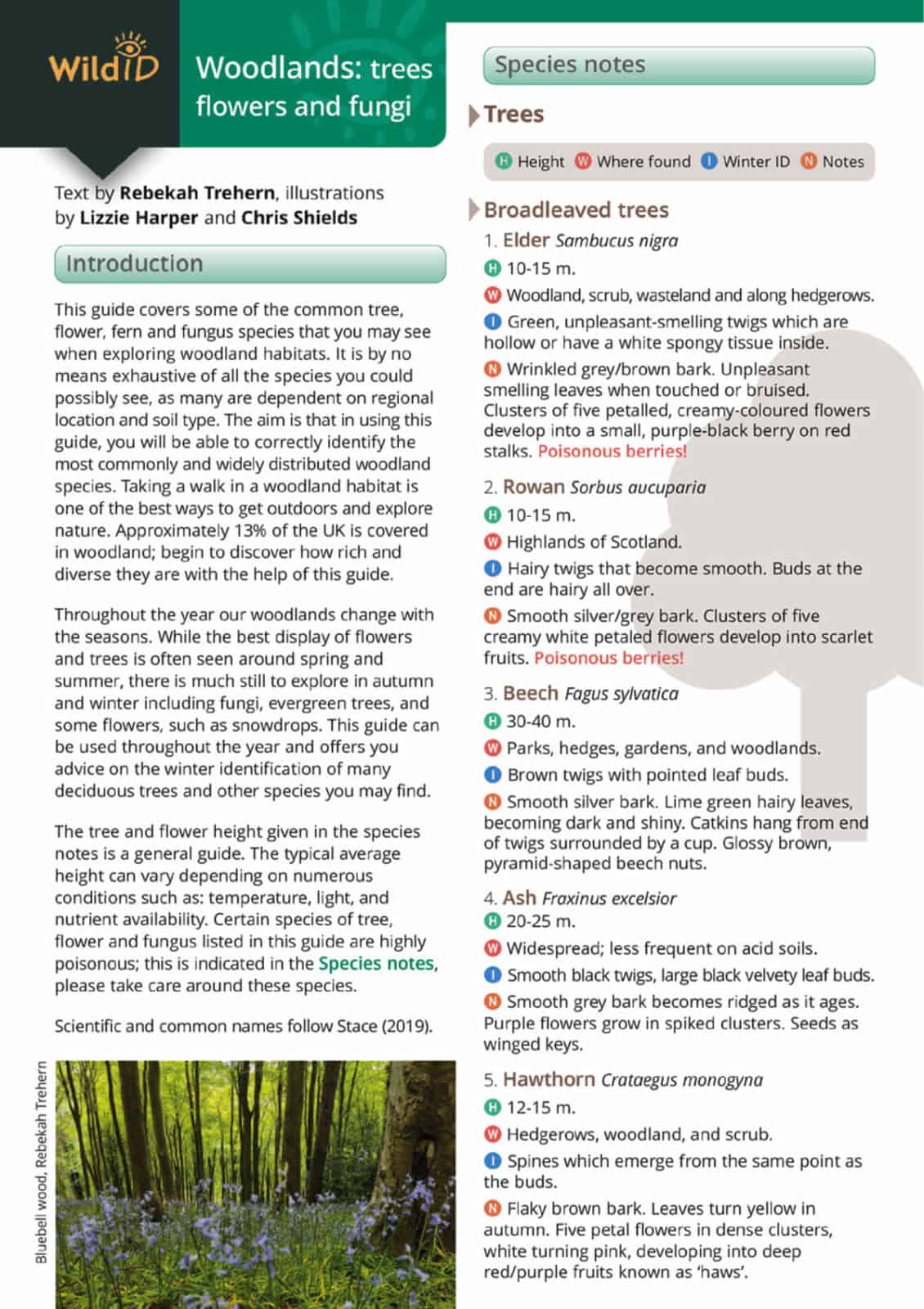
A woodland walk is a wonderful way to step outdoors and reconnect with nature. With this handy guide in your pocket, there’s something fascinating to spot in every season. Beautifully illustrated throughout, it highlights the key features to look for, helping you identify the plants, trees and fungi that bring our native woodlands to life. Concise species notes overleaf cover height, habitats and tips for spotting them in the wild.
Spring is the showiest time for woodland flowers, bursting into bloom as the days warm and before the leaf canopy closes overhead. Later in the year, flowers give way to colourful fruits and seeds: rose hips glowing red, brambles heavy with blackberries, and wild strawberries hidden among the leaves. Tree-spotting is often easiest in late spring and summer when leaves, flowers and seeds offer clear clues.
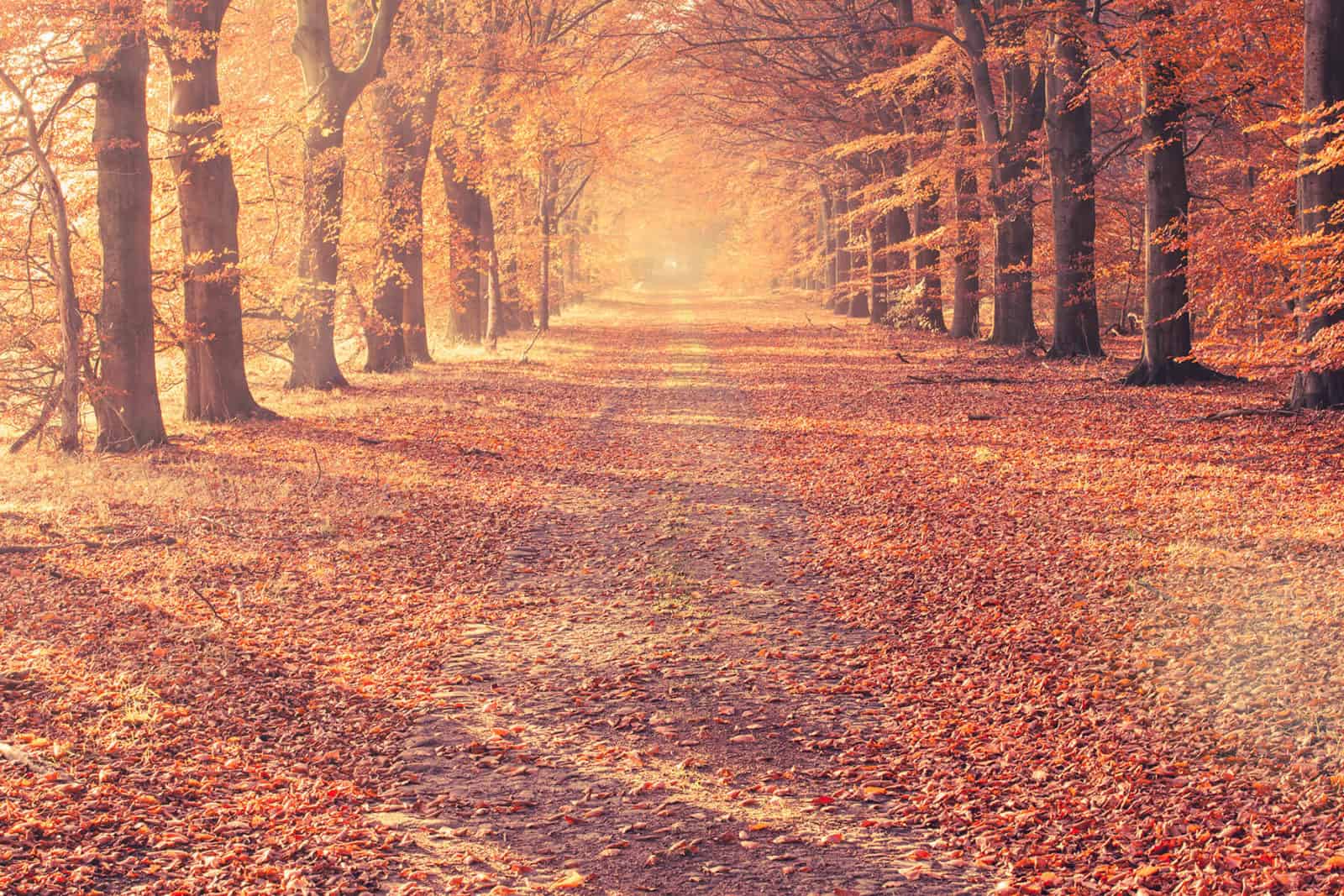
Come autumn, the woodland floor transforms again. After the first autumn storms and before winter’s frost arrives, fungi thrive among the leaf litter, dead logs and old stumps. From the striking Amethyst Deceiver to the peculiar Stinkhorn, there’s always something unexpected to discover. Not all fungi have classic mushroom shapes either. Look out for bracket fungi like Turkeytail and Birch Polypore growing on dead wood.