
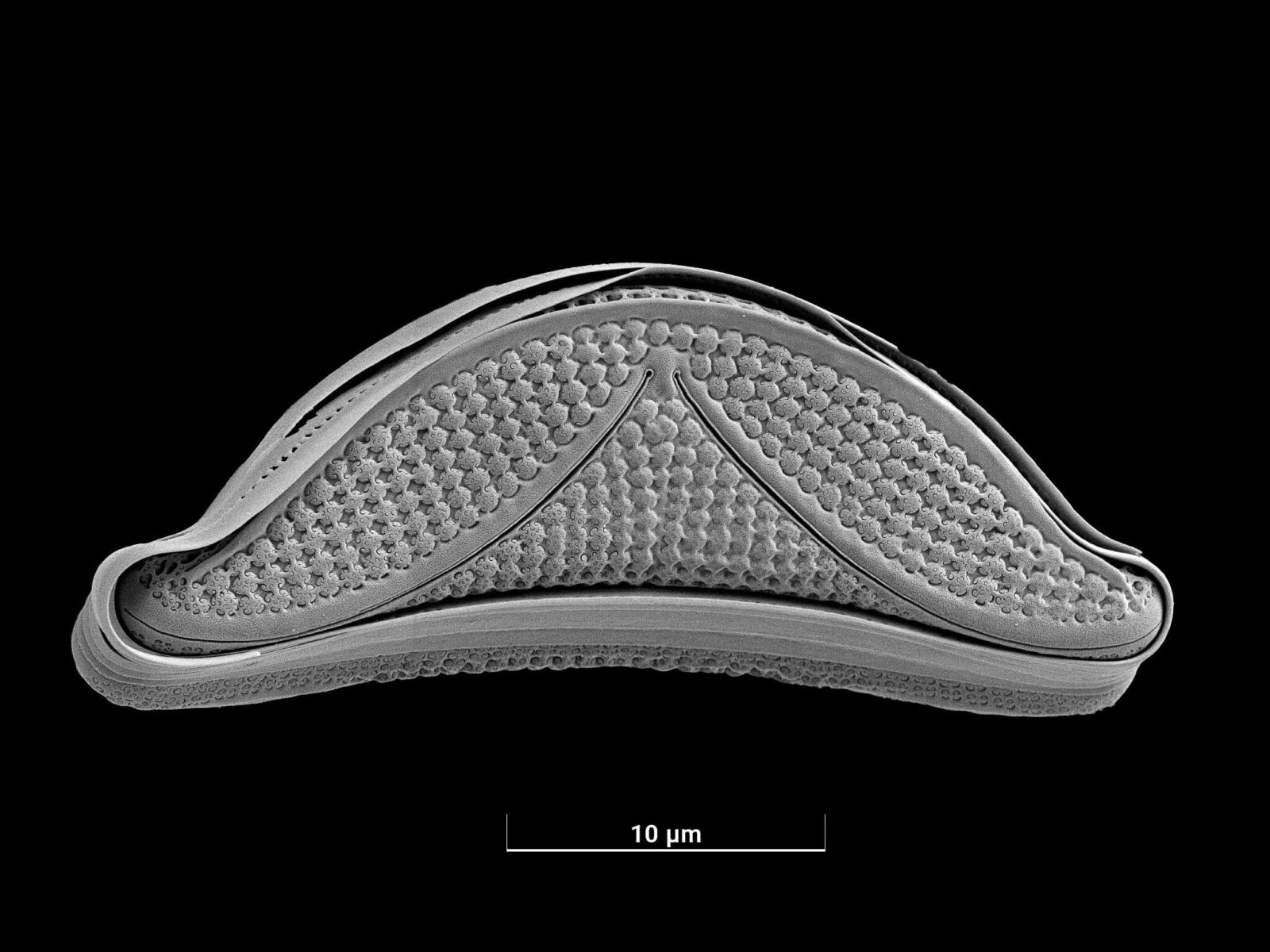
Take a trip down the microscope with Field Studies Council Supporter, Jeremy Poole, for an amazing view of his diatom microscopy, and to understand a little of his background.
Fundraising Officer, David Plant, recently contacted a long standing supporter, Jeremy Poole, to ask if he would tell us about his journey as becoming a Field Studies Council member. Jeremy has shared a little about his fascinating hobby of scanning electron microscopy, and even shared a few images with us, below, which allow us us a glimpse of an otherwise unseen world.
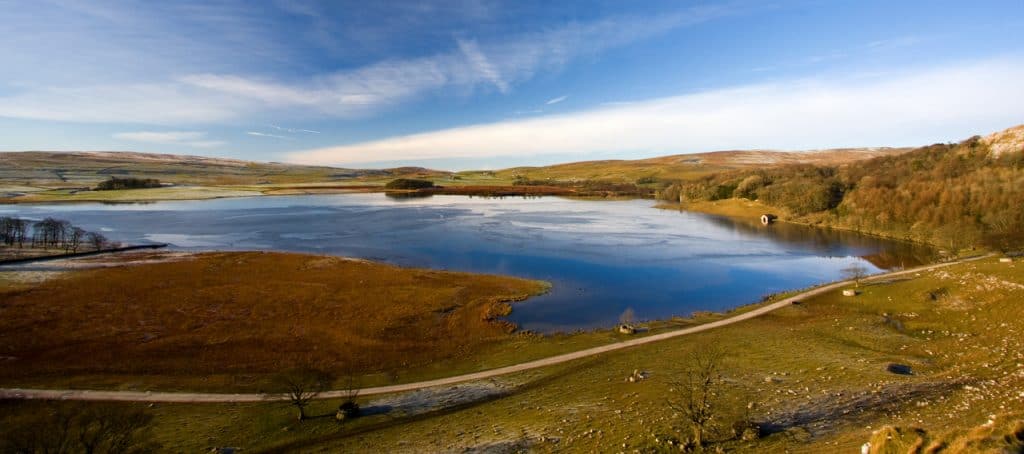
Read on to find out more about his bank holiday weekends at Malham Tarn collecting algae, protozoa and crustaceans for microscopic study. both while at the Center and later on back in his lab at home.
“I studied engineering at university, and later gained a PhD in acoustics. I worked for a large multi-national company as a systems engineer for 30 years, before retiring early.
Since then I have been able to pursue my many interests, including photography, arachnology, nature and electron microscopy, more or less full time.
In 2021 I was awarded the distinction of Fellowship of the Royal Photographic Society in the Imaging Science category, for a book of scanning electron micrographs.
I live in the South West of the United Kingdom.”
For a number of years, a group of keen amateur and retired professional microscopists met over the August bank holiday weekend at Malham Tarn Field Centre for a weekend of collecting and studying samples under their microscopes. With its Tarn (lake), streams and pools the favoured subjects were water life, such as algae, protozoa or crustaceans. It was at the very first of my visits to Malham Tarn Centre that I was introduced to diatoms. These are microscopic algae with a siliceous (glass-like) skeleton, known as a frustule. These have long been a favoured subject for microscopists to test the resolution of their instruments, as certain features of the frustule are so small that they are very difficult to distinguish with even a very high quality optical microscope.
Although live diatoms make good subjects for microscopists, especially when they can be seen apparently “swimming” around – despite being plants – the dedicated diatomist will treat the samples with chemicals to dissolve away the organic matter, leaving the glass-like frustule to be mounted and its beauty observed. There are many species of diatom, each with its own characteristic frustule, which can be used for identification.
“I am fortunate enough to own a scanning electron microscope, and this permits the study of diatoms at a much better resolution than with light microscopes, enabling much finer detail to be seen and measured. At our very last visit to Malham Tarn Field Centre, just before it closed as a centre in 2022, I was fortunate enough to collect a sample containing diatoms that I believe to be Epithemia sorex and following processing I was able to produce a number of images, including the ones shown here.”
Image 1 is what is known as a girdle view. This shows the “bands” that enable it to grow. The top and bottom parts of the diatom are known as the valves and for this diatom they are sloping, so also visible in the girdle view.
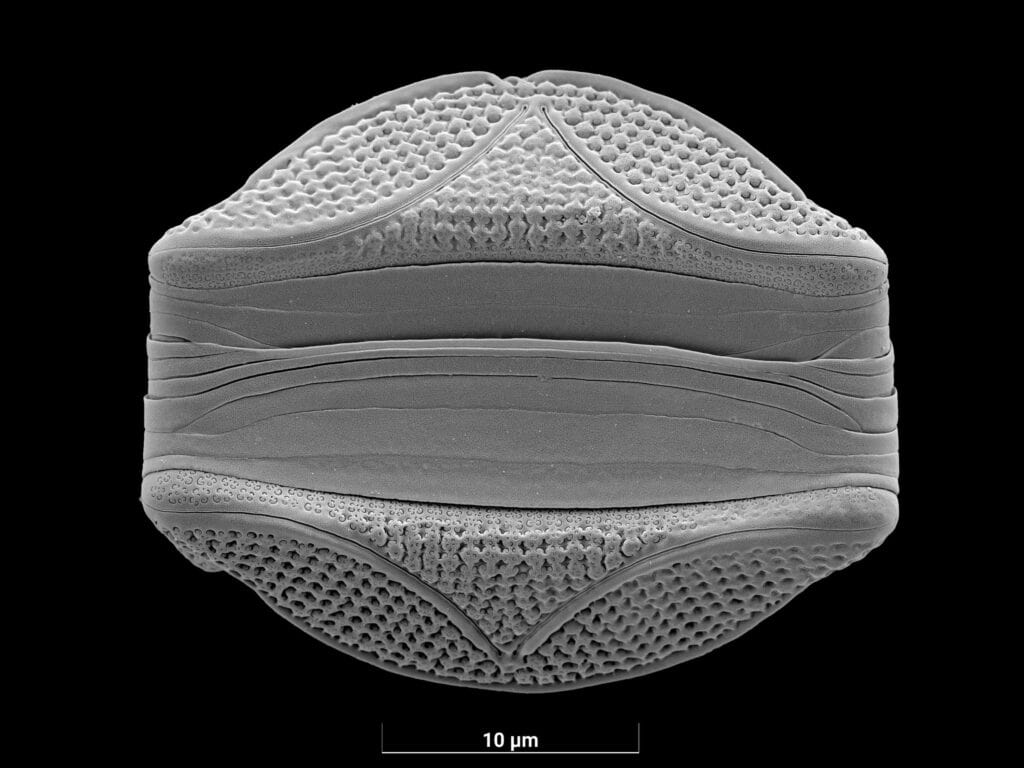
Image 2 is a view of a valve from above. The girdle bands are also clearly visible.
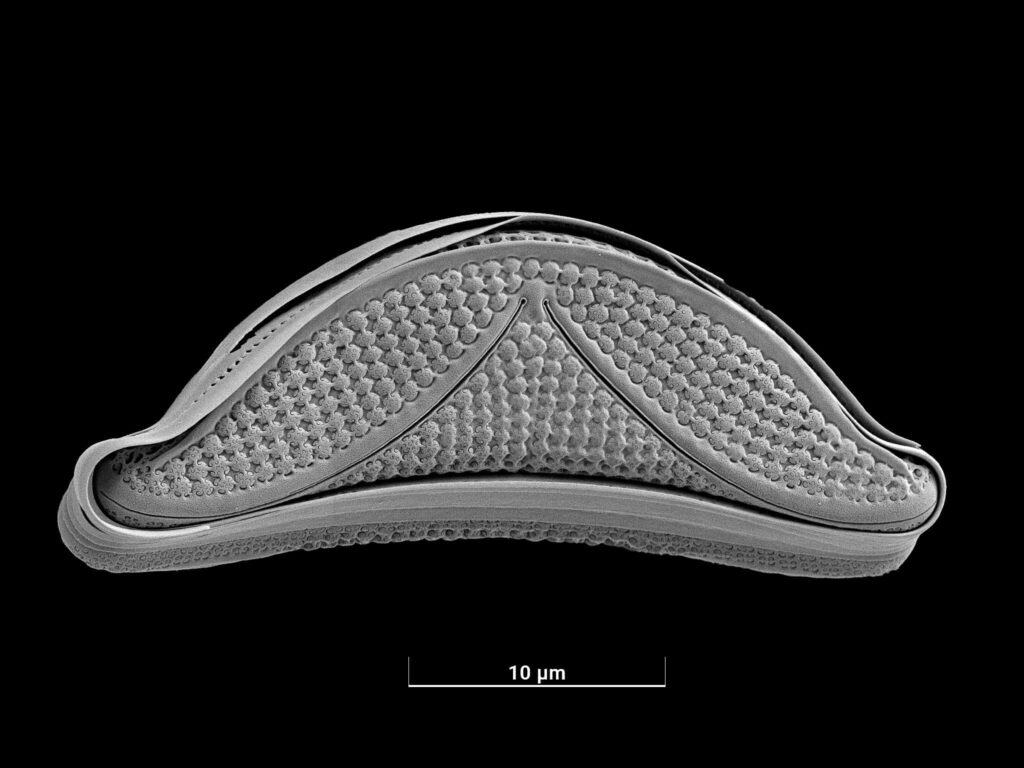
Image 3 is a detail from the same diatom as image 2 but at higher magnification. The curved channels are known as “raphes”, and the measured width of the channels is of the order of 160 nm. This is very much at the limit of what a light microscope can resolve, but with the scanning electron microscope much finer detail can also be seen.

We’d like to extend our thanks Jeremy for sharing his story and amazing micrographs with us.
If you are interested in becoming a Field Studies Council Member, membership starts from just £2 a month, which goes towards helping young people access amazing outdoor learning experiences.
Your support will connect young people with nature and teach them important green skills for nature. For some, a residential trip to a field centre is their first experience in nature and first time staying away from home. But without financial support, the children who stand to benefit the most are the most likely to miss out.
Find out and sign up here: www.field-studies-council.org/about-us/membership/