
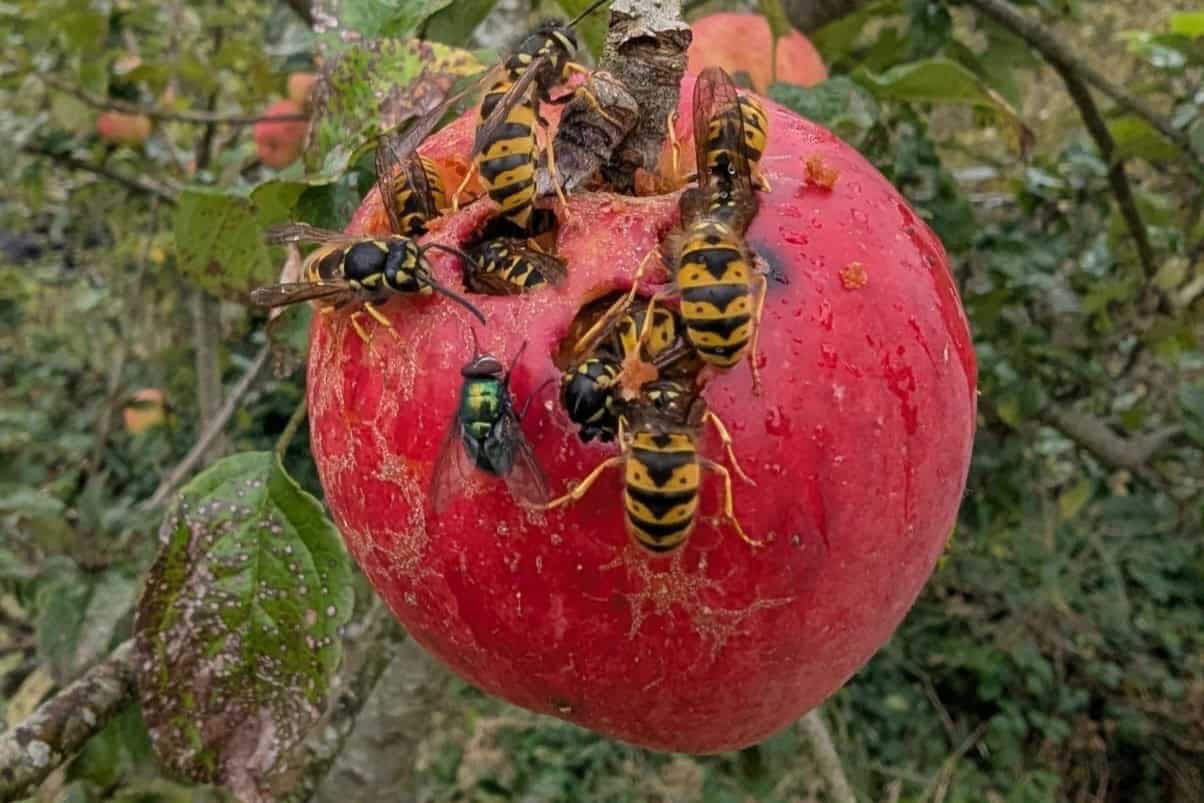
As summer fades, wasps become more noticeable. Whether they’re feeding on fallen fruit, coming for your picnic, or making a break for your open kitchen window, these insects are regularly spotted in September — but why is this?
Social wasp diversity
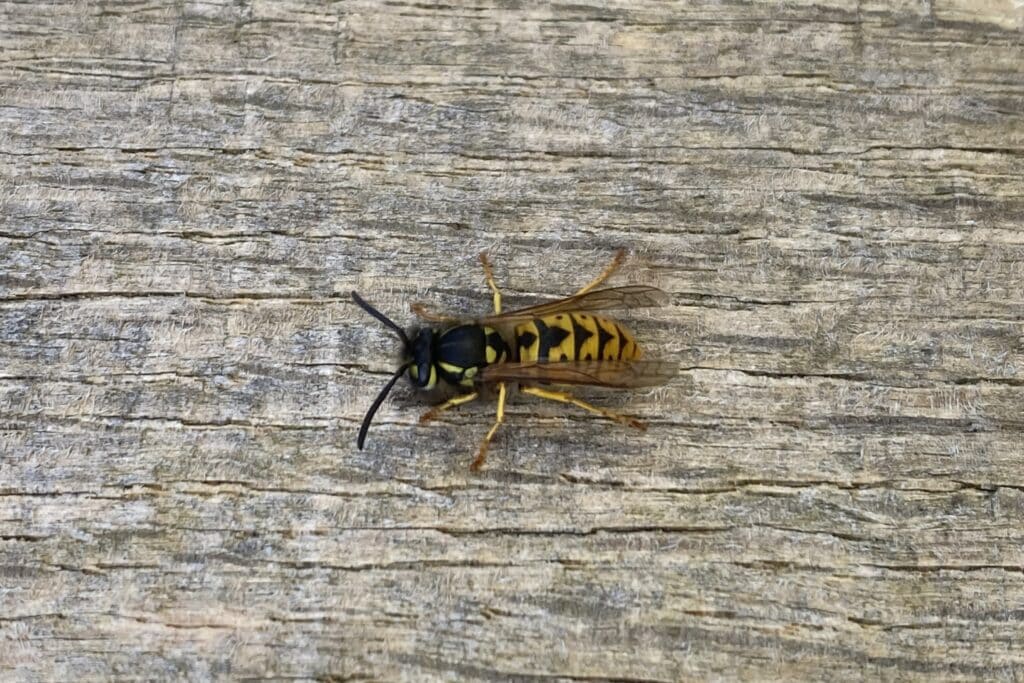
In the UK, there are over 9,000 different species of wasps! However, the majority of them are classed as solitary species which do not live in colonies. The well-known and frequently encountered yellow and black wasps are known as social species, living in a nest and raising a colony. There are nine native social wasp species in the UK, with the most frequently encountered and most widespread being the Common Wasp, Vespula vulgaris.
A year for a wasp
Social wasps have an annual life cycle, with a queen emerging from her winter shelter in spring in search of a suitable place to establish a nest. She will create a small papery nest, laying her first few eggs. Once hatched, she will tend to the young, feeding and rearing them into adults — these young become the first set of worker wasps. Throughout the summer, the queen will continue to lay eggs, and the workers increasingly take over the nest and the role of rearing the young larvae.
By autumn, the nest can contain thousands of worker wasps! The final generation of the year includes fertile males and females — the fertile females are the queens of the following year.
The old queens, worker wasps and fertile males will all die off before winter, leaving only the new queens to shelter until the next spring.
Feeding preferences
Though wasps are notorious for invading picnics, their feeding habits are complex and change throughout the year.
While the colony is growing, adult workers focus on feeding the larvae, which require high-protein food from soft-bodied invertebrates like caterpillars, beetle larvae, flies, and aphids. Adult wasps hunt this prey, bring it back to the nest, and feed it to the larvae. In return, the larvae secrete a sugary substance that serves as food for the adults.
This natural predation helps control invertebrate populations, making wasps valuable for maintaining ecological balance and protecting our plants!
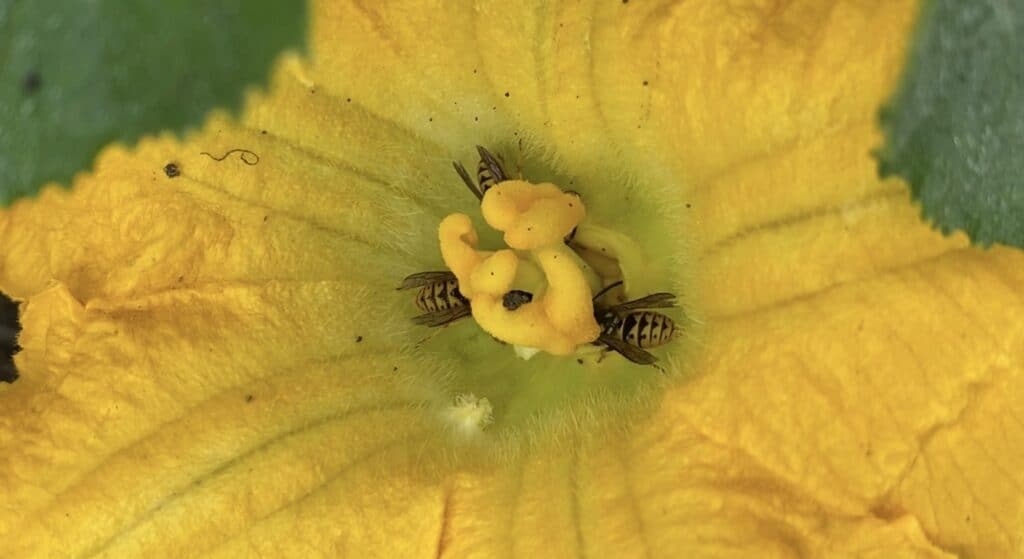
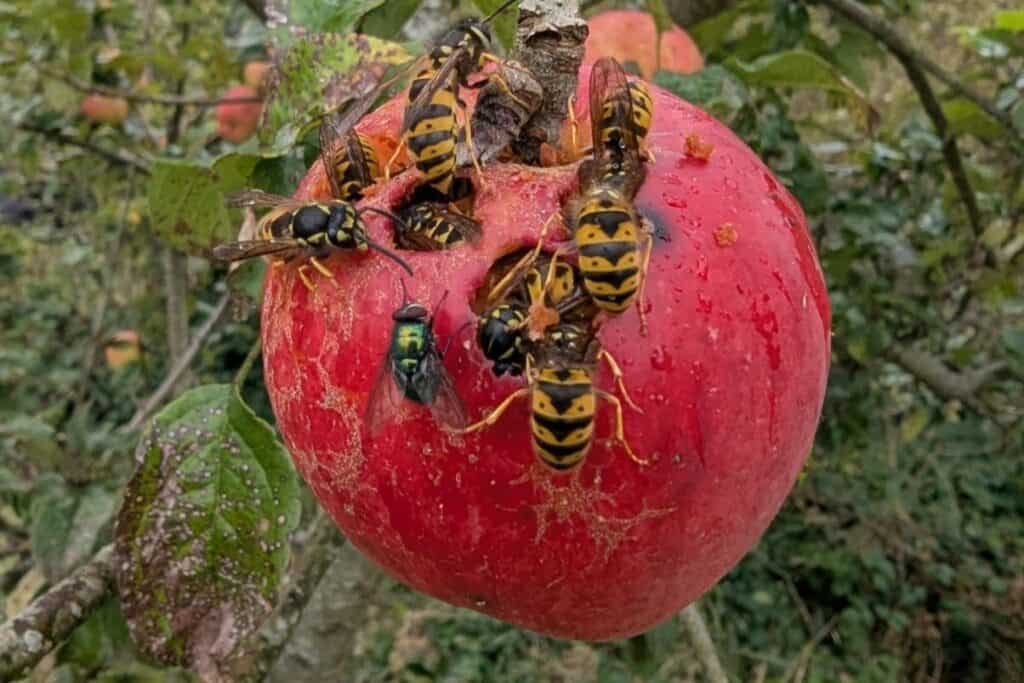
Unlike the larvae, adult wasps do not feed on other invertebrates. Instead, they rely on sugar-rich foods like nectar and fruit. When feeding on nectar, they often become accidental pollinators, making them an important pollinating insect in the UK. In late summer and autumn, with no larvae in the nest to provide a sugary reward, wasps turn to other sources for a sweet meal, often targeting fallen fruit or our picnics!
Frequently asked questions
- What do social wasp nests look like?
- Social wasp nests are often found in cavities, on buildings, or hanging from branches. They are made of thin paper-like layers in a rounded teardrop shape. Wasps use wood fibres mixed with saliva to create them, which they can be seen gnawing on wood to gather.
- Are social wasps aggressive, and can they sting?
- Social wasps can sting, but UK species typically only do so when they feel threatened. Staying calm and minimising movement around them can help avoid being stung. If you encounter a nest, keep your distance to prevent aggravating them.
Learn more
The ‘Social Wasps AIDGAP’ is a new guide for 2025. It is a photo-based identification guide for naturalists and enthusiasts, in a handy, lightweight and fold-out format. This guide is designed for identifying social wasp workers: the infertile adult females that make up the majority of individual wasps that you will see. It features all 9 native species: Common Wasp, German Wasp, Red Wasp, Saxon Wasp, Norwegian Wasp, Tree Wasp, Median Wasp, Cuckoo Wasp and European Hornet. The Asian Hornet, an invasive non-native species, is also included.
This article was originally published in Amateur Gardening magazine 2024.