
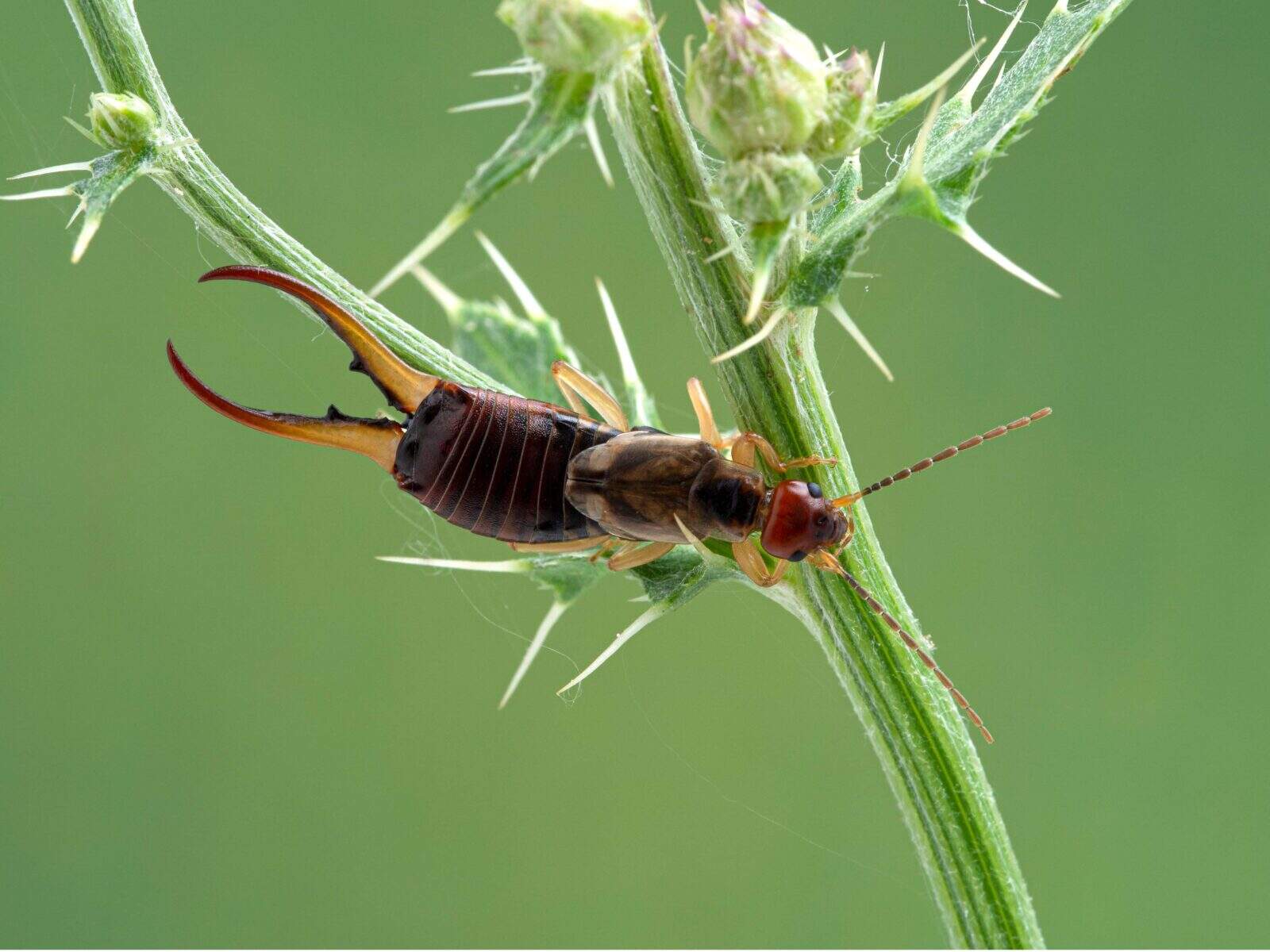
At this time of year, tidying up the garden, moving pots, or adding in new plants may all result in you finding one of these insects — the earwig. Often brushed with a bad reputation, the earwig actually has some surprising but amazing traits and behaviours, and it does not want to live in your ears!
Earwig anatomy
Unsurprisingly, the most common species of earwig you will encounter in the UK is the Common Earwig (Forficula auricularia), although there are three other similar-looking species you could come across, with only minor differences between them.
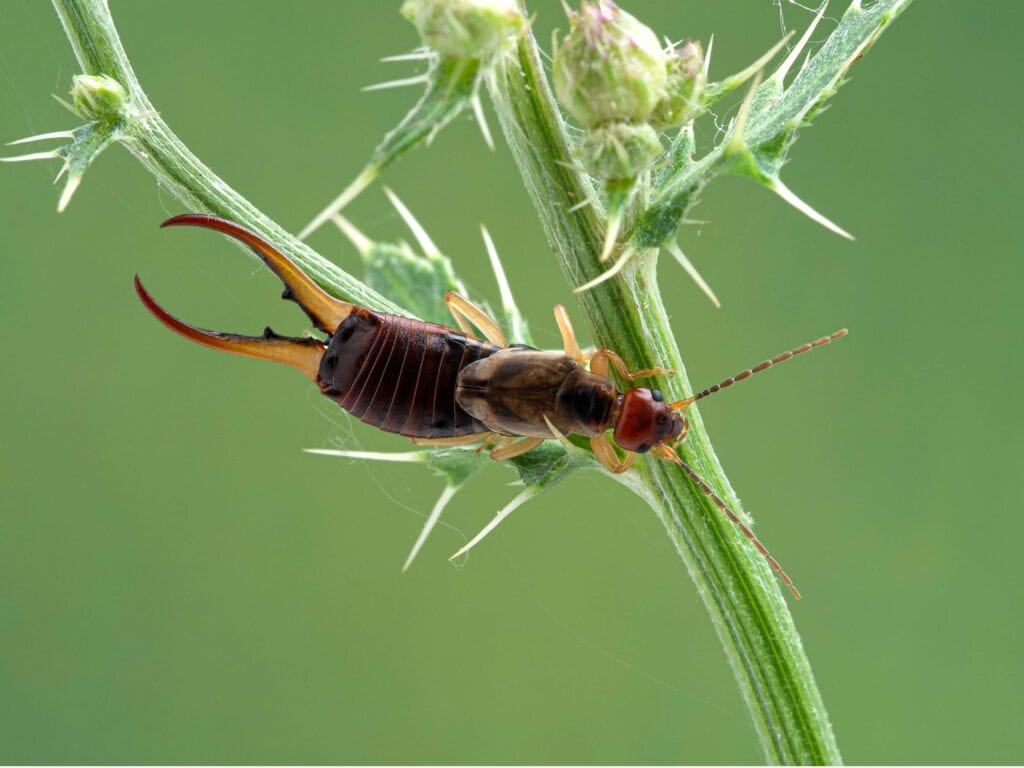
All earwigs have long, slender, flat bodies with distinctive pincers. Their pincers may look unnerving, but they do not have the power to harm humans. For the earwig, they are invaluable as they will be used for defence, grabbing prey, and mating.
But one part of their anatomy that is a little less noticeable is their wings. Like most insects, earwigs have two pairs of wings. However, the front pair has evolved into hardened wing cases, protecting the fragile hind wings beneath them. Their hind wings are folded up like a fan and are one of the best examples of compact wing folding in insects, opening up to roughly ten times their size!
Surviving winter
Like many insects, earwigs will be preparing to shelter through the harsh winter weather, but before that, they will be looking for a partner to mate and shelter with. You may still see them this month during mild weather, but as it turns colder, you are more likely to find them when tidying up. Lifting pots, moving wood, and cutting back hollow stems may uncover these creatures as they settle down in a shelter — not being too tidy can really help our wildlife!
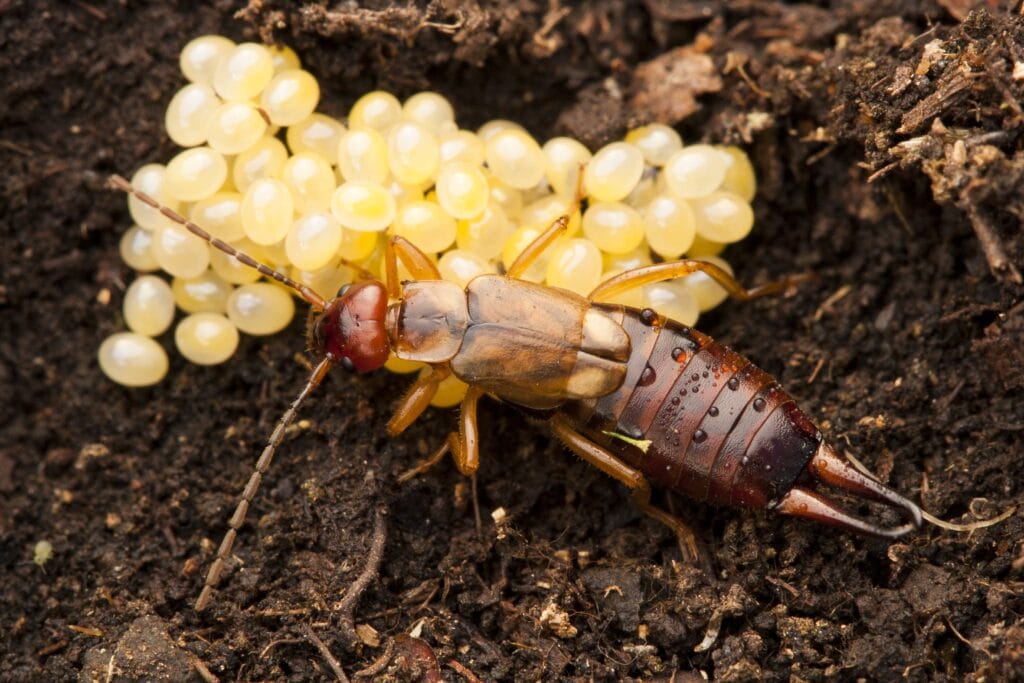
However, they may also shelter in the soil, creating a nest where a male and female will spend the winter. Females will carve out a round nest in the soil, laying eggs and guarding them. They are one of the very few insects that show parental care, and they will also clean the eggs, keeping fungal spores at bay by periodically ‘licking’ them. The eggs will hatch in spring, and the young, commonly referred to as ‘wiglets’, resemble smaller versions of the adults. The female will continue to guard them from predators until they are ready to leave and fend for themselves.
Frequently asked questions
- What species are there in the UK?
- Common Earwig (Forficula auricularia), Lesser Earwig (Labia minor), Lesne’s Earwig (Forficula lesnei) and Short-winged Earwig (Apterygida media).
- Learn more about these species in our previous blog: The Minibeast, The Myth, The Legend – Earwigs in the UK
- Do they harm garden plants?
- They may eat certain garden plants, such as dahlia and clematis, but they are very useful predators of aphids on fruit trees and shrubs.
This article was originally published in Amateur Gardening magazine 2024.