Dragonflies guide
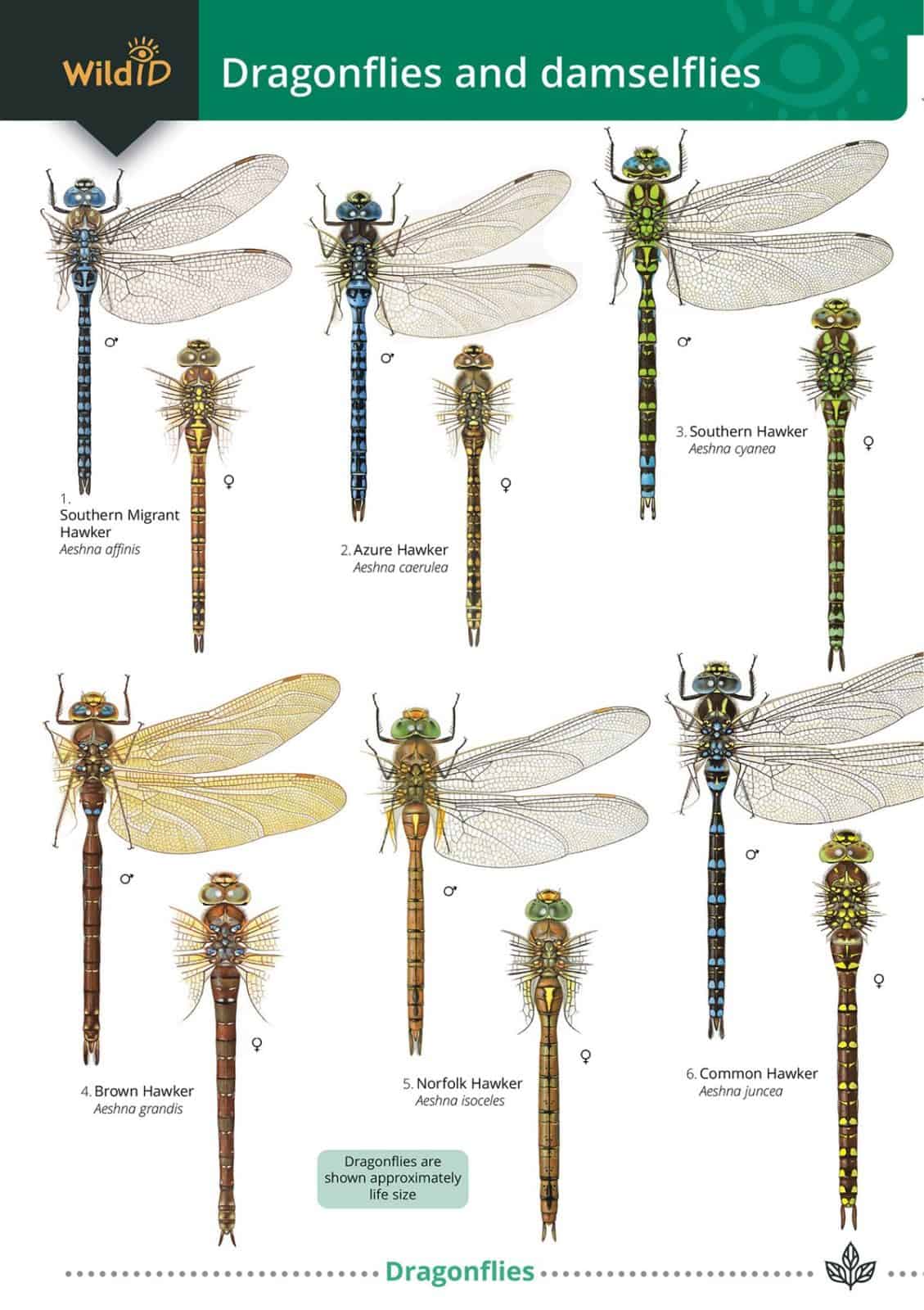
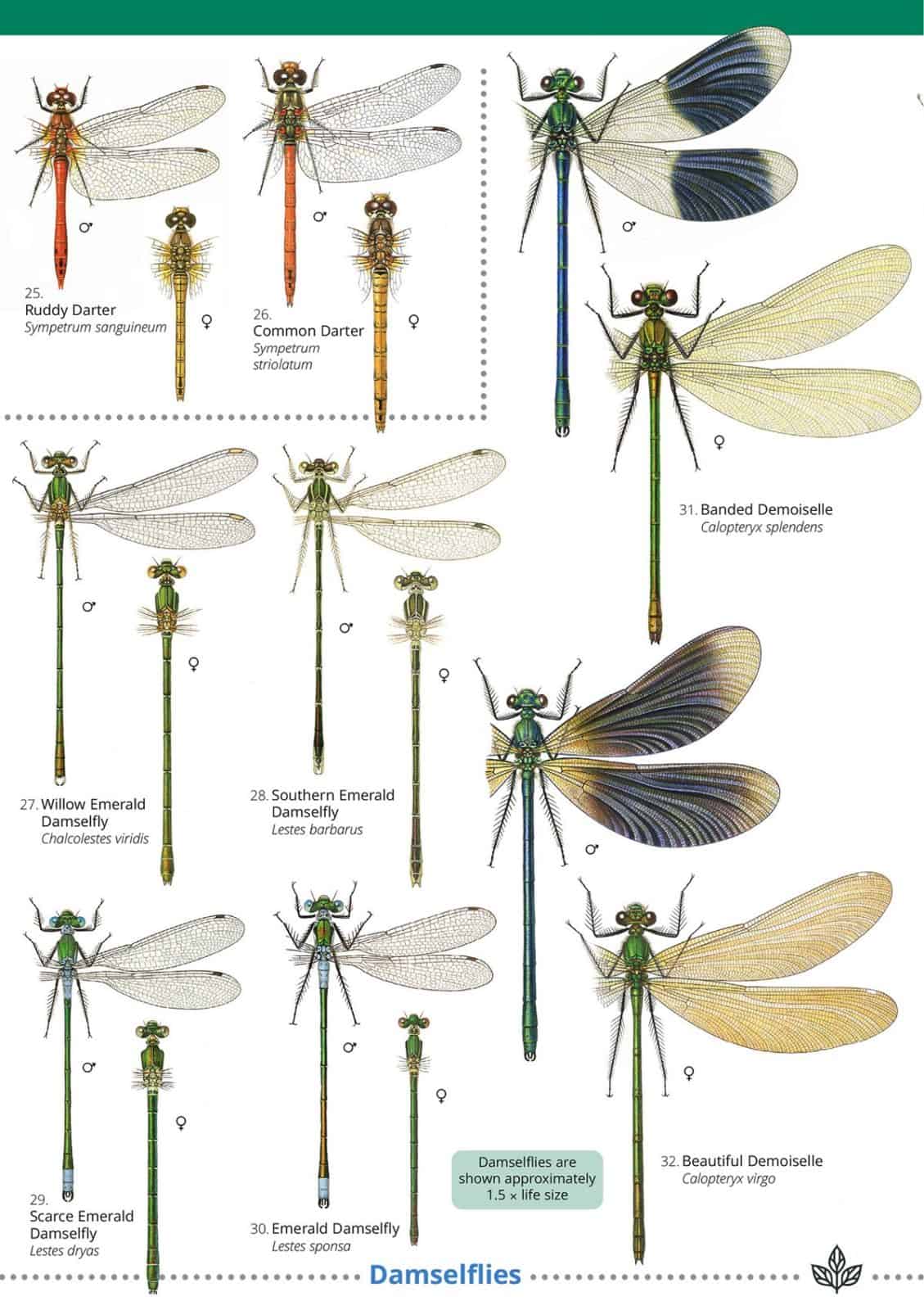
WildID Dragonflies guide is an up-to-date identification guide to all the dragonflies and damselflies of Britain and Ireland.
- Designed for speedy identification of living dragonflies and damselflies
- Beautiful life-size colour paintings by Richard Lewington, with different forms for males and females where needed
- Features 26 dragonflies and 20 damselflies, plus 5 vagrant species
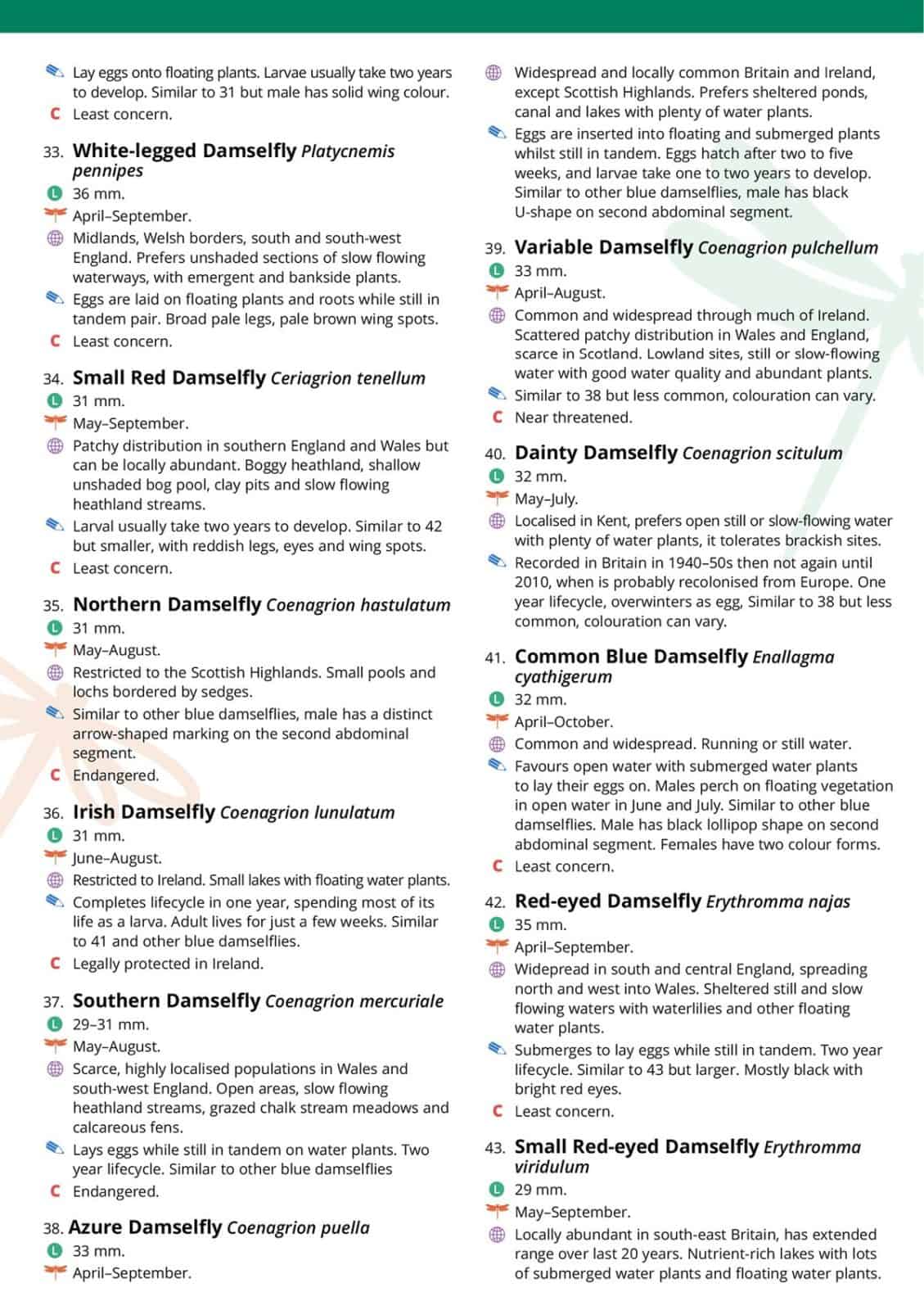
Dragonflies and damselflies are daytime fliers, most active during sunny summer days. You’ll usually find them near freshwater habitats such as rivers, ponds, and lakes. With practice, many species can be identified in the field. Since blue damselflies can be particularly confusing to distinguish, this guide offers detailed close-up views of the nine most similar species. Notably, the second abdominal segment is key to telling them apart.
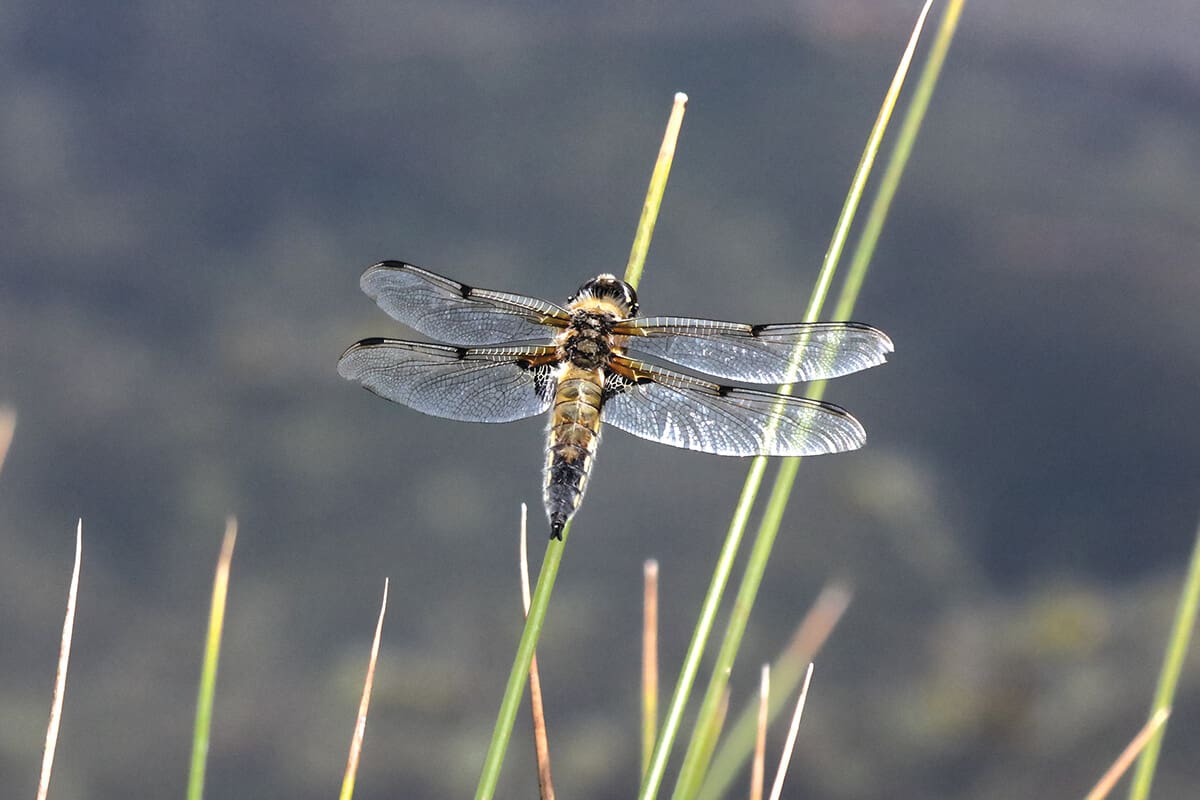
Both dragonflies and damselflies have long, slender bodies and two pairs of intricately veined wings. They are often strikingly colourful. Generally speaking, dragonflies are larger and more robust. Adult dragonflies are sizable insects; the largest British species can have a wingspan of around 10 cm and a body length reaching about 8 cm. Their eyes are enormous, covering most of their rounded heads, and they typically rest with their wings held open.
In contrast, damselflies are smaller and more delicate. Their flight is weaker and fluttering, and they frequently perch on plants. When resting, damselflies usually fold their wings along their bodies. They also have smaller eyes, positioned differently from those of dragonflies.
Together, dragonflies and damselflies belong to the insect order Odonata, which means ‘toothed jaw’. Odonata is a fascinating group, comprising around 5,500 species worldwide. Though still common and widespread, these insects are ancient: they were among the earliest flying insects on Earth. Fossils of dragonfly-like creatures have been found in Carboniferous rocks dating back over 350 million years.