
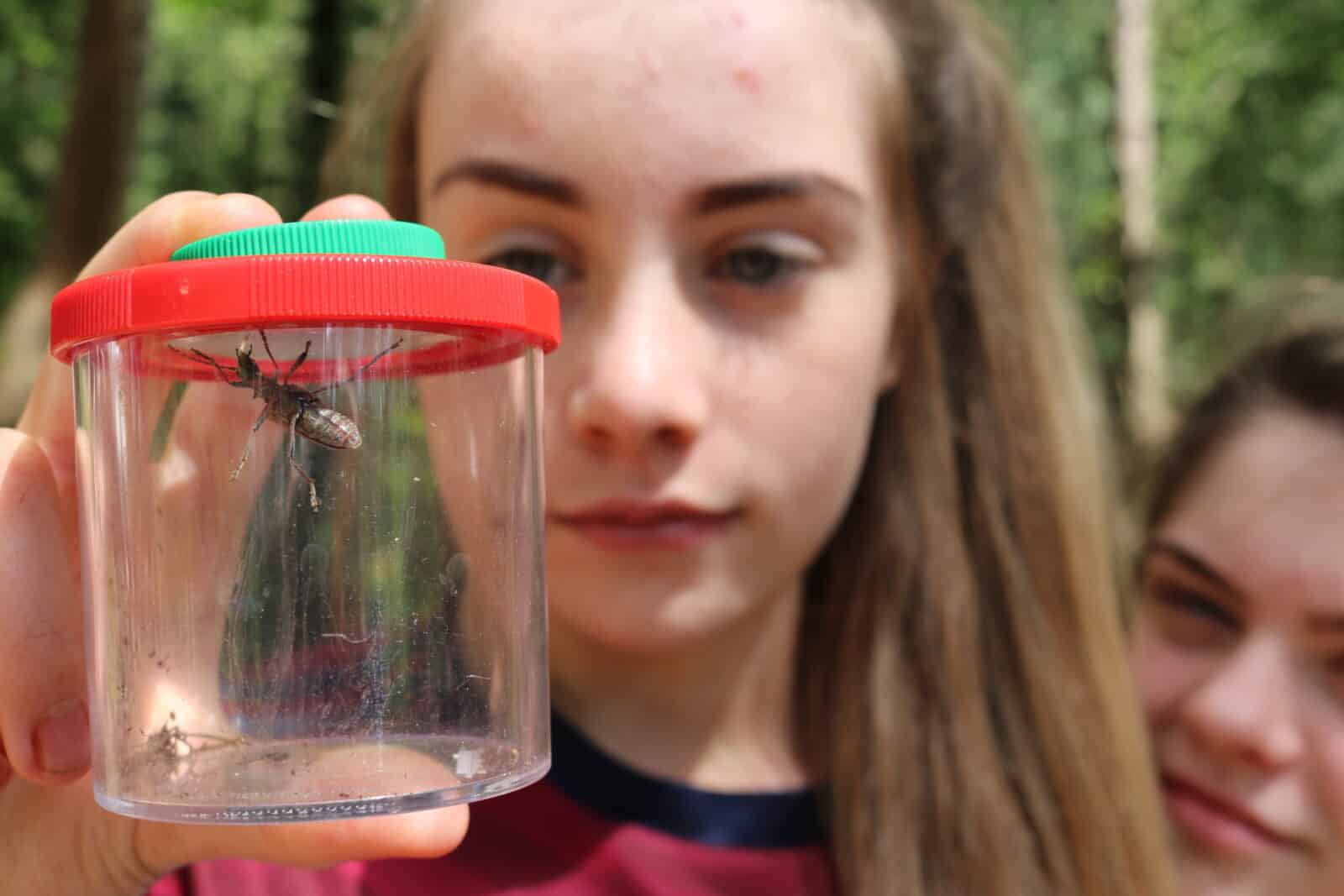
This course combines fieldwork with outdoor activities to give students the opportunity to explore real scientific contexts in an exciting and engaging way. The course allows students to get first-hand experiences of a range of habitats and investigate the interactions between organisms and their environments.
Students will benefit from connection with nature and a greater understanding of the environmental issues shaping their world. Our expert tutors aim to inspire their curiosity and strengthen their learning skills.
Through active challenge and outdoor activities students will develop personal and academic resilience, self-confidence and independence. Teamworking and collaboration will support their social development, communication skills and problem solving.
At our accredited adventure centres you can also include adventure activities in the course programme, further information is here.
All courses allow time for reflective practice to underpin the skill building opportunities and allow students time to assess their progress and achievement.
Example Timetable
This gives just one example of what a course looks like at our centres. We will adapt the activities to your outcomes, student needs, location and conditions on the day.
Day 1
Midday arrival
- Welcome and outline the challenges ahead
- Tour of Centre
- Allocate kit eg waterproofs
Afternoon
Teambuilding
Depending on the outcomes you want to achieve, we will use a range of techniques and fun activities to focus on the skills required for teambuilding including effective communication, self-confidence and problem-solving.
Activities could include a team water transport challenge, a problem-solving minesweeper game and line-sorting tasks.
The teamwork skills, support and collaboration built in this session is carried forward to support effective fieldwork during the course.
Evening
Night walk
Take a guided journey around the centre grounds to connect to nature through contact with nocturnal wildlife. By observing the night sky (depending on weather conditions) students may learn about the stars, and also understand the impact of light pollution. Students will also engage with reflective exercises to develop a better understanding of how to manage their own wellbeing.
Day 2
Morning and Afternoon
Depending on your location, you will explore a local environment, habitat or ecosystem, eg rocky shore, freshwater or woodland. After a scene setting introduction, students will collect data using sampling techniques relevant to the ecosystems and hypotheses. Measurements of biotic and abiotic factors and their interactions will be made as well as developing identification and classification skills.
Throughout the study, our tutors will highlight the links to wider sustainability and how science works in the real world. To underpin the learning and promote positive wellbeing, we encourage and embed the 5 pathways to nature connection. Whatever the weather and location, this day can develop student resilience, increase their ability to plan for an outdoor day, change their perspective and develop their team-building skills.
Evening
Depending on your preferred outcomes we can develop wider science links with a sustainability activity, take students out for a fun, social activity such as orienteering in teams using a map, or let them sit back and reflect on their day with a campfire.
Day 3
Morning
You can use the final morning to develop a deeper understanding of the findings of our investigation, build further subject links, learn about the environment with a practical conservation task or build personal and team skills with bushcraft and survival techniques.
Examples include habitat creation, planting for wildlife, water sustainability, fire-lighting and shelter-building, micro-climates and sustainability and pollinator surveys.
Depart after lunch
To ensure safe and quality learning experiences for students, the timetable may alter depending on weather conditions and local factors at centres.
How this course fulfills the specification
Students will take part in fieldwork activities that foster scientific attitudes, increase experimental and investigative skills and allow contextual, real world learning about the environment and its ecology. Outdoor learning and experience promote creative and critical thinking as well as improving nature connection, teamwork and resilience and links to sustainability.
Added value of this course
Develop skills
- Communication | Resilience | Independent thinking | Leadership
- Numeracy | Literacy | Investigative skills | Observation
Enhance Knowledge'
- Ask questions.
- Apply knowledge in the real world and make links.
- Make sense of new places and understand our place and role within this.
Enjoy'
- Have fun | Make friendships | Connect with nature
Why Choose Field Studies Council?
-

Expert tuition by fully trained staff
-

Stunning locations across the UK
-

Outstanding curriculum knowledge
-

Rigorous health and safety procedures
-

Support before and after your visit
-

Free places for visiting staff