
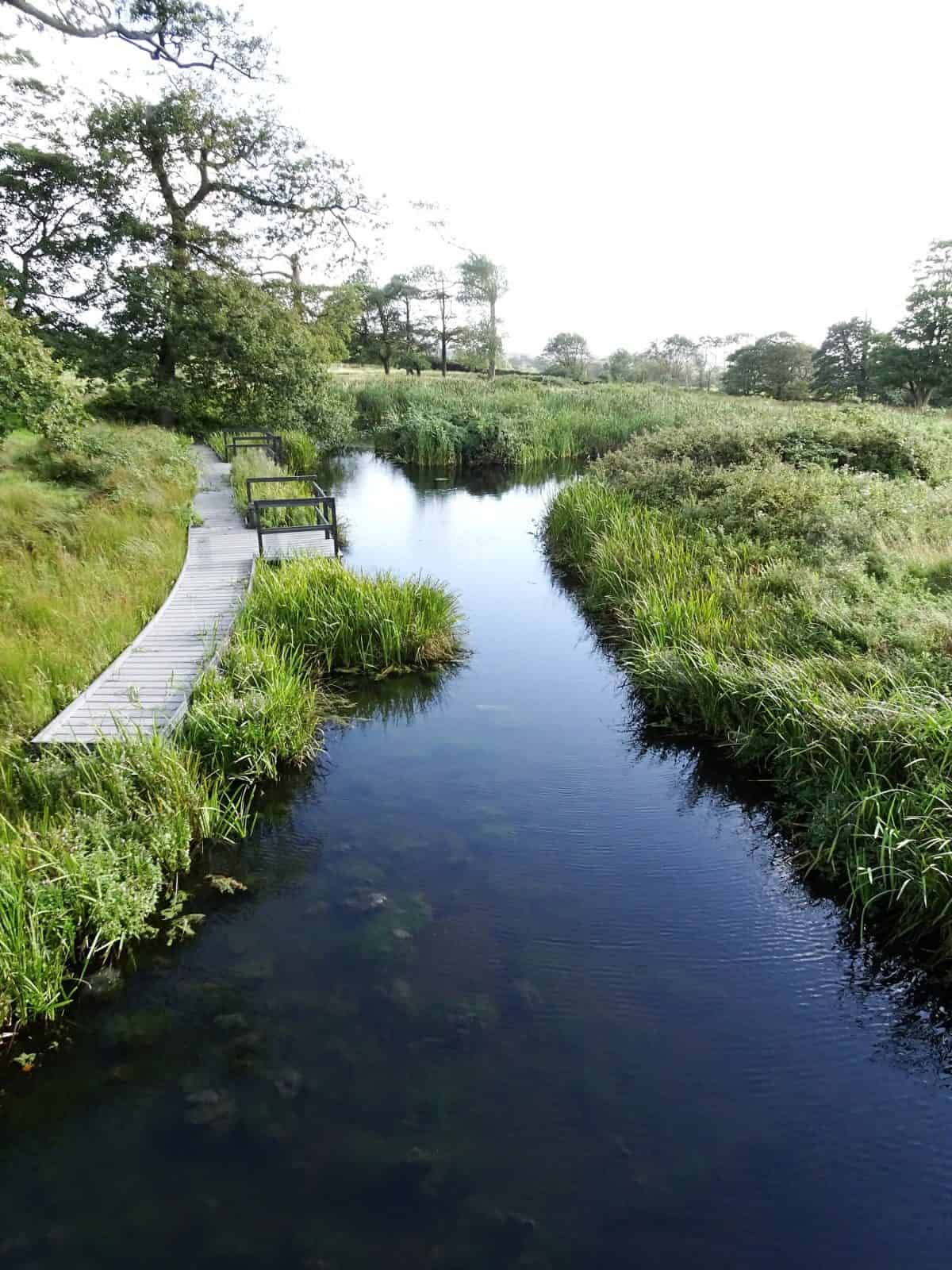
Biology fieldwork at Margam Country Park provides students with rich, hands‑on experience across a wide range of contrasting habitats within a single, accessible location. The park’s mix of woodland, grassland, wetland and freshwater environments allows students to investigate ecosystems, biodiversity and ecological processes through direct observation and data collection.
Situated in South Wales, Margam offers immediate access to managed woodland, semi‑natural grassland, ponds and streams, alongside nearby sand dune and coastal ecosystems. This enables students to study biology as an interconnected discipline, linking species distribution, adaptations, succession and human impacts across different habitats and environmental gradients.
Ecosystems and Biodiversity
Students investigate ecosystems across woodland, grassland, wetland and freshwater habitats within the park, examining species diversity and ecological interactions. Fieldwork focuses on understanding how management and human activity influence biodiversity patterns.
Sampling and Ecological Fieldwork
Core ecological skills are developed using quadrats and transects to measure abundance, frequency and percentage cover. Students learn to apply appropriate sampling strategies and use keys to accurately identify plant and invertebrate species.
Succession
Succession is studied through grassland change, woodland regeneration and habitat boundaries, allowing students to explore how communities develop over time. Investigations consider abiotic gradients such as light and soil moisture, with data analysed to identify trends and relationships.
Population Ecology
Population ecology studies focus on estimating population size and distribution of selected species within the park. Ethical considerations, sampling reliability and limitations of field methods are embedded throughout these investigations.
Ecological Energetics
Energy flow is explored through food webs in woodland and freshwater ecosystems, with a particular emphasis on invertebrate communities. Quantitative data is used to examine trophic structure and ecosystem functioning.
Practical Skills and Data Analysis
Students develop mathematical and analytical skills through calculations such as Simpson’s Index of Diversity and the use of statistical tests. Fieldwork includes evaluation of data quality, accuracy and reliability.
Margam is a preferred strong for biology because of howlocal habitats support the development of core ecological fieldwork skills. Students can carry out quadrat and transect sampling, biodiversity surveys and population studies within the park before applying the same methods in contrasting environments. From GCSE ecology requirements to A‑level investigations, Margam supports confident progression through practical skills, data analysis and scientific evaluation, using environments that clearly demonstrate ecological theory in real‑world contexts.