
Our Botanical Skills for Ecologists course is a popular training opportunity that runs in several locations across the UK, teaching participants the essential skills, techniques, and top tips for anyone with an ecology career (or an interest in enhancing their botany knowledge!). This blog from Emma Moffat walks you through a day on the course and some of the things to expect.
A blog by Emma Moffat, Biodiversity Training Team Leader (In-person)
RSPB Leighton Moss is a wonderful venue I hadn’t been to before – it is nestled in small country roads by the Morecambe Bay coast and is handily located a stone’s-throw from the M6 and Silverdale train station.
We all arrived in torrential rain, but there were still lots of eager birders also entering the site in full waterproofs. ‘The Holt’, our classroom for the course, was very cosy – especially with the rain pattering on the roof. It was also very well stocked with tea, coffee, and biscuits and we were very well looked after by the RSPB.
The course was full of people from all over the country (including Somerset!), and was taught by our fantastic tutor Ian Powell. Many of the attendees were brushing up on their botanical skills before taking a BSBI Field Identification Skills Certificate (FISC), which assesses your botanical proficiency on a scale from 1 (beginner) to 5 (professional).
The first day of the two-day course focuses on learning parts of plants and using them to identify ten of the most common wildflower families and how to use a key. The second day focuses on a further wildflower family that is essential for ecologists to identify – the grasses.
Wildflower features and top ten families
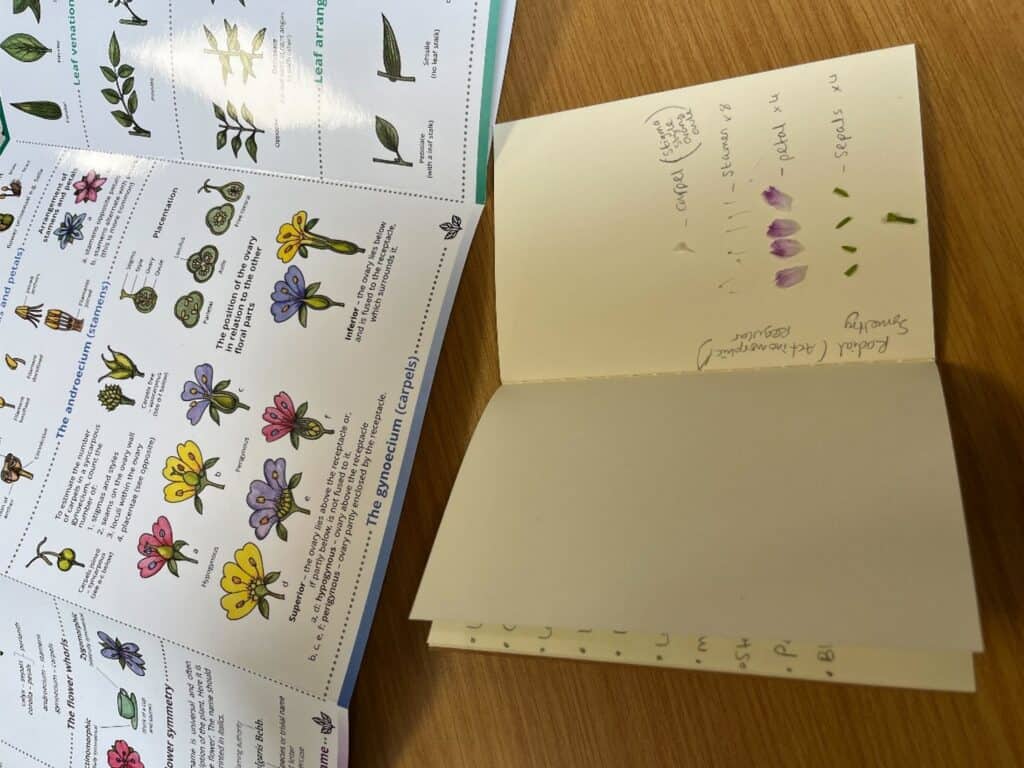
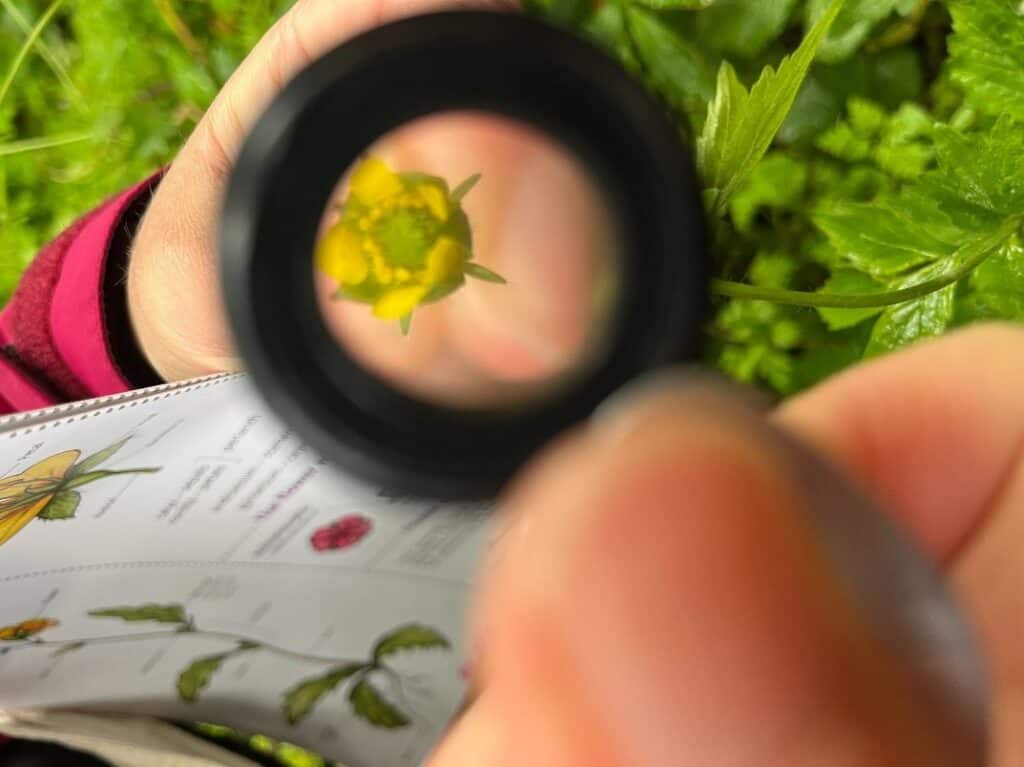
We started in the classroom learning the names of all the different parts of a plant, and how to describe different features such as the margins of leaves. Everything we learnt was cemented by looking at a range of different specimens and pulling apart flowers into the individual parts- sepals, petals, stamen, carpels. The Describing Flowers WildID Guide was very useful for learning all the new terminology!
Armed with our knowledge about all the different potential features of plants, we then applied this to learning the different characteristics of ten of the most common wildflower families. Being able to identify wildflower families is incredibly useful because instead of being overwhelmed by the whole of a flower guide to work out what your plant is, you can narrow right down to a much smaller section and use a family key for species identification. Knowing the top ten families gives you instant access to around 50% of a flower guide.
Pea family (Fabaceae)
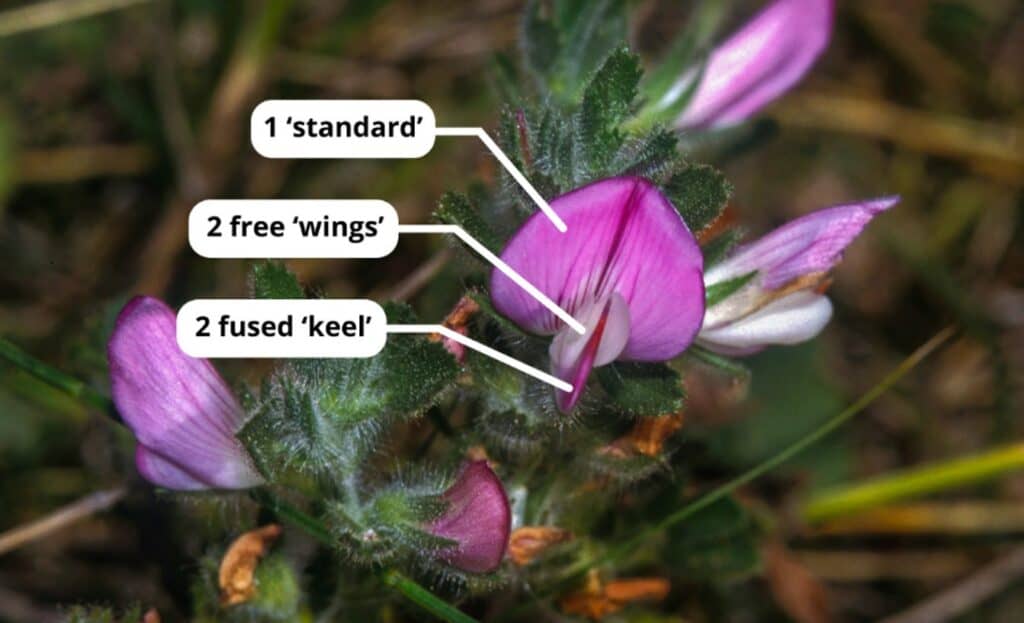
One of the families we learnt about was the Pea family – Fabaceae. The pea flower is very distinctive – they are zygomorphic or irregular (so only have one line of symmetry). The flowers have 5 petals, 1 standard petal, 2 wing petals, and 2 petals making a keel.
Pea family leaves are usually trifoliate or pinnate and there are obvious, leaf-like stipules.
Out in the field
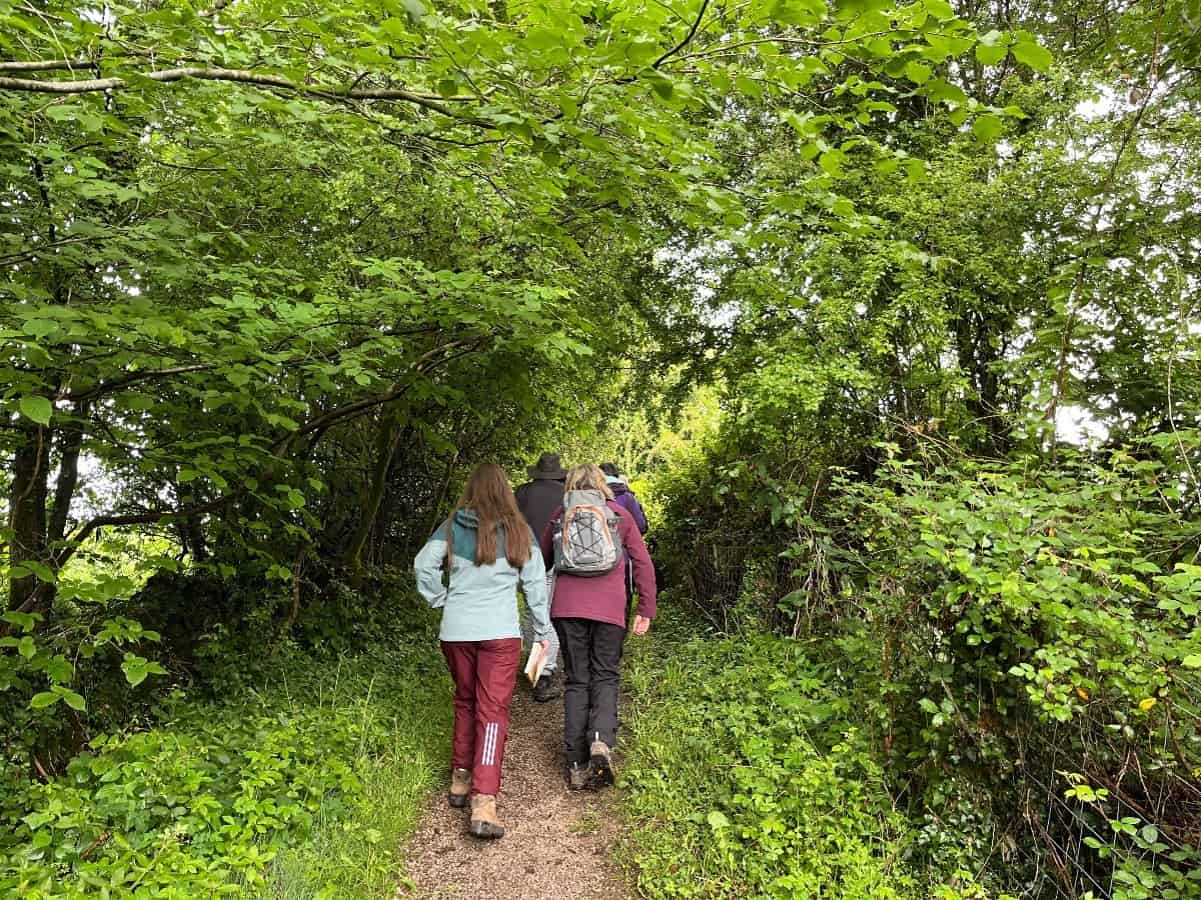
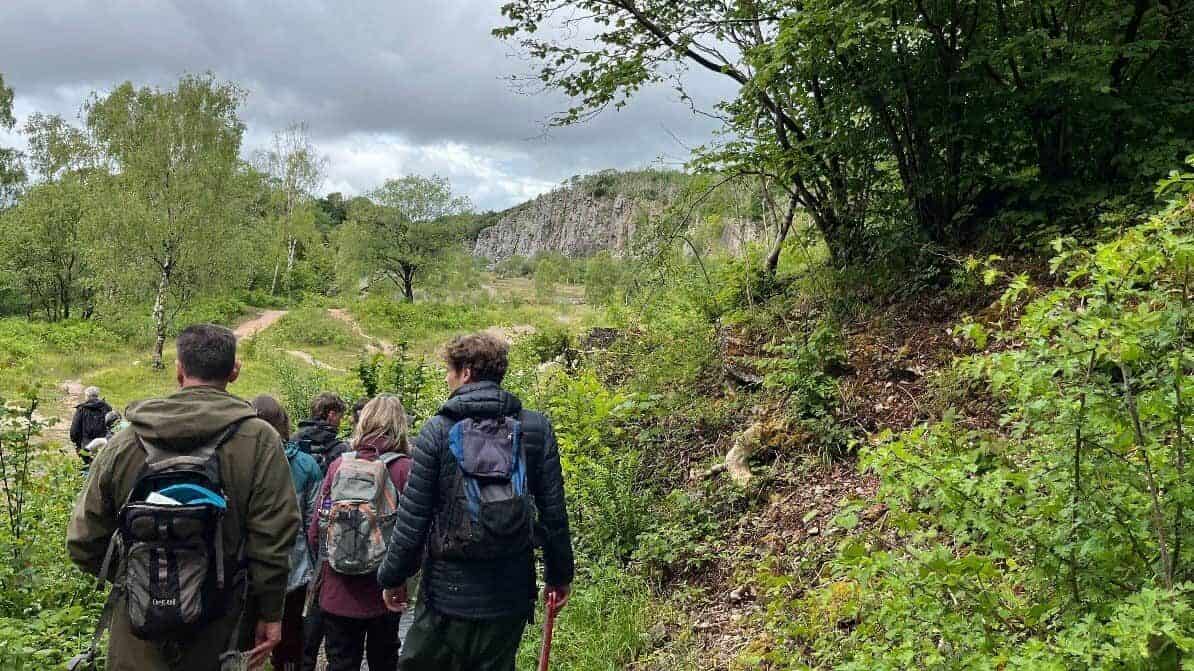
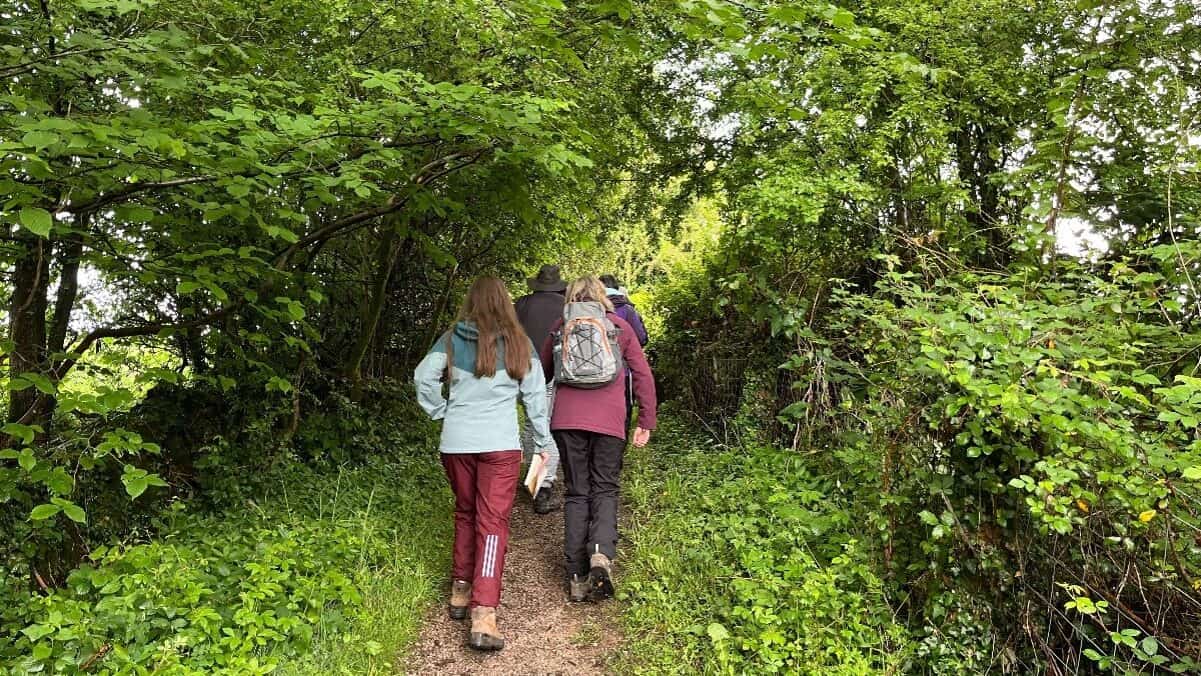
Thankfully the rain stopped after lunch so we could spend the afternoon outside applying our knowledge. We followed a footpath with wonderful overflowing hedgerows that gave us lots of examples to look at, and we ended up on a footpath through Trowbarrow limestone quarry, which was full of exciting plants.
The level of challenge was built through the afternoon as we started by identifying the family of Wood Avens (Roses – Rosaceae), Bird’s Foot Trefoil (Peas – Fabaceae), and Twayblades (Orchids – Orchidaceae), before being stretched to identify the family of Germander Speedwell (Plantains – Plantagenaceae), Wild Thyme (Dead-Nettles – Lamiaceae), Salad Burnett (Roseaceae), and Lady’s Mantle (Roseaceae). We were also spoilt with a sighting of Fly Orchids.
Using a key
We rounded off the day by looking at how to use a dichotomous key (like in Rose or Streeter) to identify a plant. The example we went through was Germander Speedwell, which is especially identifiable from its two rows of hairs along the stem.
Ian’s top tips for using a dichotomous key are:
- Always start at the beginning of the key and work through – no skipping ahead!
- Always read both couplet statements before you decide which one applies to your plant.
- When starting out, never try and key something out that you don’t know the answer to when you first try!
For many on the course it was the first time going through a key. The best way to get to grips with keys is to keep practising. If you are starting out, why not try keying out a Foxglove (Plantain family, but you may find it in the Figwort family in most field guides), Garlic Mustard (Cabbage family), Red Campion (Campion family), or another plant you know well?
Are you interested in improving your botanical skills? You can see all the upcoming dates for this course here.
If you’d like to be the first to hear when we release new dates and to receive exclusive discounts, sign up for our Biodiversity Newsletter.