Jellyfish
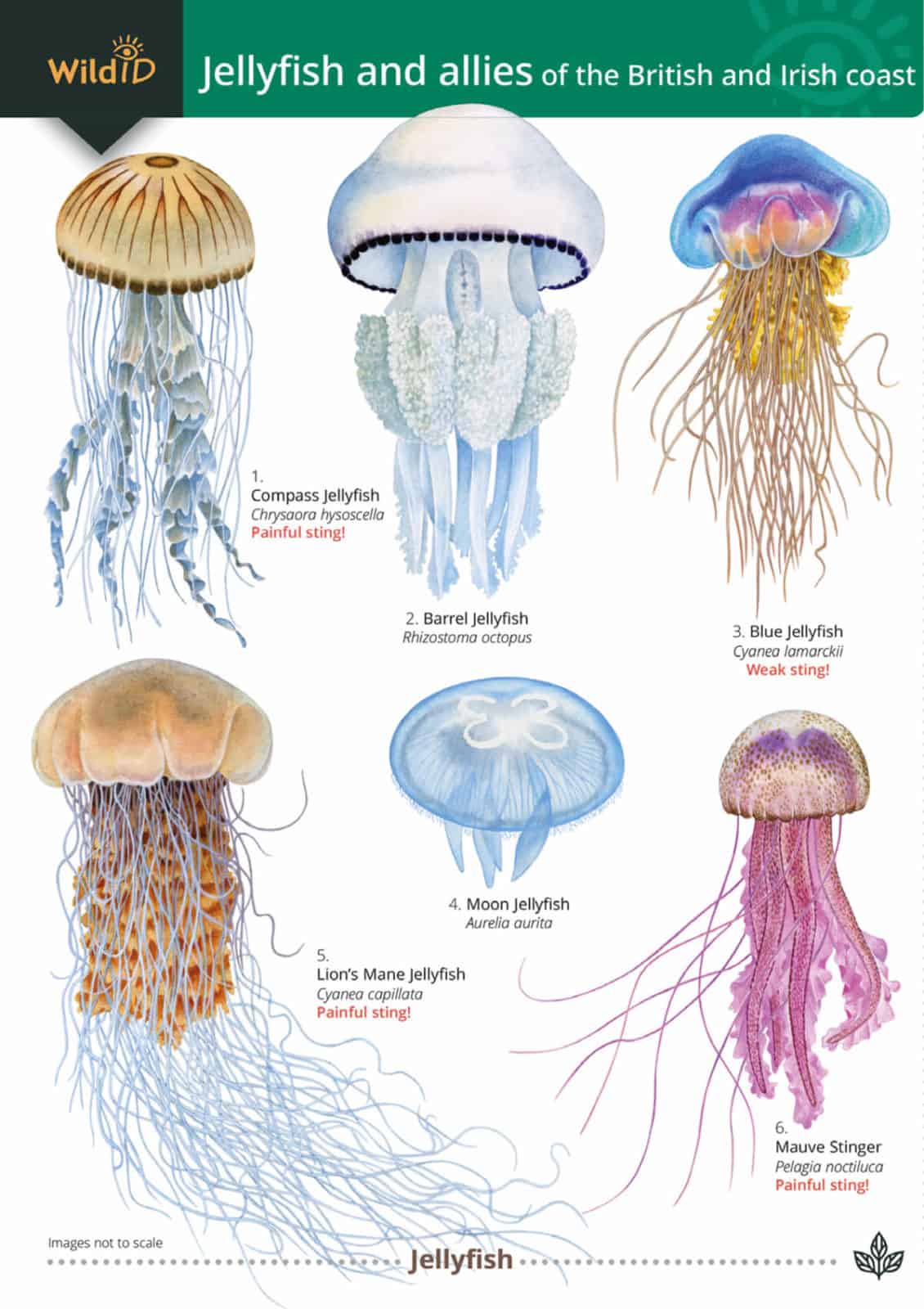
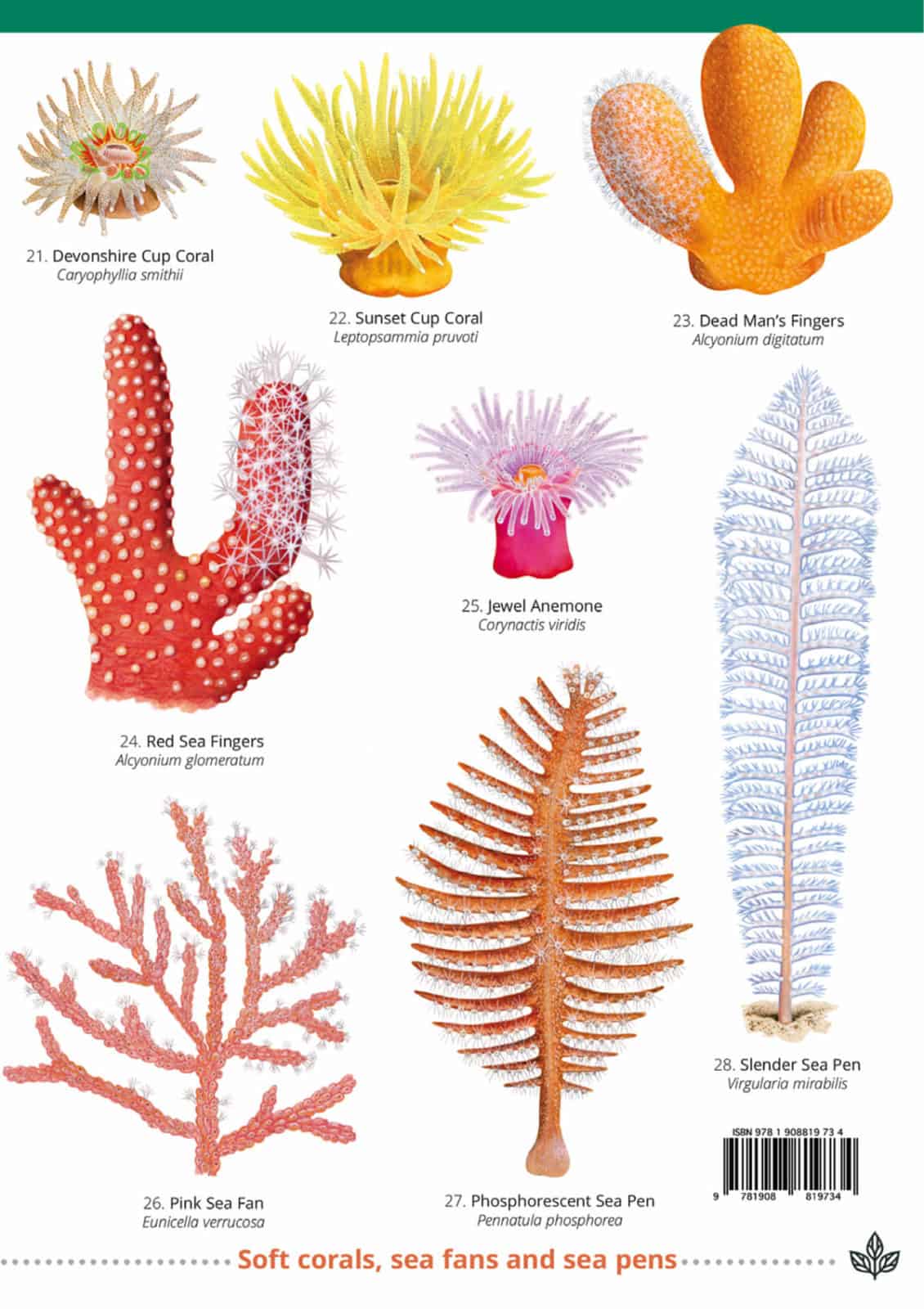
The Jellyfish guide features 28 jellyfish and allied species of the British and Irish coast.
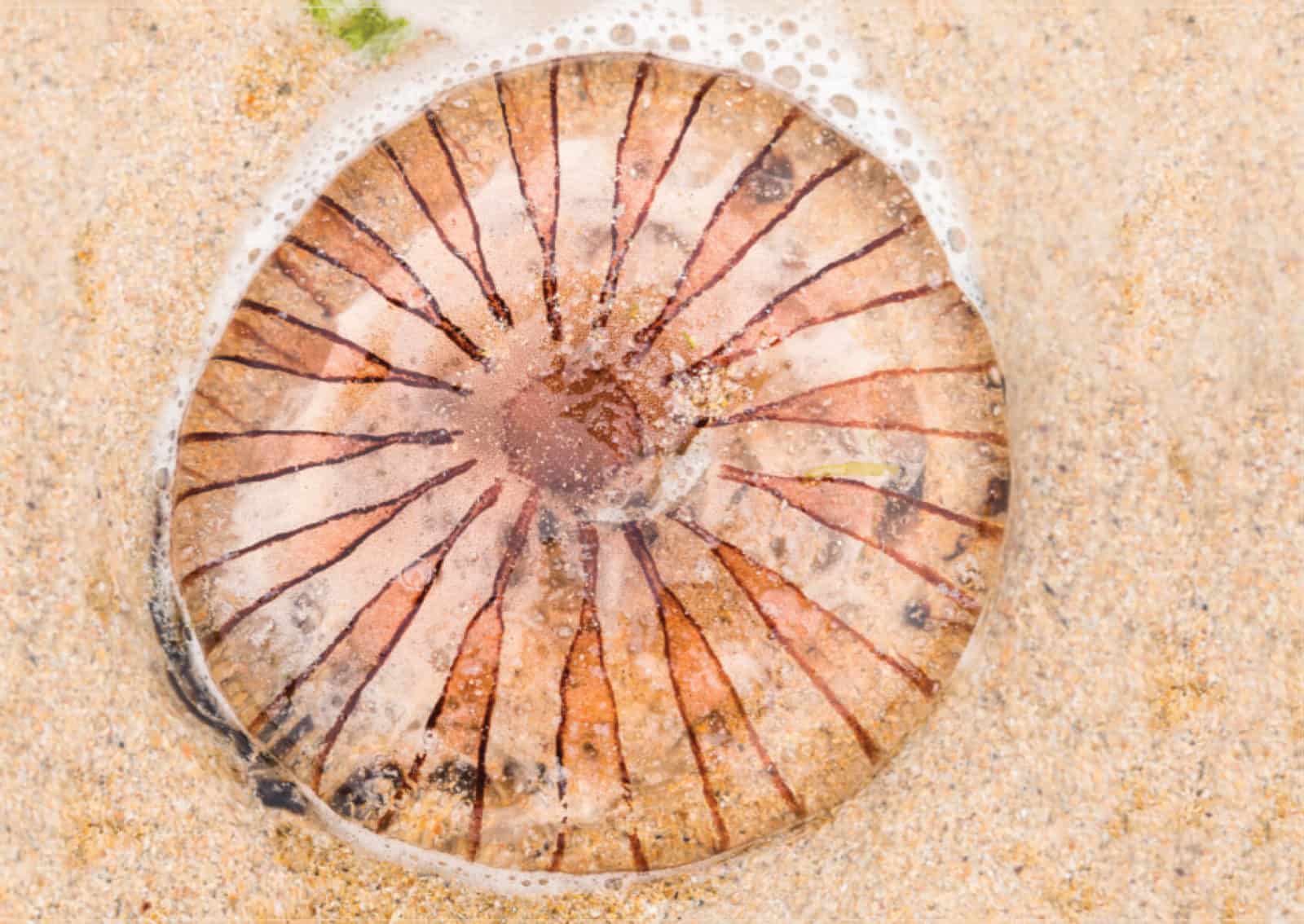
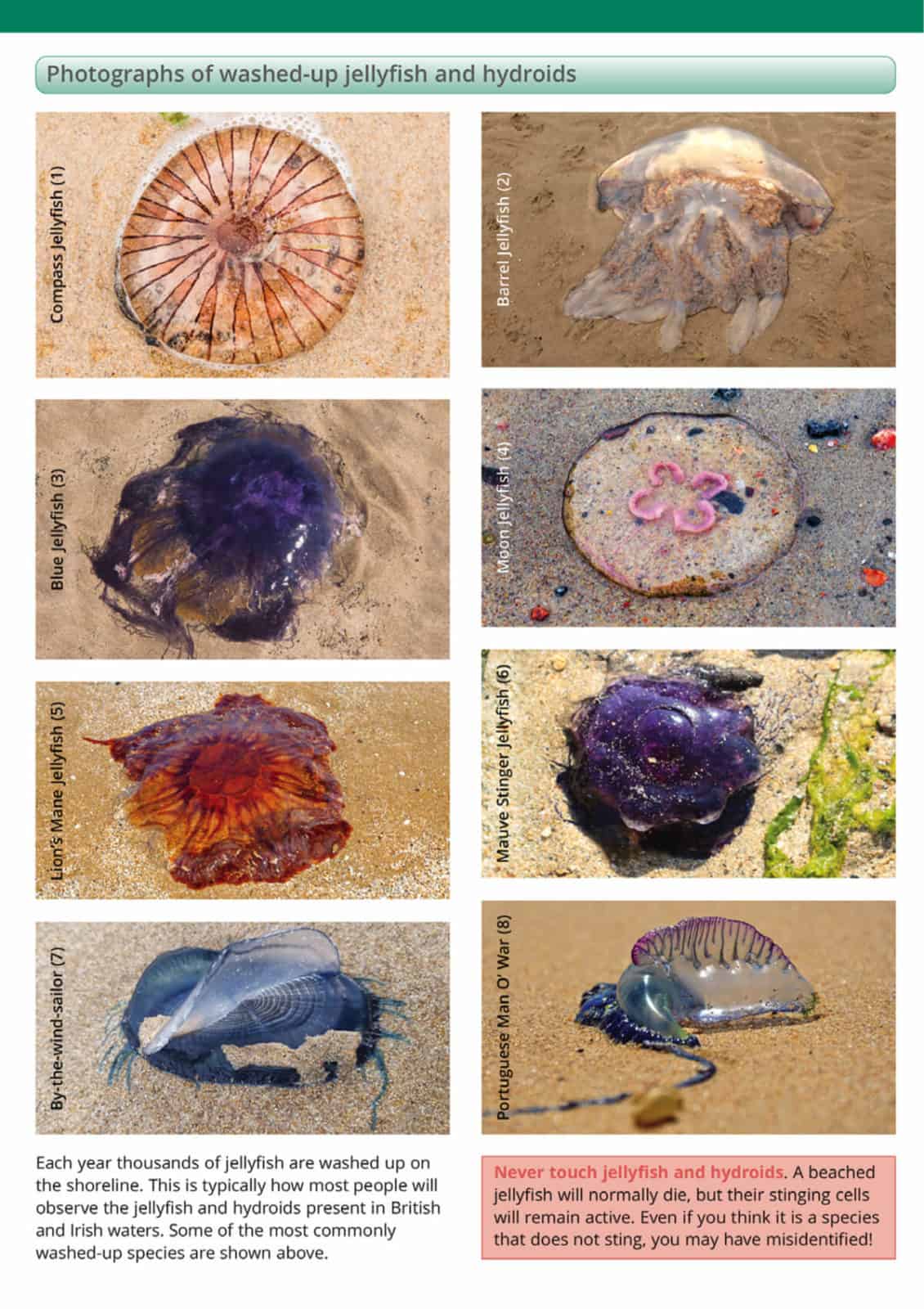
Beautiful colour paintings highlight key features of 28 living animal species. The text explains their size, active months, and habitat. There is also a photo gallery of the most common jellyfish found washed up on the shore, which is usually how most people first see them.
Jellyfish, hydroids, soft corals, sea pens, sea fans and sea anemones make up the phylum Cnidaria. These marine invertebrates are primitive animals, lacking a brain and other internal organs. You can often spot jellyfish drifting near the surface of the sea, especially in calm weather. They sometimes get stranded in shallow pools or wash up on sandy beaches, so it is also worth checking the tide line.
Jellyfish themselves have an easily recognised body shape, consisting of an umbrella-like bell and stinging tentacles. These animals are weak swimmers, mostly drifting with the current. By contrast, sea anemones tend to stay in one place, attaching themselves to the rock with a basal sucker. Their bodies are soft but tough, with tentacles for catching prey. You should be able to find the Beadlet Anemone on many rocky shores.
Hydroids are small and delicate, and include the beautiful free-swimming By-the-wind Sailor and the Portuguese Man o’War. Soft corals, sea pens and sea pens are colonial animals, often growing fixed to submerged rocks. In tropical waters, their bodies form the basis of coral reefs.
Scientific names used on this guide follow the World Register of Marine Species.