Enjoy exploring the Wildflowers of the Stour Valley and have the chance to learn how to identify wildflowers correctly.
By close examination and gaining an understanding of floral structure, you will make a start in being confident in the species you identify using your wildflower guidebook in the field.
This Exploring the Wildflowers of the Stour Valley course is targeted at anyone interested in learning more about this area of natural history.
Read more
What will be covered during this course?
- An introduction to flowering plants.
- Floral anatomy.
- Botanical terms to help understand species descriptions.
- Basic skills to start identifying species of wildflowers using a key.
By the end of the course you will be able to:
- Differentiate flowering plants from other divisions in the plant kingdom.
- Describe floral anatomy with botanical terms.
- Explain the difference between monocots and dicots.
- Label different vegetative parts of plants.
- Define different types of inflorescences.
- Identify the difference between a superior and inferior ovary.
- Apply knowledge of the above by looking at plants closely in the field, and practice using a key to identify flowers.
No prior knowledge will be assumed; participants with at least some prior knowledge may find it a little easier to build on their existing learning, but it isn’t necessary.
Please note: This course is not part of the Biodiversity learning framework, this course is organised by Flatford Mill and the tutor.
About the tutor
Alanna Cooper
Alanna Cooper is a botanist and principal ecologist with over 18 years’ experience in ecological consultancy. Alanna has experience of botanical survey work and habitat management in both Canada and the UK. She has a passion for wildflowers and helping beginners to botany develop their identification skills.
About Flatford Mill
We have four buildings that are used for visitor accommodation. Whilst most rooms are either en-suite or have a dedicated bathroom, there are some
rooms in The Mill that share showers and toilets at the end of the hall. If this is
un-suitable for you please make the office staff aware upon booking or as soon as possible.
Please be aware that you are visiting a Field Centre that caters in the main for school parties; the accommodation is basic and dormitory style, but warm and comfortable.
Explore our range of nature courses hosted by our engaging tutors and learn from their expertise and knowledge. Our nature experiences are a chance to meet like-minded people and are a chance to unwind from everyday life. They are great opportunity to experience the UK’s glorious wildlife and the surrounding countryside of our field centres.
This course is open to participants aged 18 and over only. For under-18s, please contact the centre directly or see our young people courses and activities for families.
Example Timetable
Example Timetable
This timetable is subject to change but should give a clear outline of what to expect.
Please arrive promptly so that the classroom session may begin at 0930. The course will be completed by 17:00.
0930-12:30 Classroom session
We will begin with a short presentation introducing flowering plants, followed by dissecting a flower, going over the basics of flower anatomy. Following this, we will learn vegetative parts of the plant, and how inflorescences (collection of flowers on a plant) give wildflowers their distinctive shape and habit. All these factors help beginners to recognise diagnostic features and learn to recognise to species-level some of the most widespread and successful plants that characterise the Suffolk countryside.
12:30-13:30 Lunch
13:30-16:00 Field excursion
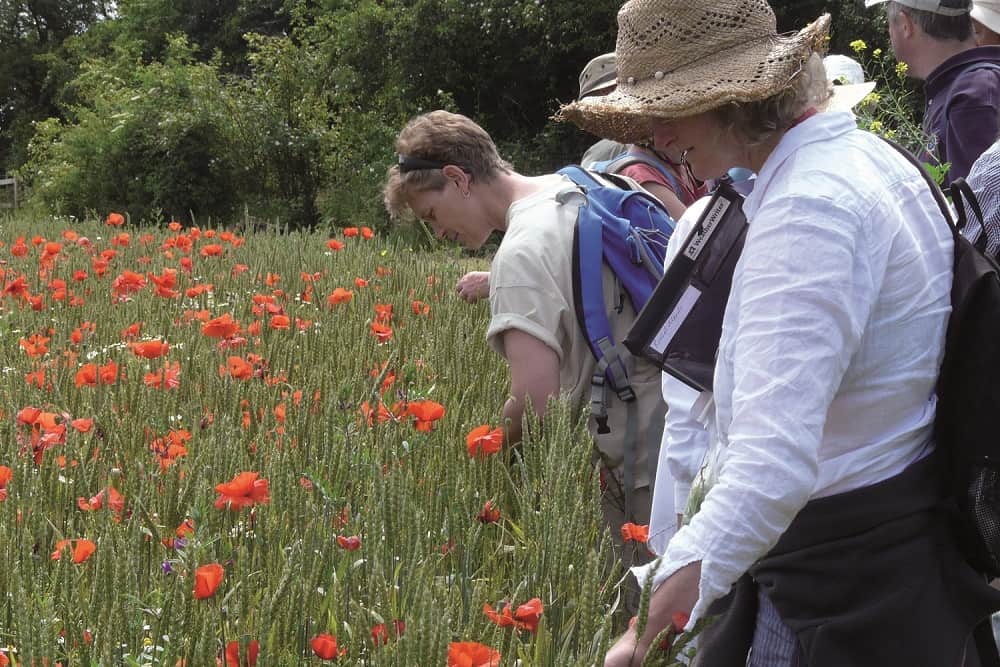
The classroom session will be followed by a group-led session identifying plants in and around the beautiful surroundings of Flatford Mill. This includes wildflower meadows, hedgerows, scrubland and a cottage garden. Students will practice using a simple identification key to identify wildflowers to the species level. This will mainly be a group activity, but there will be a chance to have a go individually or in smaller groups if desired. You will walk one to two miles over uneven ground during the afternoon. This will be done at a slow ‘botanising’ pace.
16:00-17:00 Consolidation of learning in the classroom and final questions.
What's Included
-
 Expert Tuition
 -
 Free Wi-Fi
 -
 Hot and Cold Drinks
Check-in is between 1600-1800. If you are arriving after 1800, please advise us so we can arrange a self-check-in.
You will meet the tutor at dinner, following which you will have your first session.
Before You Attend
What to bring
Since this is a pure beginner’s course, all guidebooks and hand lenses will be provided by the tutor to borrow. However, if you have your own hand lens (x10 magnification recommended), or your own copy of a flower identification book, please bring this along. The tutor will have copies of the ‘The Wild Flower Key (revised edition)’ by Francis Rose revised and updated by Clare O’Reilly, to practice using in the field, although books may need to be shared depending on course numbers.
Opportunities to attend this course
This course is not currently available to book. Dates will follow soon.
Sign up to our Email Newsletter