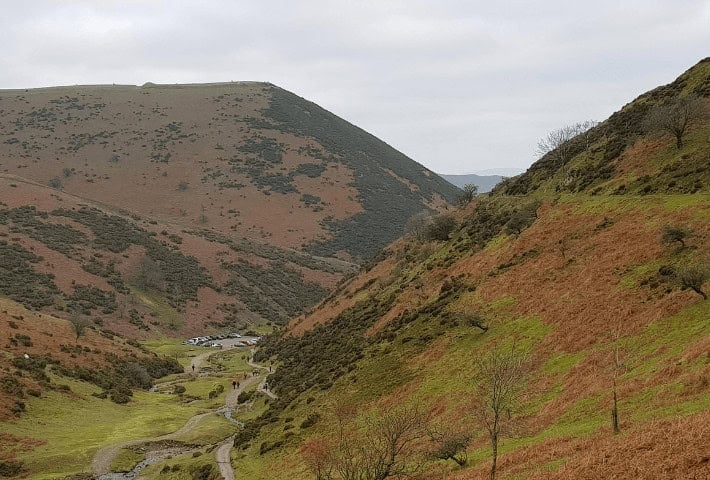
Shropshire is a Geological mosaic containing the greatest variety anywhere in the UK and, arguably, the world.
As a result, the scenery is both varied and spectacular. Shropshire contains rocks from as long ago as 1050 million years up to the last few thousand years, with only Cretaceous rocks being absent.
Read more
It sits on the boundary between England and Wales and the Geology reflects this with rocks that are both Welsh and English in character. Shropshire has “endured” an amazing range of environments from catastrophically volcanic to tropical marine to hot deserts to fully glacial. With such a long Geological history it is to be expected that the sequence has been subjected to massive stresses and strains resulting in faulting, folding and even low grade metamorphism. It is no surprise that, as a result, Shropshire was the location for some of the earliest Geological work by Giants of the subject such as Murchison who classified the Silurian around Ludlow. Because of all this variety the scenery is spectacular with panoramic views from many of the Shropshire hills. From various locations in Shropshire you can catch a glimpse of Snowdon, Cadair Idris, Sugar Loaf Mountain (the Welsh one, not the Brazilian one!), The Black Mountains, The Malverns, The Cotswolds and The Peak District. The aim in five fieldwork days is to catch a flavour of what Shropshire has to offer.
About the tutor
David Cronshaw
David Cronshaw is a former Geology Tutor at Preston Montford Field Centre. He has led Geology courses for Field Studies Council for over 30 years to many areas of the UK including Shropshire, The Lake District and The Yorkshire Dales. He enjoys all aspects of Geology but is particularly interested in the impact that Geology has on the landscape around us and how rocks have been altered in the millions of years since they were formed. David undertook his PhD research on the Geology of Snowdonia. He has recently retired from teaching in a Lancashire School.
Explore our range of nature courses hosted by our engaging tutors and learn from their expertise and knowledge. Our nature experiences are a chance to meet like-minded people, a chance to unwind from everyday life, and a great opportunity to experience the UK’s glorious wildlife and the surrounding countryside of our field centres.
This course is open to participants aged 18 and over only. For under-18s, please contact the centre directly or see our young people courses and activities for families.
Example Timetable
An example timetable
Day 1
An introduction to the course. Shropshire, “a sense of place in time and space!” This will be followed by an introduction to the field excursion planned for Monday.
Day 2
The Precambrian, Cambrian and Carboniferous rocks of the Ercall, Lawrence Hill, Maddocks Hill and the Hatch. We will visit a variety of disused quarries in the shadow of the Wrekin, the distinctive landmark hill on the outskirts of Telford. Here, the boundary between Precambrian and younger rocks is superbly exposed in the old workings. We will see a wide variety of volcanic rocks and younger sediments and tackle the thorny question of dating rocks of this age.
Day 3
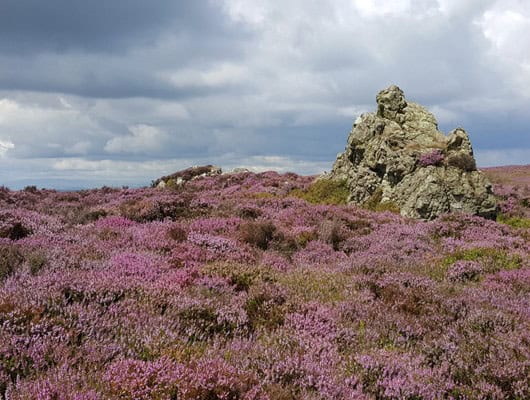
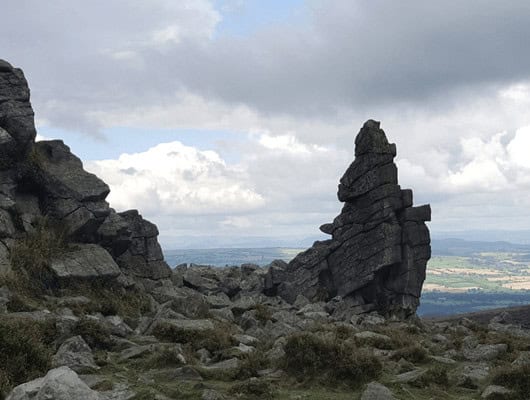
The Ordovician of the Stiperstones and Shelve area of Western Shropshire. We will start in a massive disused quarry above the village of Pontesbury and then head to the old mine workings around Snailbeach, where we can hunt for a variety of minerals. We will then head up onto the National Nature Reserve of the Stiperstones themselves, where, with luck, the views will be spectacular. We will then wind our way back to the Field Centre via the old mining areas of Shelve and the Roman Gravels.
Day 4
A trip to the far South of the county where we will examine the classic exposures of Murchison’s Silurian period in the Mortimer Forest above Ludlow. In the afternoon, we will visit the Old Red Sandstone and Carboniferous rocks of Titterstone Clee Hill. The way back will take us over the textbook escarpment of Wenlock Edge with it’s panoramic views towards the North West.
Day 5
A day of two halves. In the morning we will stray into Wales to examine the countryside around Corndon Hill, a massive igneous intrusion which we will have hopefully seen from the Stiperstones. If the weather is kind we will have lunch at an atmospheric stone circle on Stapeley Common. In the afternoon we will head North onto the North Shropshire Plain to look at the New Red Sandstones of Nesscliffe Hill.
Day 6
Back onto the North Shropshire plain, to Grinshill, for another look at the New Red Sandstones of this distinctive hill jutting out from the low-lying land of the Plain. The views from the top should help tie the previous excursions into place. Following this, we will head back to the Field Centre, where, if time permits, we will be able to examine a curious exposure in the grounds of the Centre. We will conclude the course with a packed lunch!
In the evenings
Each evening, I will aim to go through the day’s findings to build up a picture of the fascinating story that is Shropshire’s “Secret Past” so that by the end of the week, it’ll be something less of a mystery!
What's Included
-
 Expert Tuition
 -
 Free Wi-Fi
 -
 Full Board Accommodation
 -
 Hot and Cold Drinks
 -
 In Course Transport
 -
 Picnic Lunch
Before You Attend
- In terms of equipment, a hand lens is useful, whereas a Geological hammer isn’t!
- If you have a hard hat, it’s worth bringing, although these will be available for our use at Preston Montford.
- As it is fairly late in the year, warm clothing and waterproofs are essential, as is robust footwear (Stiperstones, for example, means “sharp stones”)!
- I wouldn’t recommend any specific reading before the course, as I like to build a picture from the field observations we make.
- OS maps are useful, but unfortunately, we stray onto three sheets (Shrewsbury, Ludlow, and Telford). Having said that, a variety of maps will be available back at the Centre.
Opportunities to attend this course
This course is not currently available to book. Dates will follow soon.
Sign up to our Email Newsletter