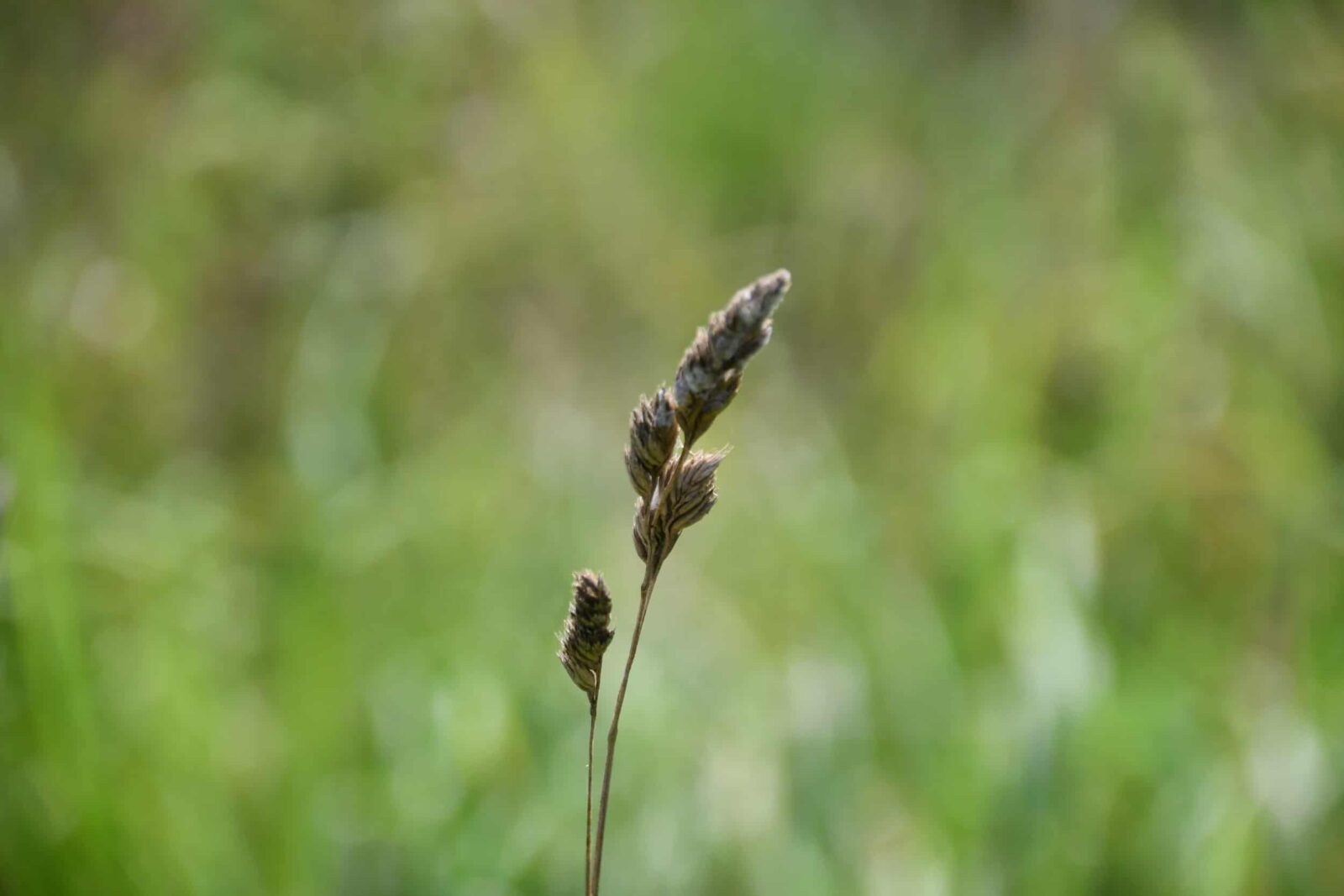
This 2.5 day intermediate course will introduce you to the very important, but often-overlooked grasses, sedges and rushes (Poaceae, Cyperaceae, and Juncaceae).
These plants are not only fundamental to the structure of various ecosystems but also serve as critical indicators of habitat health and type. Amidst a growing demand for skilled botanists capable of conducting detailed vegetation surveys, this course aims to bridge the skills gap, providing learners with comprehensive knowledge and practical expertise in identifying these species.
This course includes:
- Practice identifying grasses, sedges, and rushes.
- Exploring classification and evolution.
- Indicator species and habitat niches
- Field collection and specimen preservation
- Biological recording and surveys.
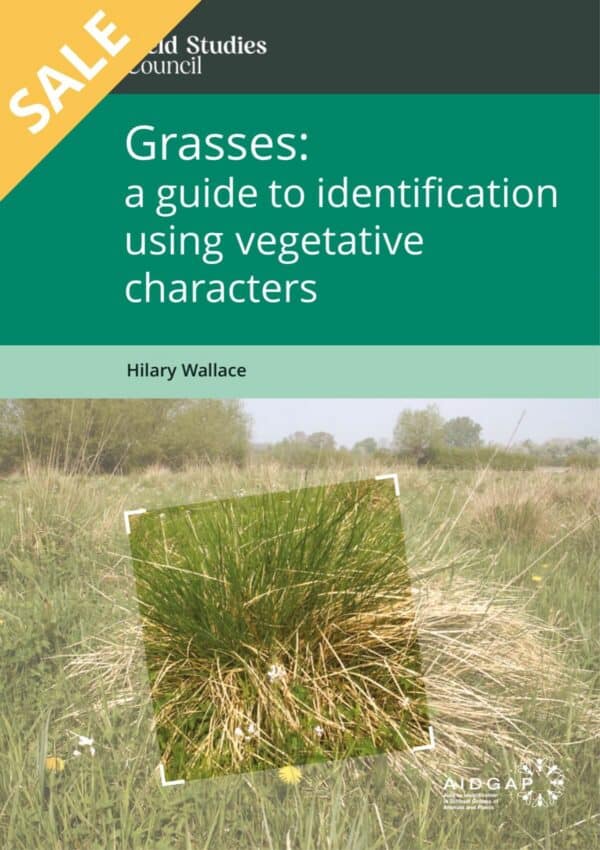
From the start of 2027, when you purchase this course, a free copy of our Grasses Guide will be posted to you. If you already have a copy, why not share it with family, friends, or colleagues.

Read More
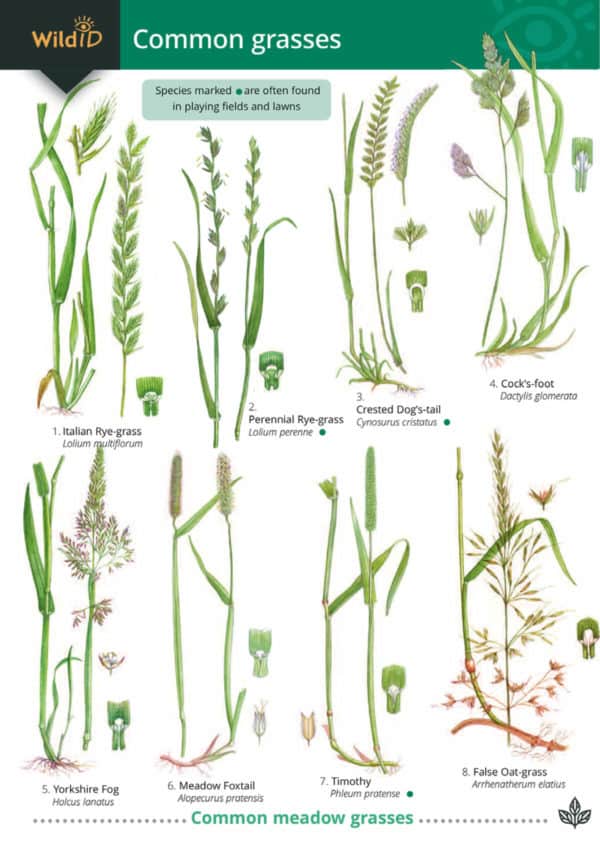
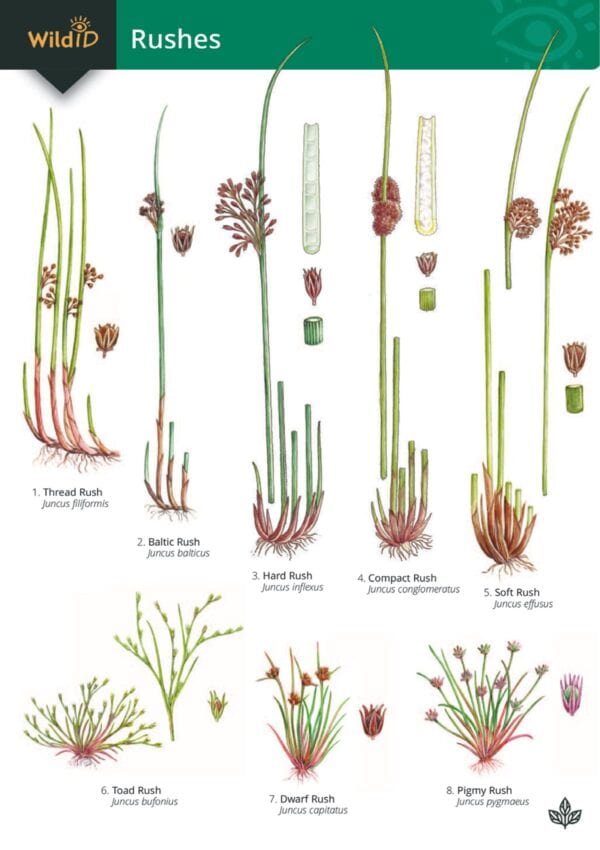
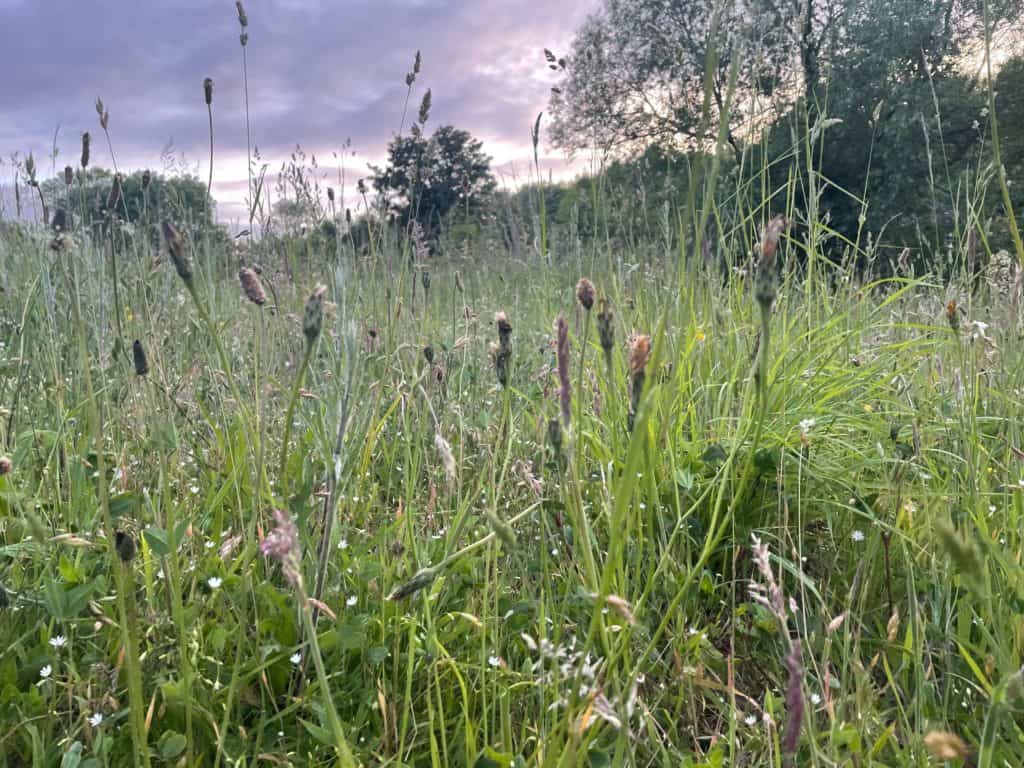
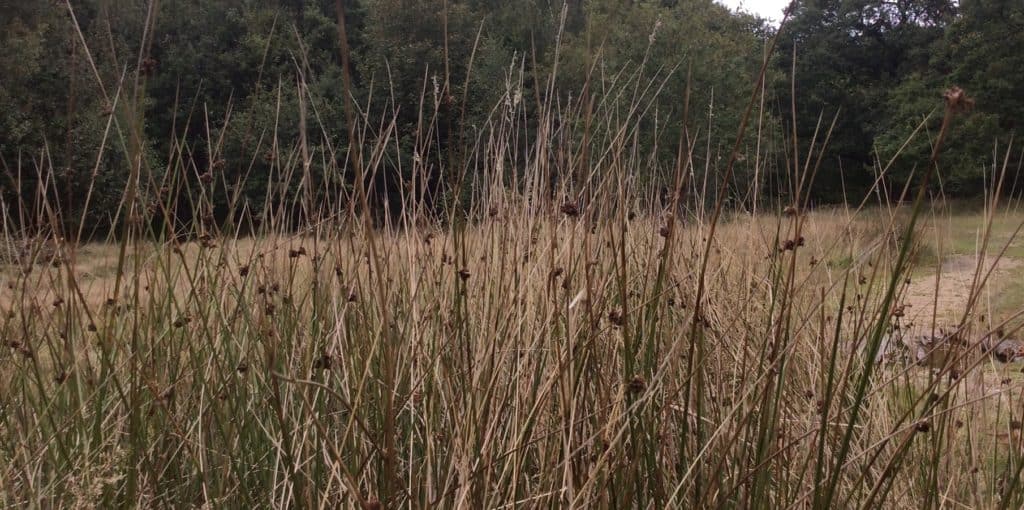
It is not possible to explore and survey any habitat without including the grasses, the Poaceae family. They form the matrix of a wide range of habitats and are of huge economic importance. Sedges, the Cyperaceae, are a diverse and interesting family and very important habitat indicators. UK and Irish Rushes are represented by the genera Juncus and Luzula and can show similarities to grasses and sedges, often occurring alongside them. This makes their identification essential.
Much of the course will focus on grasses and how to identify them both in the field and in the lab. Preston Montford offers a range of habitats so that students can see different grass species where they grow naturally. Several members of the sedge family also grow in the grounds plus some rushes. Otherwise, these groups will be explored both though specimens brought in by the tutor and at Sweeney Fen SSSI nature reserve.
By the end of the course, you will be able to:
- Demonstrate an understanding of the morphology and taxonomy of grasses, sedges, and rushes, employing diagnostic tools and techniques for accurate species identification.
- Critically analyse and interpret the ecological functions of grasses, sedges, and rushes within their ecosystems, evaluating their roles as indicators of habitat health and contributors to biodiversity as well as their evolution.
- Apply field and laboratory techniques for the collection, documentation, and ecological assessment of grasses, sedges, and rushes.
Who Should Attend? – The course is designed for those who are developing careers as ecologists or perhaps want to refresh their knowledge. Individuals may also be volunteering with for example, a wildlife trust and want to help with the monitoring of habitats and reserves. Some people attend because they simply like grasses and want to learn more about them.
This intermediate level course is open to anyone with some existing knowledge of the subject. It would be an advantage for learners to have at least some knowledge of grass (sedge and rush) structure and to be familiar with some grass (sedge and rush) species.
This course is for those aged 18 and over only. (You do not need to be a Harper Adams University student to attend this course).
Knowledge Level – Intermediate. Level descriptors can be found on the following web-page: Framework and Course Level Descriptors .
Accommodation and meals
There are three booking options which all include course tuition, evening meals and refreshments:
- Non-Resident (Breakfast and lunch not included)
- Resident (Sole Occupancy)
- Resident (Shared room- please email [email protected] to inquire about this option)
If you choose a resident booking, this includes accommodation on Friday night and Saturday night, and meals throughout the course: an evening meal on the Friday and Saturday, and breakfast and packed lunch on Saturday and Sunday.
If you choose a non-resident booking, this includes an evening meal on the Friday and Saturday before the evening session. Please bring your own packed lunch on Saturday and Sunday.
Please be aware that you are visiting a Field Centre that caters in the main for school parties; the accommodation is basic and dormitory style, but warm and comfortable. Please also note that bathrooms may be shared.
If we are unable to reach viable numbers for this course, we will inform you of the course cancellation 4-5 weeks prior to the course run. We would recommend when purchasing accommodation and/or travel you should take out your own insurance.
Bookings will close if course capacity is reached.
About the Tutor
Fiona Gomersall
Fiona Gomersall is a trained biology teacher and skilled field botanist. She is Ecologist for the Elan Valley Trust and Vice County Recorder for Vascular Plants for Radnorshire. Fiona is as an active member of the Shropshire Botanical Society and botanist for the Upper Clun Community Wildlife Group.
Harper Adams University Student Information
Interested in becoming a HAU student?
You can find out more about the Biological Recording and Analysis programme here.
Existing HAU Biological Recording and Analysis Students
This 2.5 day course is one of your optional modules. You will be asked to choose your modules through HAU, and then you will book your accommodation and meal options through the Field Studies Council via an online form we will share with HAU.
If are a student and need more information about this course or the booking process, please email [email protected].
The summative assessment for this module will be set by HAU and will be completed and marked after the course.
Example Timetable
Example Timetable
Please note that this course is currently being developed for 2026 as part of the Harper Adams University ‘Biological Recording and Analysis’ course, so there may be small changes to the example timetable outlined below. Once a detailed schedule has been produced, this will be shared with participants.
Friday
- 1pm Course begins. Introduction and Grasses Part 1 PowerPoint
- 2.30 – 4.30pm Field session
- 4.30pm Tea break
- 6.30pm Dinner
- 7.30pm- 8.30pm Evening session to recap on the day’s learning
Saturday
- 9.30am-12.30pm Grasses Part 2 PowerPoint with field work in the grounds
- 12.30 – 1.30pm Lunch
- 1.30 – 3.30pm Sedges and Rushes PowerPoint
- 3.30 – 4.00pm Tea break
- 4.00 – 6.00pm Field work in the grounds
- 6.30 pm Dinner
- 7.30- 8.30pm Evening session to recap on day’s learning.
Sunday
- 9.30am -12.30 pm Site visit to Sweeney Fen SSSI nature reserve
- 12.30 – 1.30pm Lunch at Preston Montford
- 1.30 – 4.30 pm Examination and setting of assignment
- 4.30pm Tea break
- 5.00pm End of course
Lunch will likely be in the field, so please make sure you make yourself a packed lunch at the centre if you choose a residential booking, or bring a packed lunch with you if you choose a non-residential booking.
What's Included
-
 Expert Tuition
The course has been carefully created by expert tutors and educators to help you build your knowledge and apply it within the field surrounded by like-minded individuals.
The course includes:
- Classroom learning covering the theory of the topic
- Field excursions to apply new knowledge
- Expert tuition for which the Field Studies Council is renowned
- Clear objectives and progression
- Refreshments (tea/coffee)
If you choose a resident booking, this includes accommodation on Friday night and Saturday night, and meals throughout the course: an evening meal on the Friday and Saturday, and breakfast and a packed lunch on Saturday and Sunday.
If you choose a non-resident booking, this includes an evening meal on the Friday and Saturday before the evening session. Please bring your own packed lunch on Saturday and Sunday.
You can rest assured that the absolute best content from an expert in environmental education will be provided. In choosing a Field Studies Council course, you will be joining thousands of people who learn with us each year.
Bursaries and Subsidies
Natural History Bursaries
There are a number of natural history bursaries available to help with the cost of your course. To find out if you and your chosen course are eligible, read more here.
Student Discount
This course is eligible for a student discount. If you are a current student, please use discount code BioStudent20 at checkout for 20% off all Biodiversity courses.
Before You Attend
What to Bring
- Notebook and pencil
- Sensible footwear and clothing for being outdoors
- Small bag to carry personal items
- A vacuum flask/drink bottle and a bag or a box for carrying a packed lunch.
- x10 Hand lens
- Your preferred grasses, sedges, and rushes ID guides
Recommended Literature
- Jermy, A.C., Simpson, D.A., Foley, M.J.Y., and Porter, M.S. (2007). Sedges of the British Isles. 3rd ed. Botanical Society of the British Isles.
- Poland, J. and Clement, E.J. (2009). The Vegetative Key to the British Flora. Botanical Society of the British Isles.
- Stace, C.A., Preston, C.D., and Pearman, D.A. (2015). Hybrid Flora of the British Isles. Botanical Society of Britain and Ireland.
- Grasses AIDGAP: A guide to identification using vegetative characters
There will be a member of staff with first aid training and access to a first aid kit on site. If you have special medical or access requirements, please let us know as soon as possible so we can plan the course.
Opportunities to attend this course
-
Fri 18, June 2027 1:00pm - Sun 20, June 2027 5:00pm
Your booking includes a free copy of our Grasses Guide which will be posted to you from January.
- Non-resident Booking - please arrive for 1 pm on the Friday for the first session.
- Resident (Sole Occupancy) Booking - please arrive for 1 pm on the Friday for the first session with accommodation Friday and Saturday night.
No current dates for this course? Click here to view all the upcoming Natural History courses.
Sign up for the Biodiversity Newsletter to be the first to hear about new course dates and to get early bird discounts!
Progress Your Learning
This is a training course from the Field Studies Council, delivered by expert tutors with an approachable learning style. After attending this course, you may like to progress your learning with further relevant courses or branch out into other areas of natural history. The Field Studies Council offers both online and in-person courses, so you can choose the learning style that suits you best.
The course gives you the opportunity to immerse yourself in a new subject and acquire novel skills. Our online portal gives you time to study at your own pace and fit the lessons around your own schedule.
If you have any questions about our courses, please check out our Frequently Asked Questions or email [email protected].
Group Bookings Made Easy
If you have a group of 10 or more individuals wanting to complete one of our courses, our team are available to discuss your options – from discounts to private team courses. Find out more!
You can rest assured that the absolute best content from an expert in environmental education will be at your fingertips. In choosing a Field Studies Council course, you will be joining thousands of people who learn with us each year.