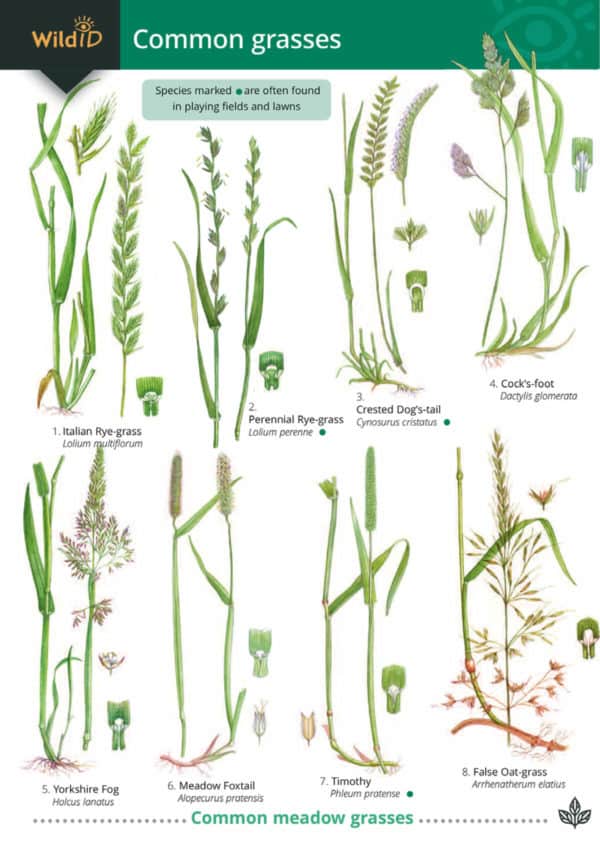
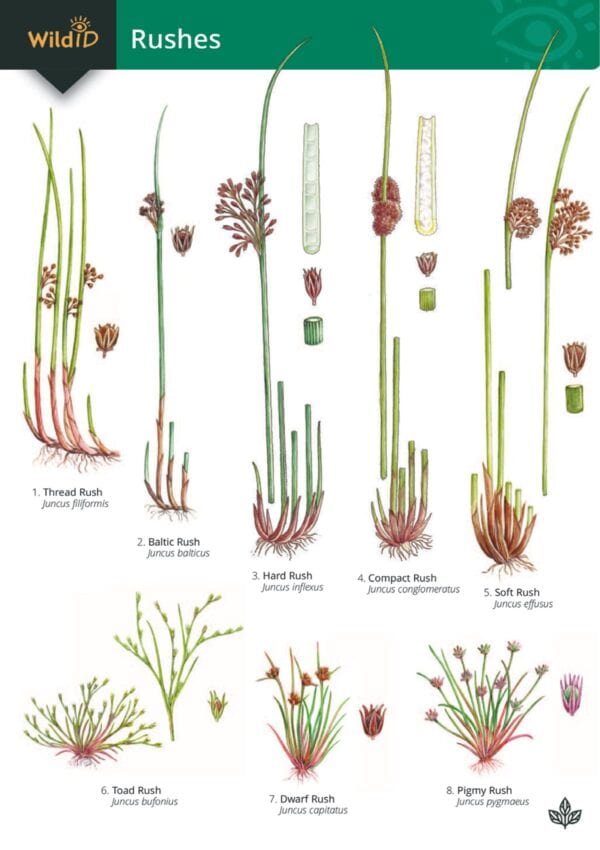
This beginner course will help you begin your journey into identifying UK grass, sedge, and rush species. We will delve into the unique botanical characteristics of the three families and use floristic and vegetative features to identify some key common UK species.
This course will include:
- Understanding the botanical features and structures of grasses, sedges, and rushes and learning the terminology used to describe them.
- Learning how to use distinctive characteristics to differentiate between grasses, sedges, and rushes.
- Practical experience identifying some of the most common grass, sedge, and rush species with an expert tutor.

Read More
Grasses, sedges, and rushes are often overshadowed by their more colourful and showy counterparts among flowering plants. However, upon closer inspection, they reveal interesting features and unique beauty. Since these groups make up nearly a third of the British flora, overlooking them results in missing a significant portion of the plant diversity in the UK.
Grasses, sedges, and rushes can also tell us a lot about the habitats in which they are found. This makes the ability to correctly identify them essential for ecologists completing habitat surveys, such as UKHab and NVC. Getting to know grasses, sedges, and rushes also opens up a new and exciting world for enthusiasts who want to expand their botanical knowledge.
By the end of the course, you will be able to:
- Recognise and identify key features of grasses, sedges, and rushes that can help with identification.
- Identify 5-10 common species of grasses and 5 common species of both rush and sedge.
- Understand what common grass, sedge, and rush species can tell us about the habitat in which they are found.
Who Should Attend? – This course is for adults 18+ (see FAQs). Nature enthusiasts, students, rangers, early career consultants and ecologists. Ability to identify grasses, sedges, and rushes is essential for completing habitat surveys such as UKHab.
Knowledge Level – Beginner. Level descriptors can be found on the following web-page: Framework and Course Level Descriptors
Prior Knowledge – No existing knowledge or experience is needed for this course, just a willingness to explore and learn. Some existing knowledge of general botany would be useful, but not essential.
PLEASE NOTE: There is no accommodation or meal facilities provided with this course. Refreshments (tea and coffee) will be available. If we are unable to reach viable numbers for this course, we will inform you of the course cancellation 4-5 weeks prior to the course run. We would recommend when purchasing accommodation and/or travel you should take out your own insurance.
Bookings will close if course capacity is reached.
Please email [email protected] if you have any questions.
About the Tutor
This course is delivered by more than one expert tutor. Your tutor will depend on the location of the course you book.
Fiona Gomersall
Fiona Gomersall is a trained biology teacher and skilled field botanist. She is Ecologist for the Elan Valley Trust and Vice County Recorder for Vascular Plants for Radnorshire. Fiona is as an active member of the Shropshire Botanical Society and botanist for the Upper Clun Community Wildlife Group.
Hannah Gibbons
Hannah Gibbons is an Ecologist specialising in habitat and botanical survey and habitat management advice. She has been providing plant identification training courses for 15 years and when possible focuses on vegetative (non-flowering) identification as this provides skills all year round. Hannah currently works part time for the National Trust but has worked for a number of conservation organisations in the South West. She especially enjoys grassland habitats, arable plants and sedges.
Henry Miller
Henry is a botanist working at Kew Gardens on projects relating to the conservation of tropical plants in Uganda as well as producing extinction risk assessments for Ethiopian species. Outside of work, he is involved in the Botanical Society of Britain and Ireland and the London Natural History Society. Henry volunteers with these organisations to record and identify a wide range of plants.
Ambroise Baker
Ambroise is a keen field botanist and a plant ecologist by training. His first love was horticultural botany with a passion for succulent plants throughout teenage years. This led him to discover field botany during a stay in South Africa in his early 20s and has never looked back. Since then, he has been developing and applying his plant identification skills during his studies, research, and professional life. He has been lucky to survey grassland, heathland and woodland in various corners of Europe and the UK, as well as extensive field work in freshwaters, mostly ponds and lakes. Ambroise has a particular soft spot for urban floras, open mosaic habitats, and taxonomic groups such as grasses, Brassicaceae, bryophytes, charophytes and aquatic plant. When he can’t indulge in field botany, he enjoys family life, allotmenteering and his job as a university lecturer.
Example Timetable
Timings for this course may vary, so please check the start and end times of the different course runs at the bottom of the page. Please arrive in time for the course to start promptly.
This course will involve both classroom learning and field excursions to cover all of the learning objectives.
Lunch is not included so please bring your own food. Refreshments (tea and coffee) will be provided.
Example Timetable
This timetable may be subject to change depending on the tutor, location, weather, and needs of the group, but should give you an idea of what to expect.
Day 1
-
- 10am-10:30 - Welcome and Introductions
- 10:30am- 11:30 - PowerPoint session introducing grasses, sedges, and rushes, then the botanical skills needed to identify grasses. This might involve looking at specimens in the classroom, or field visits to look at grass features.
- Tea Break
- 11:45-13:00- PowerPoint session introducing some common grass species- with field session to find examples.
- Lunch - 1 hour
- 14:00-14:45- PowerPoint session looking at more common grass species and their features- with field session to find examples.
- Tea Break
- 15:00-16:30- Field session for individuals/ small groups to practise their identification skills with the tutor helping and answering any questions.
- 16:30-17:00 - Recap and questions
Day 2
- 10am-10:30- Welcome and recap of day 1
- 10:30am- 11:30- PowerPoint session introducing the botanical skills needed to identify sedges. This might involve looking at specimens in the classroom, or field visits to look at sedge features. Followed by an introduction to common sedge species around the site, with field session to find examples.
- Tea Break
- 11:45-13:00- Field session for individuals/ small groups to practise their sedge identification skills with the tutor helping and answering any questions.
- Lunch - 1 hour
- 14:00-14:45- PowerPoint session introducing the botanical skills needed to identify rushes. This might involve looking at specimens in the classroom, or field visits to look at rush features. Followed by an introduction to common rush species around the site, with field session to find examples.
- Tea Break
- 15:00-16:30- Field session for individuals/ small groups to practise their rush identification skills with the tutor helping and answering any questions.
- 16:30-17:00- Recap and questions
What's Included
-
 Expert Tuition
The course has been carefully created by expert tutors and educators to help you build your knowledge and apply it within the field surrounded by like-minded individuals.
The course includes:
- Classroom learning covering the theory of the topic
- Field excursions to apply new knowledge
- Expert tuition for which the Field Studies Council is renowned
- Clear objectives and progression
- Refreshments (tea/coffee)
You can rest assured that the absolute best content from an expert in environmental education will be provided. In choosing a Field Studies Council course, you will be joining thousands of people who learn with us each year.
Bursaries and Subsidies
Student Discount
This course is eligible for a student discount. If you are a current student, please use discount code BioStudent20 at checkout for 20% off all Biodiversity courses.
Natural History Bursaries
There are a number of natural history bursaries available to help with the cost of your course. To find out if you and your chosen course are eligible, read more here.
Before You Attend
There will be a member of staff with first aid training and access to a first aid kit on site. If you have special medical or access requirements, please let us know as soon as possible so we can plan the course.
What to Bring
- Notebook and pencil
- Sellotape to stick specimens
- Lunch and refreshments
- Sensible footwear and clothing for being outdoors
- Small bag to carry personal items
If you have them:
- Your preferred wildflower guide(s) that includes grasses, sedges, and rushes
- x10 hand lens
Recommended Literature
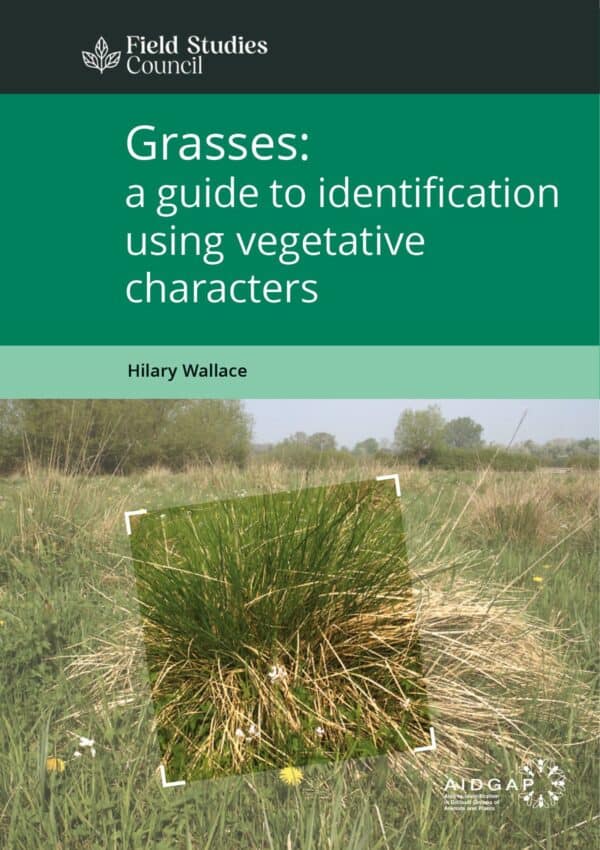
If you want to take your learning further, you might also be interested in the Grasses AIDGAP, which gives vegetative characteristics of 90 most commonly found grass species.
Opportunities to attend this course
-

Sat 29, August 2026 10:00 - Sun 30, August 2026 17:00
Accommodation and meals are not provided by the centre, so please ensure you bring all food and refreshments for the full duration of the course.
No current dates for this course? Click here to view all the upcoming Natural History courses.
Sign up for the Biodiversity Newsletter to be the first to hear about new course dates and to get early bird discounts!
Progress Your Learning
This is a training course from the Field Studies Council, delivered by expert tutors with an approachable learning style. After attending this course, you may like to progress your learning with further relevant courses or branch out into other areas of natural history. The Field Studies Council offers both online and in-person courses, so you can choose the learning style that suits you best.
The course gives you the opportunity to immerse yourself in a new subject and acquire novel skills. Our online portal gives you time to study at your own pace and fit the lessons around your own schedule.
If you have any questions about our courses, please check out our Frequently Asked Questions or email [email protected].
Group Bookings Made Easy
If you have a group of 10 or more individuals wanting to complete one of our courses, our team are available to discuss your options – from discounts to private team courses. Find out more!
You can rest assured that the absolute best content from an expert in environmental education will be at your fingertips. In choosing a Field Studies Council course, you will be joining thousands of people who learn with us each year.