
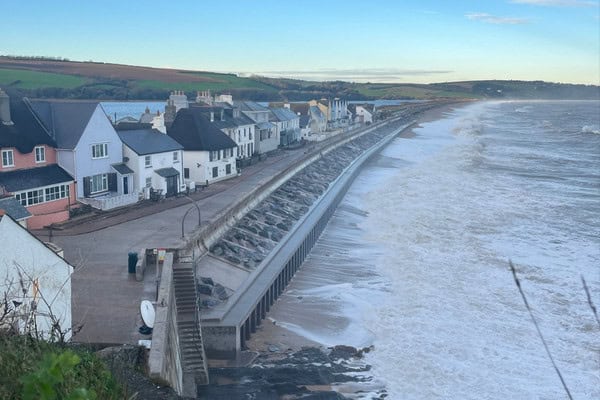
Geography fieldwork at Slapton Ley Field Centre offers an exceptional experience due to the close proximity of freshwater, coastal and settlement environments, allowing meaningful geographical enquiry within a short travelling distance.
The centre provides immediate access to freshwater and woodland environments, with Slapton Sands and the wider Start Bay coastline nearby. Rural settlements such as Slapton and nearby towns including Totnes and Plymouth extend opportunities for human geography, enabling students to explore geography as an interconnected system linking physical processes, ecosystems and changing places.
Coastal Landscapes
Coastal landscapes are investigated along Slapton Sands and the wider Start Bay coastline. Students study coastal processes, sediment movement, beach profiles and coastal management within a dynamic shingle barrier system directly linked to flooding and sea‑level risk.
River Landscapes
River landscapes are explored through small‑scale catchment studies feeding into Slapton Ley, alongside larger river systems such as the River Harbourne. Fieldwork focuses on erosion, deposition, downstream change, flooding and river management within the South Devon landscape.
Sand Dune Systems and Succession
Sand dune and vegetated shingle systems at Slapton Sands provide opportunities to study formation, zonation and primary succession. Students assess the fragility of these environments, the impact of trampling and the role of conservation management.
Carbon and Water Cycles
Carbon and water cycles are investigated within Slapton Wood, surrounding farmland and the Ley catchment. Students measure infiltration, interception and runoff while examining carbon storage in vegetation and soils at a local scale.
Urban, Rural and Changing Places
Rural change is studied in Slapton and Chillington, while urban change and regeneration are explored in Totnes and Plymouth. These contrasting locations allow students to investigate place identity, sustainability, regeneration and inequality across rural and urban settings.
Geographical Enquiry and NEA Skills
Slapton supports the full geographical enquiry process, from question design and pilot studies to data collection, statistical analysis and GIS. The variety of local environments allows students to collect high‑quality primary data for GCSE and A‑level independent investigations.
Slapton is particularly strong for geography because its local environments support enquiry across a range of scales. Students can collect primary data within the Slapton Ley catchment before applying similar methods in coastal, rural or urban settings, strengthening comparative analysis and fieldwork confidence. From GCSE investigations to A‑level and IB independent fieldwork, Slapton supports progression through the full geographical enquiry process using well‑established field sites.